Swipe to start reading
BY WAY OF BUCKNELL
Sounds Like Summer at Bucknell
Take a moment to pause, breathe and be transported back to Bucknell in summertime. This meditative audio story captures the peaceful sounds and simple joys of campus in the warmer months — a gentle reminder of a place that still feels like home.
Story and narration by Matt Jones
Audio and production by Joey Krikorian
BUCKNELL IN BLOOM
From vibrant flowers to lush green spaces, Bucknell’s beauty is one reason students love to call our campus home.
photographs by EMILY PAINE
If you would like a reprint of this photo, please fill out the form at go.bucknell.edu/PhotoOffer.We will send you a complimentary 8x10 print.
PATHWAYS
by SARAH DOWNEY ’25
photograph by APRIL BARTHOLOMEW
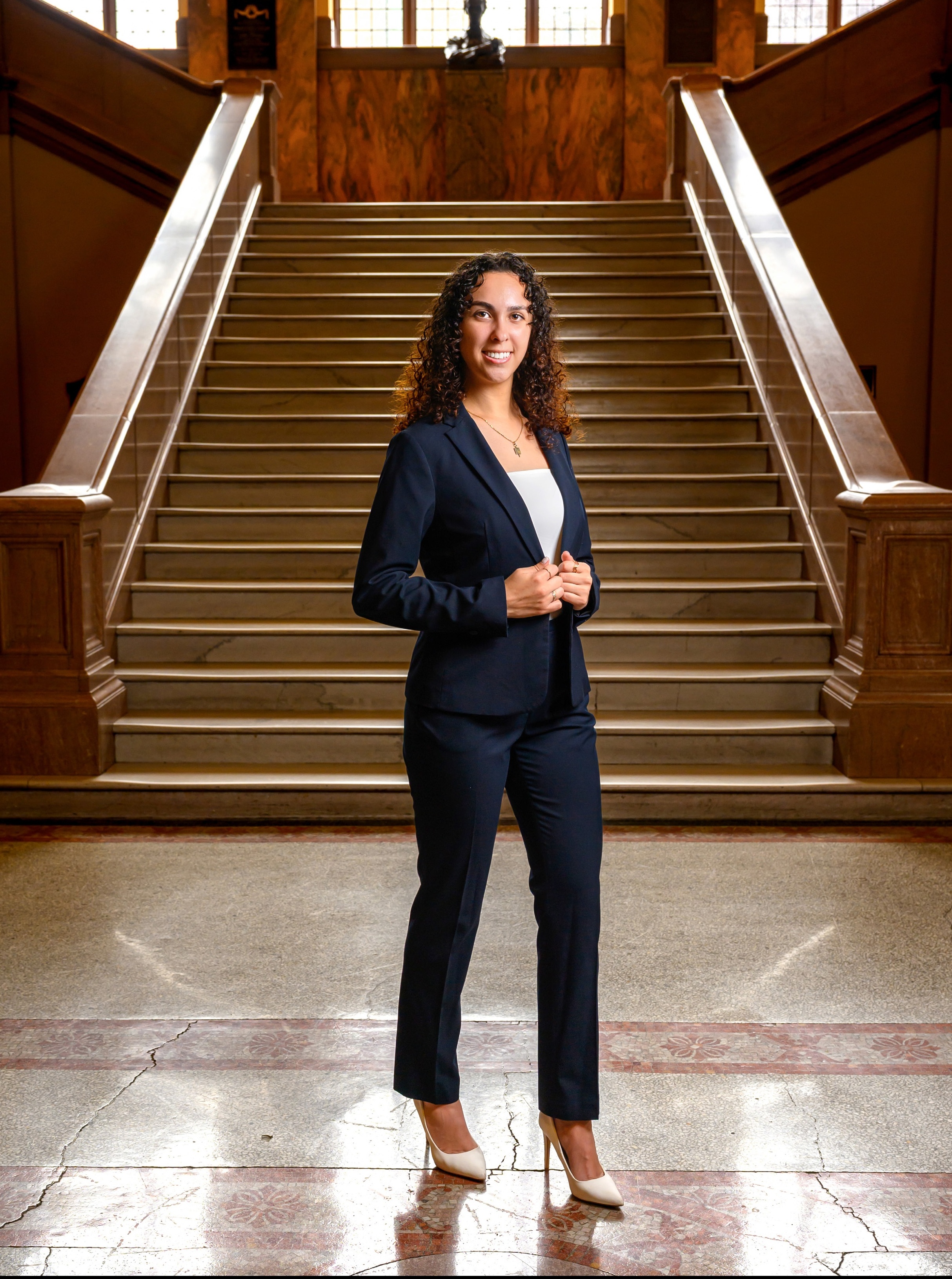
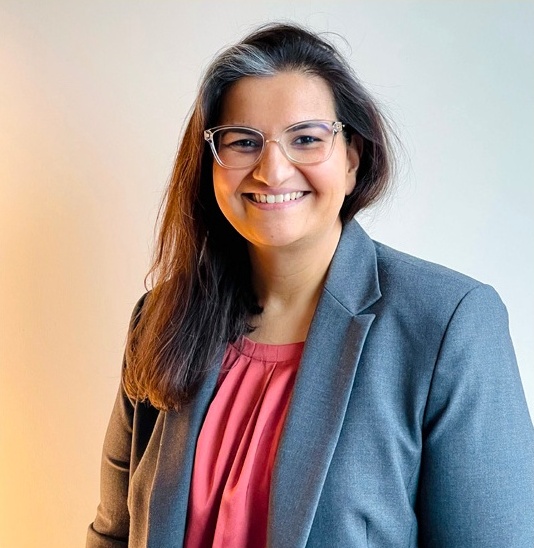
Kaia Rendo ’23 took advantage of just about every opportunity she could while at Bucknell. She worked in the Office of the President as an undergraduate executive intern, was president of the mock trial team, worked as the chief copyeditor for The Bucknellian and as a peer writing consultant at the Writing Center, all while triple-majoring in political science, Spanish, and English — creative writing.
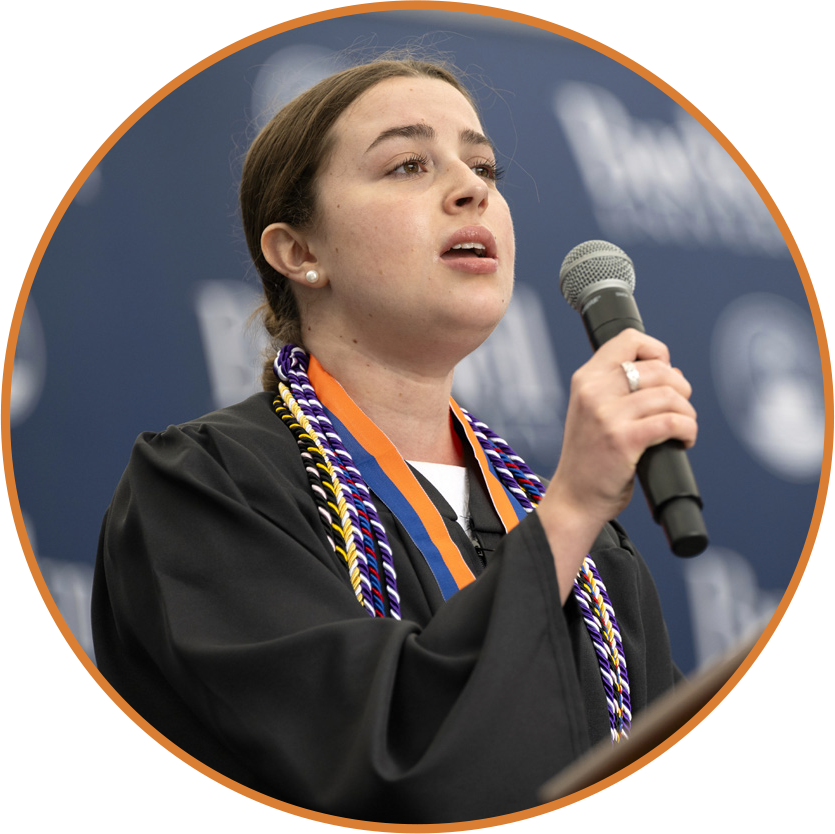
When the chance to audition to be the Class of 2023’s student speaker at Commencement arose, Rendo decided to embrace the challenge.
“I was so excited to be able to express how much I had loved my time at Bucknell,” she says.
Now, Rendo is a second-year student at the University of Pennsylvania Carey Law School, focusing on international and environmental law. As the daughter of immigrants from Uruguay and Poland, Rendo is especially interested in making an international impact. After her first year, she interned at a firm in Japan and at the U.S. Court of International Trade in New York City, where she worked on cases involving renewable energy, congestion pricing and international fishing. Next summer, Rendo will work at Freshfields, a top U.K. law firm.
Rendo says her Bucknell experiences have been crucial to her success. “Law school requires a lot of creativity and so much writing,” she says. “My work at the Writing Center and the time management skills I developed while juggling different majors and campus roles helped in ways that I didn’t anticipate.”
by SARAH DOWNEY ’25
photograph by EMILY PAINE
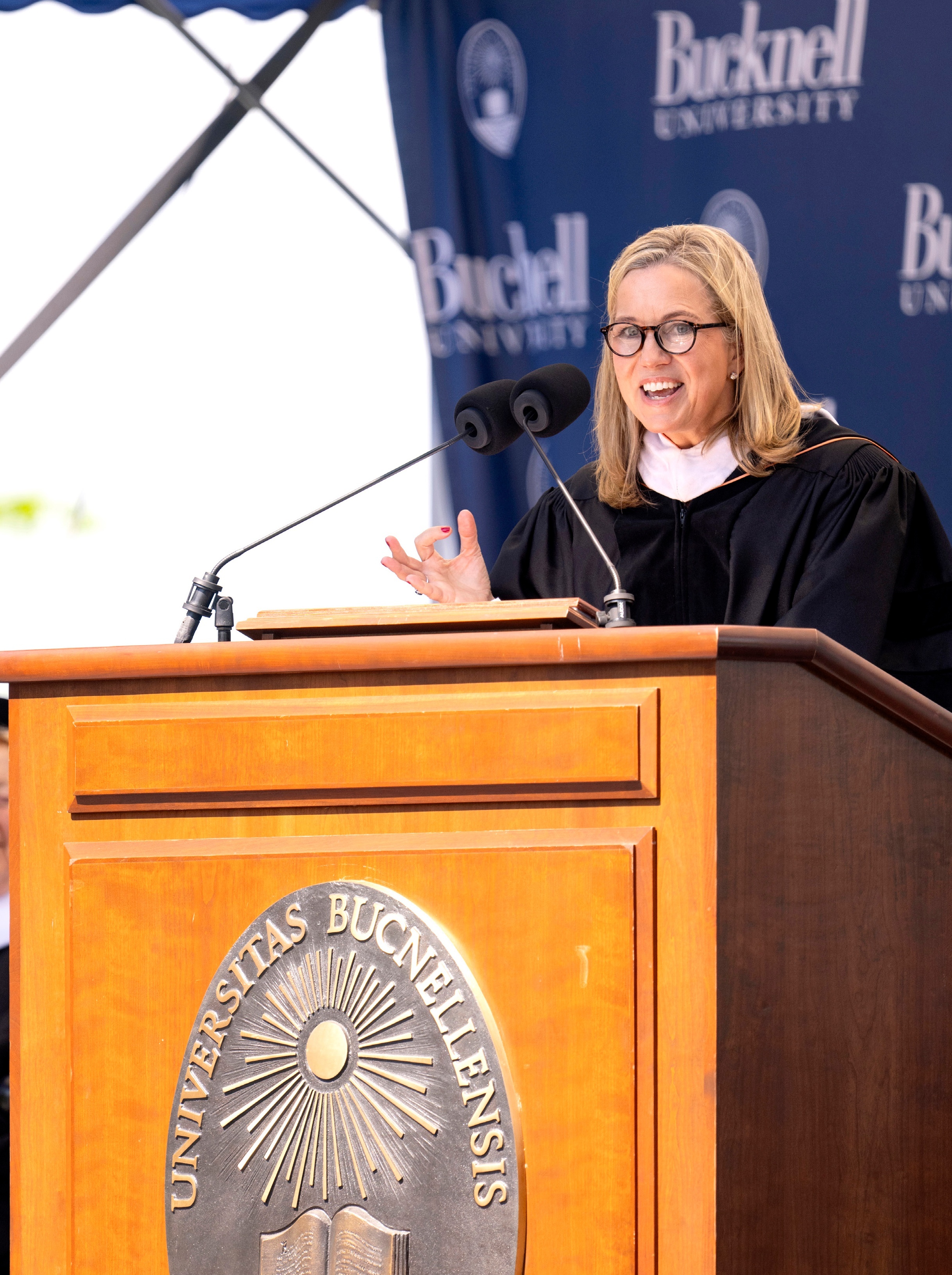
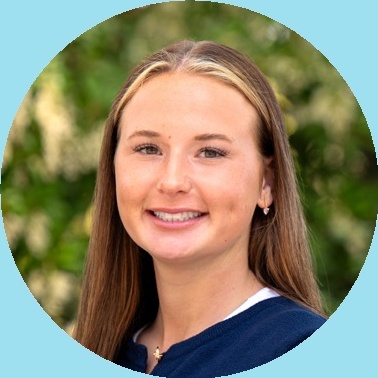
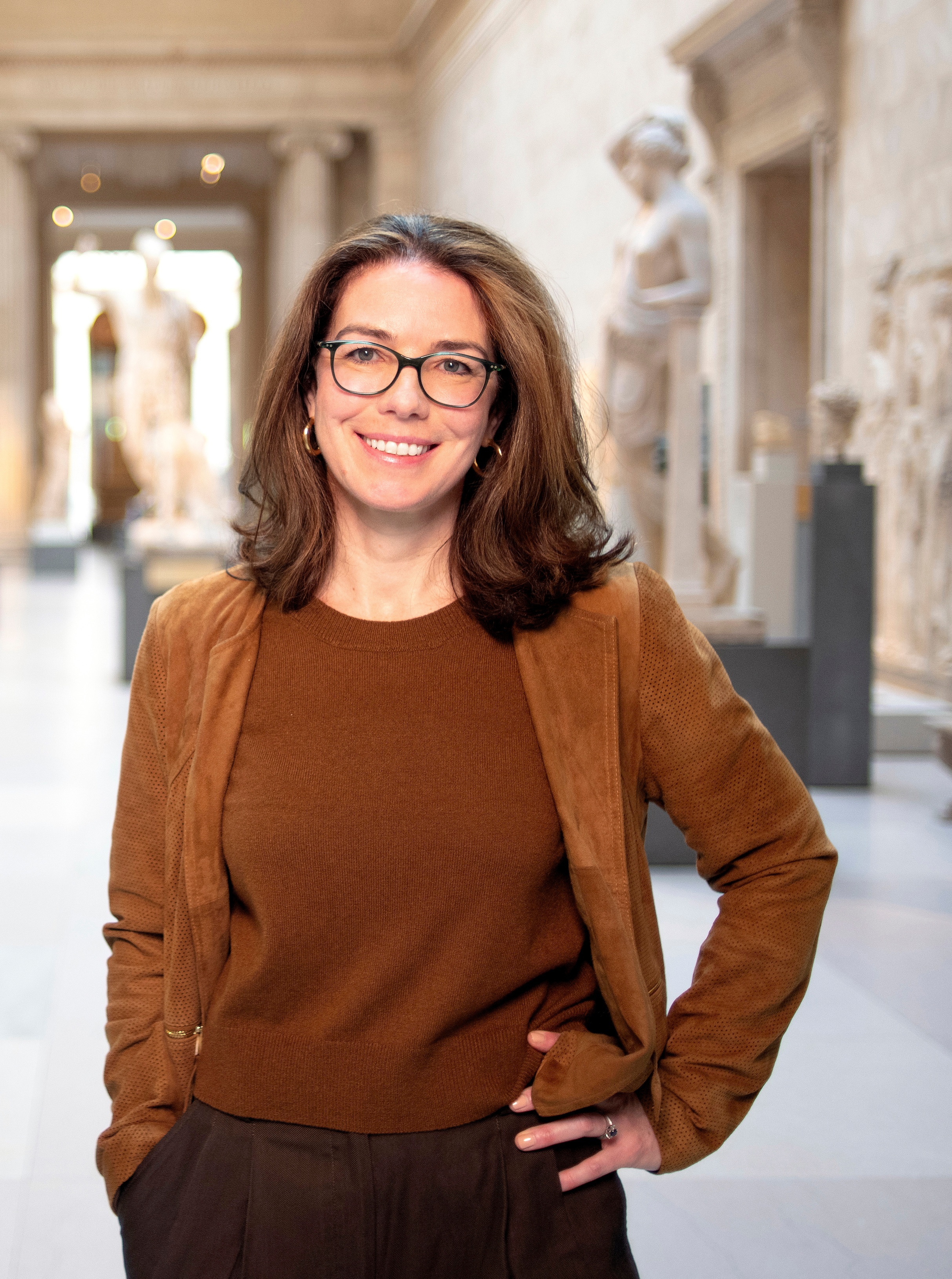
Great ideas can change the world — but only if they have the support to take off. Without early investment, companies like DoorDash and Airbnb might never have become household names. One key figure behind their success is Jessica Livingston ’93 — entrepreneur, investor and Bucknell’s 2025 Commencement keynote speaker. (Tap here for Commencement coverage.)
As an English major, Livingston never imagined a future in startups. “When I was in college, I had no idea what an entrepreneur was,” she says. After graduation, she joined an investment firm but struggled to find a career that excited her. Inspired by Jerry Kaplan’s book Startup, she started writing Founders at Work, which became a bestselling account of Silicon Valley’s early success stories.
That led to Y Combinator, one of Silicon Valley’s most successful startup accelerators. Since 2005, it has funded over 5,000 companies. Livingston, often called “the social radar” for her ability to read people, co-hosts the podcast The Social Radars with Carolynn Levy. She now sees how unpredictable career paths can be. “It’s important for students to remember,” she says, “your future career might not even exist yet.”
TRANSFORMING YOUR DIGITAL READING EXPERIENCE
SINCE GRADUATING FROM journalism school about 25 years ago, I’ve witnessed the publishing world transform. The decline of newsstands and the rise of digital platforms have changed how readers engage with content. While storytelling remains valued, readers increasingly consume those stories on desktops, tablets and phones.
With the rising popularity of digital content, we want to ensure that we are presenting our digital edition in the best format possible. Our editorial team began exploring partners who could help us enhance that experience.
After thorough research, we’re excited to move forward with eMagazines, a leader in digital publishing trusted by iconic publications like Time, Sports Illustrated and Fortune. Here are some exciting features we’re introducing:
TWO VIEWING OPTIONS Our replica version offers a desktop/laptop experience that mirrors the print edition and now includes Class Notes. If you’re on the go, switch to “mobile view” for an optimized layout on your phone or tablet. (Class Notes is available in desktop view only.)
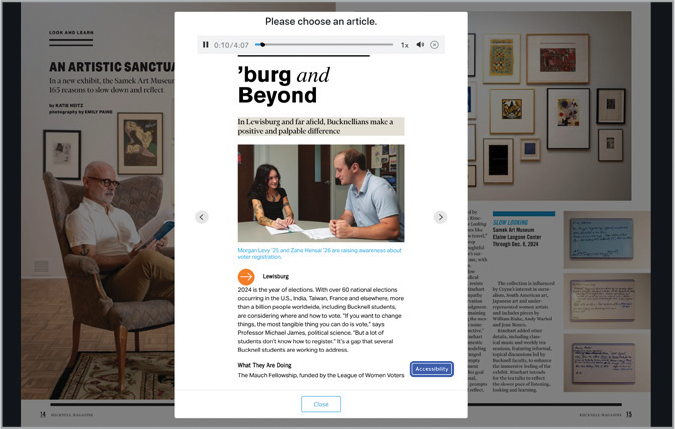
AUDIO STORIES You can now listen to every story by clicking the “Listen” icon at the top right of each page.
EASY TO NAVIGATE Click on the magazine’s cover on the bottom left corner to navigate back to the Table of Contents.
GROWING ARCHIVE We’ll be building a full archive of past issues. Currently, you can access the past year’s worth of issues; we’ll add more issues in stages. The archive will be fully searchable.
Finally, if you’d like to support our sustainability efforts, consider becoming a digital-only subscriber. Visit go.bucknell.edu/godigital to make the switch.
KATIE NEITZ
Editor
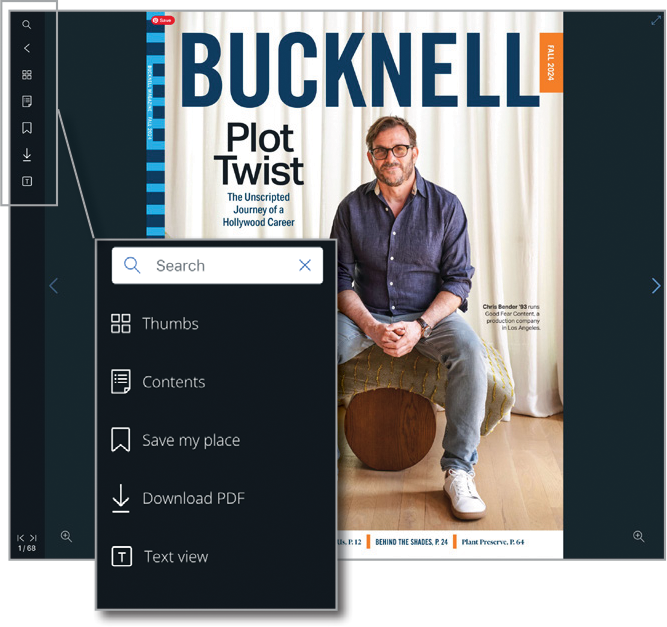
SIDE NAVIGATION FEATURES
SEARCH BAR Find specific content by typing keywords into the search bar.
LIBRARY Eventually, this will enable you to access a full archive of past issues.
THUMBS Use this feature to quickly flip through the magazine’s pages.
SAVE MY PLACE Mark your spot and return to where you left off.
DOWNLOAD PDF Save a copy for offline reading.
MOBILE VIEW Provides a phone-optimized layout.
TEXT VIEW A simplified version for easy reading.
magazine
Volume 18, Issue 3
INTERIM VICE PRESIDENT FOR MARKETING & COMMUNICATIONS
Christina Masciere Wallace P’22
EDITOR
Katie Neitz
CREATIVE DIRECTOR
Barbara Wise
DESIGNERS
Erin Benner
Ashley M. Freeby ’15
PHOTOGRAPHY EDITOR
Emily Paine
ASSISTANT EDITOR
Matt Jones
CLASS NOTES EDITOR
Heidi Hormel
EDITORIAL ASSISTANT
Kim Faulk
CONTRIBUTORS
Dave Block, Sarah Downey ’25, Shana Ebright, Mike Ferlazzo, James T. Giffen, Matt Hughes, Brooke Thames, Brad Tufts, Kate Williard
WEBSITE
CONTACT
Class Notes: classnotes@bucknell.edu
Bucknell Magazine
(ISSN 1044-7563), of which this is volume 18, number 3, is published in winter, spring, summer and fall by Bucknell University, One Dent Drive, Lewisburg, PA 17837. Periodicals Postage paid at Lewisburg, PA, and additional mailing offices.
Permit No. 068-880.
CIRCULATION
49,000
POSTMASTER
Send all address changes to:
Office of Records
301 Market St., Suite 2
Bucknell University, Lewisburg, PA 17837
©2025 Bucknell University
Celebrating 10 Years of @iamraybucknell:
A Decade of Real Student Stories
by KATIE NEITZ
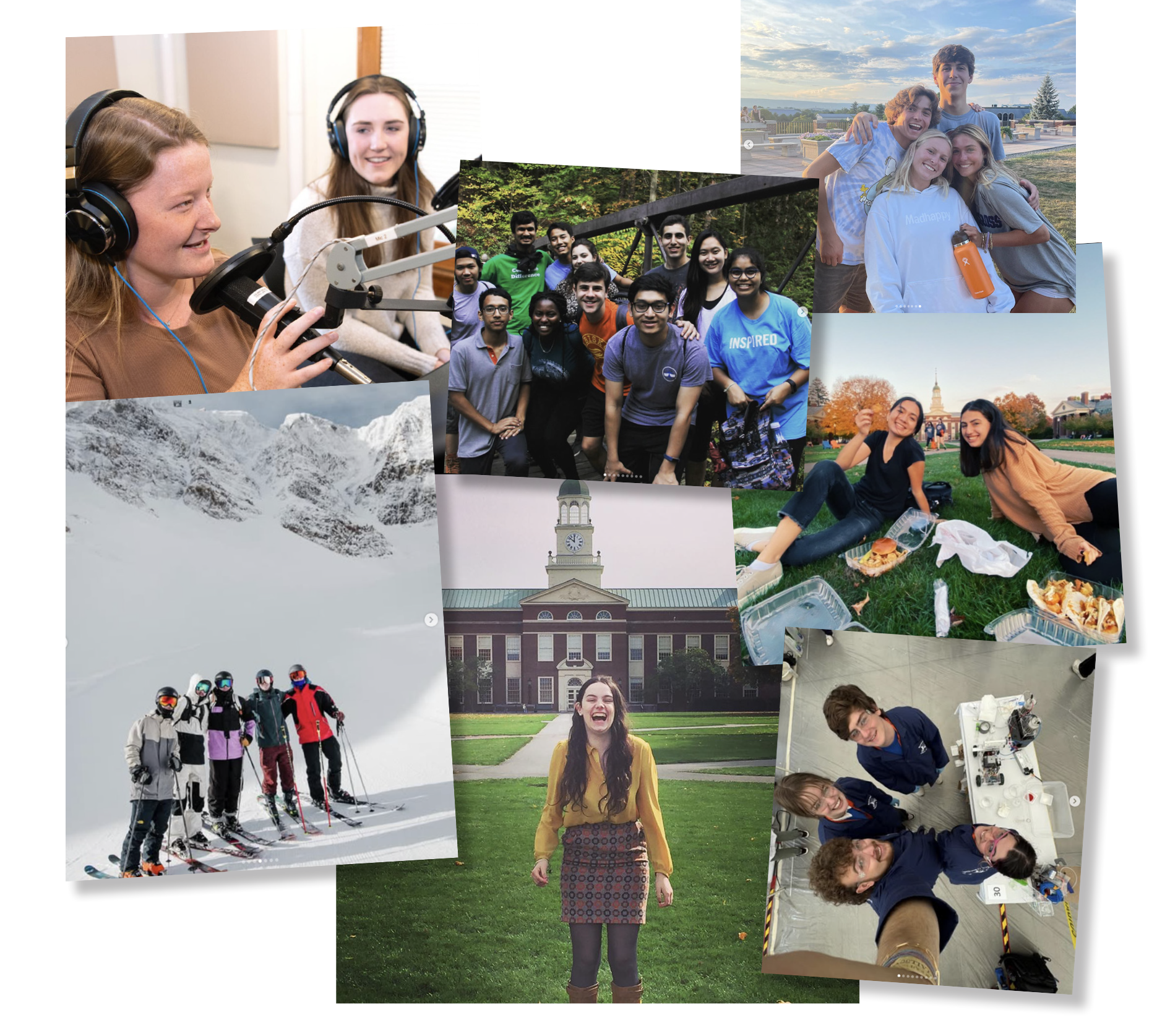
For prospective students navigating the college search process, glossy viewbooks and finely tuned emails offer an introduction to an institution. But often what high school students really want is a glimpse behind the curtain. What’s the everyday student experience like? What’s the vibe on campus? What makes this place feel like home?
That’s the idea behind @iamraybucknell, an Instagram account created and managed by Bucknell’s Division of Marketing & Communications as a tool to connect prospective students to life on campus through the eyes of those living it.
Launched in August 2015, the account invites a different student each week to share their Bucknell experience in real time. There are no scripts or approvals — just students showing what it’s really like to be a part of the Bucknell community.
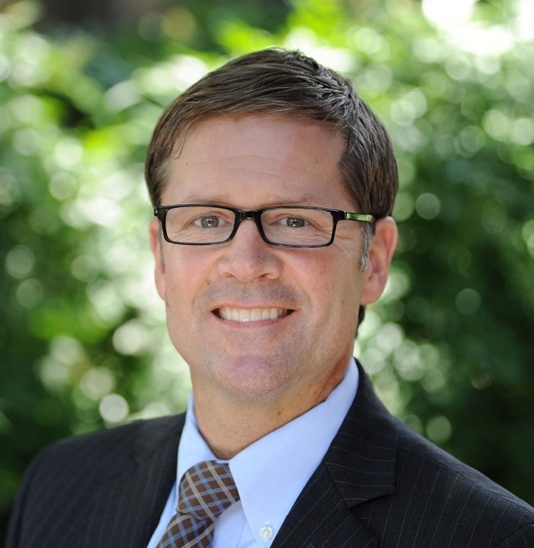
“Today’s prospective students seek authenticity — they want to hear directly from their peers about what it’s really like to live and learn at Bucknell,” says Kevin Mathes ’07, interim vice president of enrollment management.
A Decade of Authenticity
Since the account’s inception, nearly 600 Bucknellians have participated in an@iamraybucknell takeover, using the platform to share a week in their lives through photos, videos and personal reflections.
From One Student to 10,000 Followers
The account has showcased student life from all over the globe — including takeovers from the Olympic Village in Tokyo, study abroad experiences on multiple continents and, of course, countless hidden gems in Lewisburg.
Celebrating 10 Years
Bucknell will host a celebration in August and feature alumni takeovers, archival highlights and chances for current students to engage with and reflect on the account’s impact.
NEWS TICKER
TOP WORKPLACE
Bucknell is ranked No. 7 among midsized employers (those with 1,000 to 5,000 employees) in Pennsylvania, first among colleges and universities in the state, and is No. 214 among all organizations nationally in Forbes’ 2025 list of “America’s Best Midsize Employers.”
SUMMING UP 100 YEARS
Bucknell’s chapter of Pi Mu Epsilon, the national mathematics honor society, is celebrating its 100th anniversary. It was chartered in 1925 as the Pennsylvania Beta chapter, the second in the state and eighth in the nation. The milestone is sparking historical research and celebratory planning by faculty and students. Contribute memories and photos: go.bucknell.edu/mathmemories
BOTANY BOSS
Professor Chris Martine, David Burpee Chair in Plant Genetics & Research, has been elected president of the Botanical Society of America, the nation’s oldest scientific society dedicated to the advancement of plant biology.
Photos: Courtesy of instagram.com/iamraybucknell
AROUND TOWN AND AROUND THE GLOBE
’burgandBeyond
In Lewisburg and far afield, Bucknellians make a positive and palpable difference
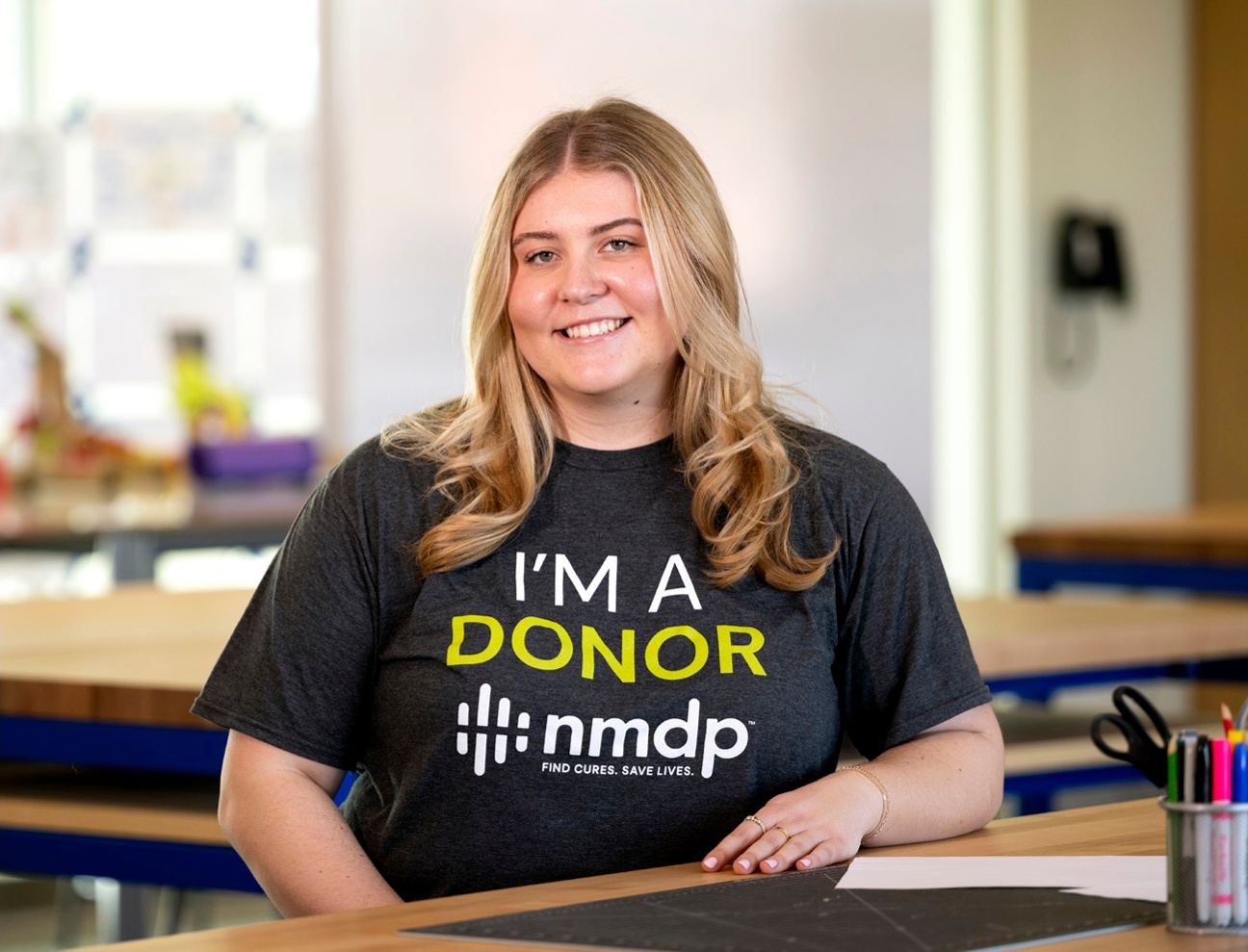
Kate Ellis ’25 donated her stem cells through NMDP, offering hope to a leukemia patient she has never met.
Europe
In the fall of 2021, Kate Ellis ’25 came across a group of students tabling at the Elaine Langone Center for their annual drive in support of NMDP, formerly the National Marrow Donor Program or Be The Match. Their pitch was simple: “Swab your cheek. You could save a life.” The markets, innovation & design major from Pennington, N.J., swabbed, signed up and moved on.
What She Did
Two and a half years later, in May 2024, Ellis got an unexpected call from the donor network: She was a potential match for a leukemia patient in Europe. After initial medical screenings, she waited for months with no updates. Then, in October, she was informed she was indeed a perfect match. Things now moved incredibly quickly — she had just 16 days to prepare for donation. Ellis says she received unwavering support from Bucknell’s faculty, who allowed her the flexibility to miss classes for the procedure and its rigorous preparatory steps.
Ellis underwent peripheral blood stem cell donation, a nonsurgical process requiring five days of injections to boost stem cell production. The side effects were intense, causing bone pain and fatigue. Ellis then flew to Wisconsin, where her blood was cycled through a machine to extract stem cells. Within 24 hours, a courier delivered them to the recipient overseas.
The Impact
Donations are anonymous, so Ellis doesn’t know the recipient’s identity. “I just hope they’re OK,” she says. “I hope my cells gave them a fighting chance.”
Ellis calls the experience life-changing. “Being entrusted with something so powerful puts things into perspective,” she says. Would she do it again? “Without a doubt. In a heartbeat.”
— Katie Neitz
Pennsylvania
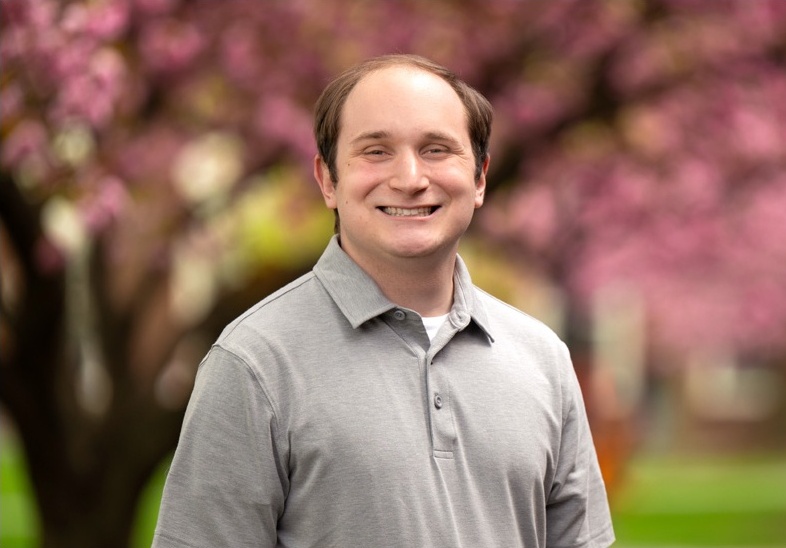
Zane Hensal ’26 got his first taste of politics in ninth grade when he job-shadowed a member of the Pennsylvania State House of Representatives in Harrisburg. It ignited his interest in public service. Since arriving at Bucknell, the political science major has been putting that passion into action.
Centered on Service
Hensal serves on the school board of his hometown district in Houtzdale, Pa., and on the board of Central Pennsylvania Community Action, a nonprofit supporting Centre and Clearfield counties with weatherization programs, food banks and affordable housing. “This nonprofit is often the first stop for those in need,” he says.
On campus, he has sought opportunities to deepen his commitment to community-focused work. For an independent study project, he partnered with the Bucknell Center for Sustainability & the Environment to develop a community resilience plan for Kulpmont Borough that will help the town apply for grants related to energy efficiency and waste management.
He also serves as a research associate with Bucknell’s Center for Community Engaged Leadership, Learning & Research, where he supports nonprofits by conducting research that strengthens volunteer engagement as well as promotes equity in underserved communities. In addition, he provides grant writing assistance to organizations like the Mature Resources Area Agency on Aging.
Zane Hensal ‘26 is combining his political science studies with hands-on public service.
What’s Next?
This fall, he’s interning with the Pennsylvania State Senate, continuing to lay the foundation for a future in public office. “There are so many issues that most of us don’t realize exist until we start listening. That’s what drives me: being able to hear people who feel frustrated and helping them find a path forward.” — Katie Neitz
Photos: Emily Paine (top), James T. Giffen (bottom)
‘More Than Just a Paycheck’
by KATIE NEITZ
Corporations that prioritize efficiency, productivity and high performance can’t afford to ignore workplace culture. Employees who feel connected to their work, colleagues and an organization’s mission aren’t just happier — they’re also more effective. In his new book, Building Community at Work, Neil Boyd, the David J. ’85 & Deborah West Professor in Management, explores how leaders can nurture a sense of belonging and shared commitment. Boyd offers actionable insights for creating environments where employees thrive and businesses perform at their best.
WHY IS FOSTERING A SENSE OF COMMUNITY AT WORK SO IMPORTANT?
Employees need more than just a paycheck and a safe work environment — they need to feel connected, valued and heard. A strong workplace community helps fulfill these psychological needs. People want to feel included and acknowledged, not just as workers but as individuals. They thrive on shared emotional connections, which often form through collaboration, shared experiences or personal interactions. And just as important, employees need to feel they have a voice — that their input matters and can influence their workplace.
WHAT MOTIVATES EMPLOYEES TO CONTRIBUTE TO A POSITIVE WORKPLACE CULTURE?
It’s one thing for employees to feel like they belong, but true workplace community goes deeper — it includes a sense of responsibility for the well-being of others and the organization as a whole. This is what I call “community responsibility.” It’s the idea that people give to the collective not because they expect something in return, but because they genuinely care. In strong workplace communities, employees naturally support one another, step up when needed and go beyond their job descriptions to contribute to a positive culture.
HOW DO LEADERS AND MANAGERS BUILD COMMUNITY?
It starts with showing unconditional positive regard for employees and genuine care. This creates an environment where people feel safe and valued. Managers who adopt a supportive, empathetic leadership style are more likely to foster a thriving community. Leadership needs to support this at an organizational level, integrating community-building practices into the overall infrastructure of the company. This includes support and intervention from executives, potentially changing organizational structure and requiring accountability.
HOW CAN ORGANIZATIONS MEASURE THE IMPACT OF COMMUNITY-BUILDING?
While traditional metrics focus on productivity or employee satisfaction, there are additional factors that need to be assessed, such as psychological safety, inclusion and the sense of community responsibility. Climate surveys and feedback mechanisms should include questions related to these dimensions. Also, it’s not enough to simply gather the data. Organizations need to take action based on the feedback, identifying areas that need improvement and ensuring that leadership and managers are equipped to make the necessary changes.
Photo: Emily Paine
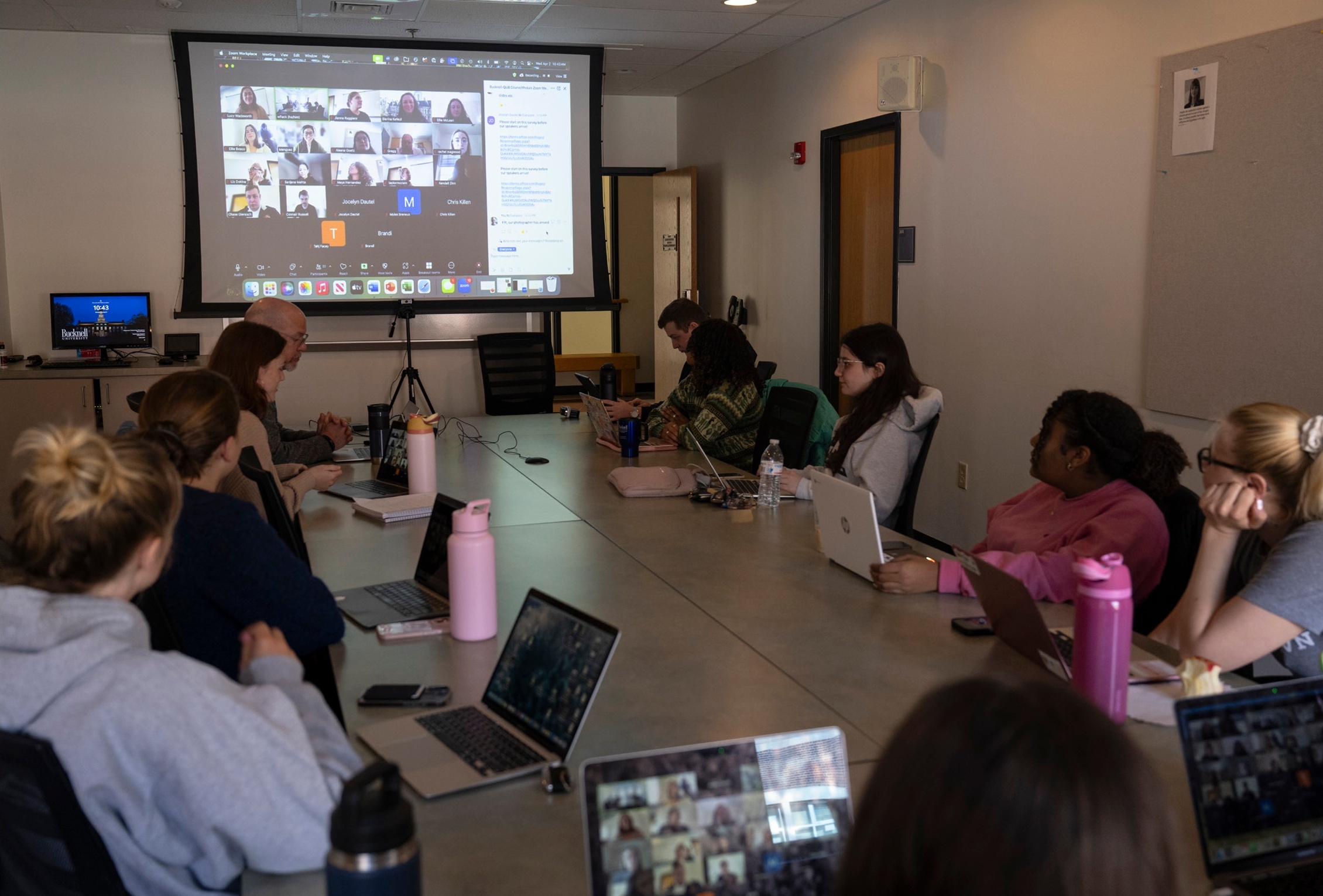
Bucknell students Zoomed weekly with Queen’s University Belfast students in Northern Ireland as part of a psychology course.
Innovative Learning — Across the Atlantic
In an international classroom stretching from Bucknell to Belfast, students examine inequality, injustice and mental health
by KATIE NEITZ
Course: International Collaboration: Psychology Toward Global Goals connects students from two different continents and cultures in a dynamic, cross-cultural learning experience. Together, they explore pressing social issues — inequality, injustice, mental health — to gain insights that deepen their understanding of these complex topics.
Locations: Bucknell University in Lewisburg and Queen’s University in Belfast, Northern Ireland.
Professors: Jocelyn Dautel ’05, who majored in psychology at Bucknell, has dedicated her career to researching children’s social categories, particularly across ethno-religious lines. Now a psychology professor at Queen’s University, Dautel credits her Bucknell study abroad experience in Northern Ireland as a pivotal moment in her academic career. “That experience sparked my interest in my area of research and prompted me to relocate to Northern Ireland to continue fieldwork.”
Professor Bill Flack, psychology, helped develop the original study abroad program that influenced Dautel’s academic path.
Format:The hybrid course combines an in-person class at Bucknell with remote participation from Queen’s University Belfast. Throughout the course, students engage with guest lecturers from various fields, such as education, policing and health. Students spend a portion of each class split into breakout rooms for conversations on these topics.
Outcomes for Students:
Students gain a global perspective on social issues while learning how psychology can be used to address them. “Students critically engage with how these challenges affect individuals and communities differently based on context,” Dautel says. Flack adds, “It’s powerful to watch our students realize that while these problems might look different in Northern Ireland compared to the U.S., the core human experiences are often the same.”
Outcomes for Professors:
“It’s a privilege to teach alongside Jocelyn,” Flack says. “Her work inspires me.” For Dautel, it’s a full-circle moment.
“Teaching with Bill reminds me of the impact Bucknell’s liberal arts education had on me — and now I’m passing that on.” Their collaboration has also sparked ideas for future research on how psychology curricula shape students’ views of individualism and social justice. “I’m excited to see where our next steps take us,” Flack says.
Photo: Emily Paine
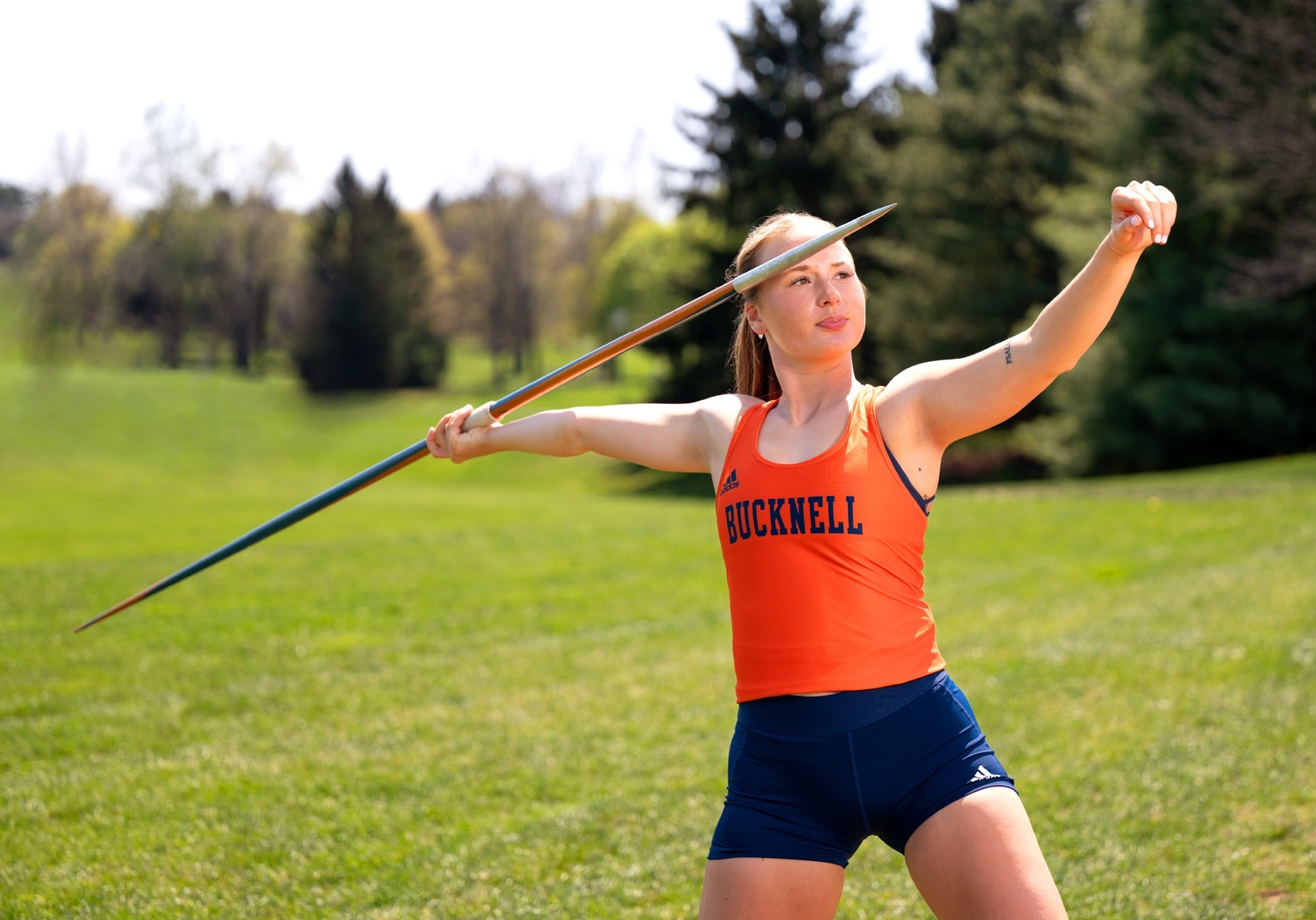
When a serious ACL injury sidelined Madelyn Hudak ’27, the javelin enabled her to reclaim her athletic identity.
Thrown Together
by BRYAN WENDELL
IN TEAM SPORTS like basketball or softball, camaraderie is baked in. Nothing unites a group like a timeout huddle or a dugout cheer after a big comeback.
Madelyn Hudak ’27 thrived in that “we’re all in this together” environment as a basketball and softball player in high school in Portage, Pa. But when she tore her ACL during her junior year, she began to question her athletic identity. As she faced ACL reconstruction surgery and nearly 10 months of rehabilitation, everything suddenly felt uncertain.
“I became very insecure in my abilities,” she says. “I just wasn’t the same athlete anymore.”
Now it was time for Hudak’s big comeback — but it would be in a completely different sport: javelin.
Throwing a 1.3-pound javelin (about the weight of a basketball) wasn’t easy. “I had horrible technique,” Hudak says of her first attempts. “It was just more of: Am I throwing it farther each time?”
Unlike in basketball or softball, where every play is a shared effort, javelin gave her full control over her progress. She saw how much she was improving — down to the inch — and trained with her dad, a track coach, to push her distances.
Despite starting years later than most javelin throwers, Hudak threw far enough to catch the attention of Bucknell’s coaching staff — to her surprise. “I didn’t have much confidence,” she says. “I kept telling myself, ‘I’m not a javelin thrower.’ ”
But her coaches saw things differently — her raw ability made her highly coachable, an athlete with potential.
At Bucknell, Hudak quickly found the support she needed to boost her confidence. “A lot of my insecurities went away because of my new teammates and coach,” she says. She discovered that track and field could feel like a family — just a bigger one than she’s ever known. Bucknell’s women’s track and field team has about 85 members.
Looking forward, Hudak hopes to make the Patriot League Championships and eventually throw at the NCAA Regional Championships. A biomedical engineering major, she’s considering law school to assist doctors in patenting prosthetics for elite athletes.
“I want to make the most of every opportunity,” she says. “I want to be proud of where I’m going next.”
INSTANT REPLAY
AN UNEXPECTED JOURNEY
I never imagined myself as a Division I track athlete. But being an athlete has always been a core part of who I am. I’m thrilled to compete at a high level — even in a sport I never planned to pursue.
THE POWER OF A SMILE
My coach always tells me to smile because I get really uptight before I throw, and that makes all my muscles tight. If I smile, it helps to put me at ease so I can perform better.
THROW
I was building up, hitting all my steps, and as soon as I hit my block and got my hips through, it just felt so good. It kind of validates everything that you’ve put into it.
Photos: James T. Giffen
BRADLEY DAVIS ’05
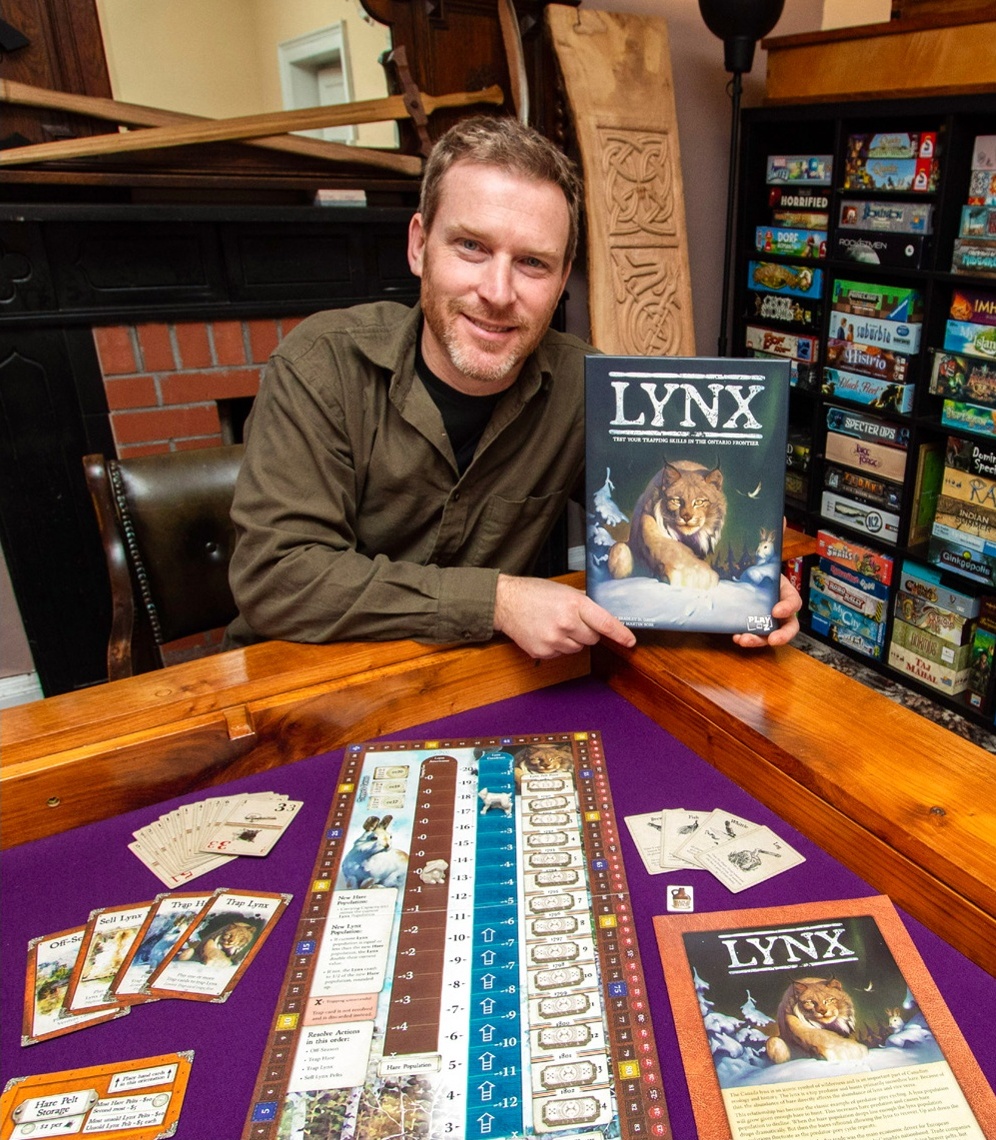
During the pandemic, board games surged in popularity as people sought ways to connect with each other at home. Bradley Davis ’05 saw an opportunity. Blending his lifelong love of board games with insights from his animal behavior studies at Bucknell, he pitched a game concept to a publisher in 2022. Lynx immerses players in an 18th-century fur-trapping society, layering historical, economic and ecological themes. “Bucknell helped me think about things from different perspectives, which is crucial in game design,” he says. His journey shows that childhood passions can grow with you. — Katie Neitz
1 The core gameplay of Lynx is:
A. Cooperative play: Players work together with a shared goal.
B. Social deduction: Players must figure out who among them is secretly working against the group.
C. Simultaneous action: Players choose their actions at the same time.
D. Point-to-point movement: Players move along a path dictated by dice rolls or card draws.
“With simultaneous action selection, there is no downtime — players don’t take turns,” Davis says. “I like that because everyone is active in the game at the same time. This also means your strategy is based on what other people are doing, which I think makes for a better experience.”
2 The hardest part of selling Lynx to publishers:
A. The board game market was in a downturn.
B. The game is complicated with a lengthy rulebook.
C. The game lacks variability and feels predictable.
D. The focus on the fur trade.
“Some publishers were uncomfortable with the theme,” Davis says. “That’s why the historical context is so important. It’s not about an activity that is part of modern society. But fur trapping was part of the Canadian economy from the early 1600s through the mid-1800s. The ecological concept of predator-prey cycling is the heart of the game, and the fur trade theme became integral.”
3 Board games should take how long to play?
A. 15 to 20 minutes
B. 30 to 45 minutes
C. 60 to 90 minutes
D. Two to three hours
“Part of game design is keeping the players invested,” Davis says. “If the game is too long, someone’s interest will fade, and they won’t want to play anymore. But if you make the game too short, you won’t have enough time to build a compelling story arc. It’s also important to have time for players who start off poorly to rebound and have a chance to win.”
4 My favorite board game of all time is:
A. Azul
C. Blokus
C. Clank!
D. Dominant Species
“Asking me to pick my favorite board game is like asking me to pick my favorite child,” says the father of three. “I can’t.”
5 The greatest joy of this experience has been:
A. Seeing people play Lynx in Germany at SPIEL, the world’s biggest board game convention.
B. Testing the game with my kids.
C. Creating something that brings people together.
D. The affirmation of many years of effort.
E. All of the above.
“SPIEL draws tens of thousands of game designers, publishers and fans,” he says. “It was exciting to see people experience Lynx. The board game community is one of the most welcoming I know. Board games give us something screen-based games can’t: a real human connection and the tactile experience of moving pieces around a board while sitting together.”
Photo: Courtesy of Bradley Davis ’05
The Misunderstood Mammal
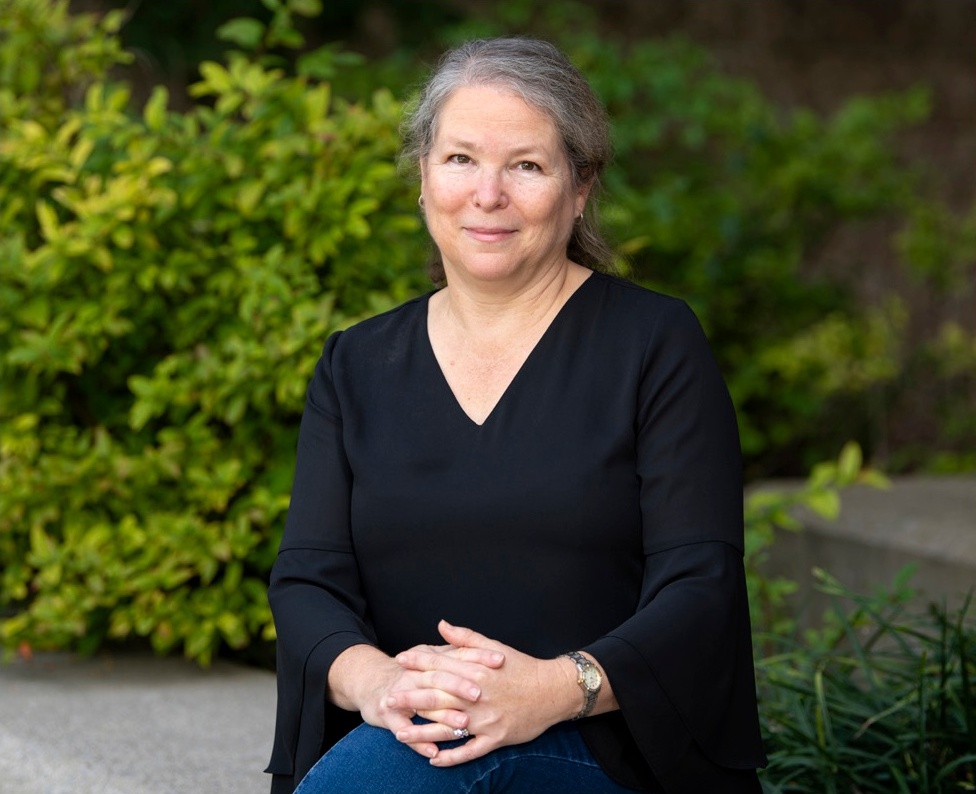
They’re not villains or vermin. Professor DeeAnn Reeder P’16 wants you to see bats for what they really are: extraordinary.
by MATT JONES
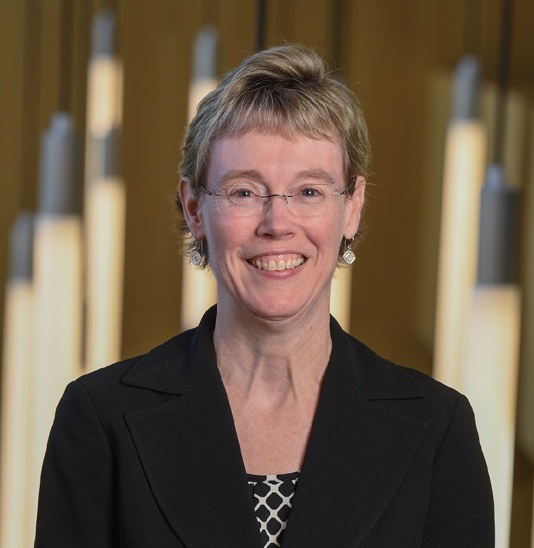
B ats get kind of a bad rap. From their folkloric associations with vampires and their mythological roots as tricksters, to their reputations as carriers of deadly diseases, these winged mammals tend to be seen as either pests or threats. There is perhaps no one who understands this better than Professor DeeAnn Reeder P’16, biology, a world-renowned expert on bat biodiversity, pathogens and diseases. In her new book, The Lives of Bats: A Natural History, Reeder constructs a comprehensive profile that reveals novel insights and dispels misconceptions about an often misunderstood mammal. Here are a dozen insights about the author and her favorite subject.
Bats Are One of the Most Diverse Mammals on Earth
With over 1,400 species, bats make up nearly 20% of all mammal species worldwide. They range from the tiny bumblebee bat, which weighs less than a penny, to the flying fox (aka fruit bat), which can have a wingspan of over five feet.
They Play a Critical Role in Ecosystems
Bats are nature’s pest control, consuming thousands of insects per night, including mosquitoes and crop pests. Some species are also pollinators, transferring pollen as they feed on nectar.
Bats Get Blamed for Disease, But They’re Not the Problem
Bats can carry viruses, but they don’t cause outbreaks. Reeder emphasizes that disease spillover is a human-driven issue. When bat habitats are destroyed, they come into closer contact with humans, increasing the risk of disease transmission. Protecting their environments is actually a preventative measure against future pandemics.
Their Immune Systems Are Extraordinary
Bats have exceptionally strong immune systems, allowing them to carry viruses like coronaviruses and rabies without getting sick. Scientists, including Reeder and her frequent collaborator, Professor Ken Field, biology, are studying their immune systems to better understand disease resistance in humans.
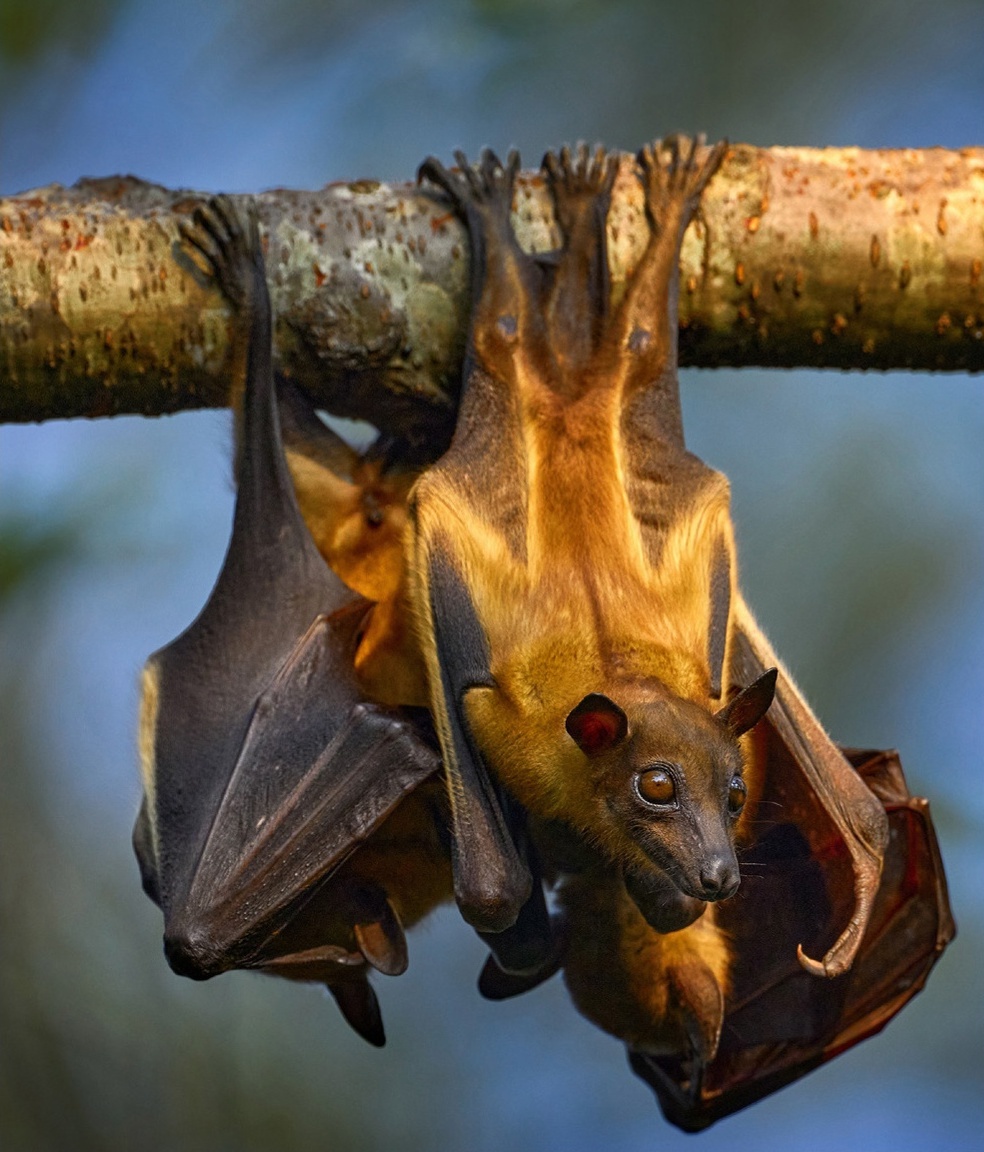
A pallid bat takes a drink mid-flight at night in Arizona (top); straw-colored fruit bats roost in a Ugandan tree (above); Professor DeeAnn Reeder P’16, biology (below).
Myths About Bats Are Everywhere — Even in Photography
While writing her book, Reeder discovered that many commercial and stock photos of bats were either photo-shopped or mislabeled. She worked closely with a photo researcher to ensure that every bat species in her book was correctly identified.
Bat Conservation and Disease Research Can Be at Odds
There’s a tension between researchers who study bat-borne diseases and those focused on bat conservation. Some worry that acknowledging that bats carry certain diseases could lead to fear-driven bat eradication. But Reeder argues that conservation efforts are key to preventing spillover events.
Reeder’s Passion for Bats Began in Costa Rica
Reeder’s fascination began during her undergraduate studies in zoology at the University of California, Berkeley. She had the opportunity to study in Costa Rica — an experience that introduced her to bat field research.
There’s tension between disease research and conservation — but protecting bat habitats is one of the best ways to prevent future pandemics.
Reeder’s Research Has Taken Her Across the Globe
Her work spans both the United States and East Africa, where she studies biodiversity and disease ecology. In South Sudan, she focuses on bat conservation through habitat protection and community outreach.
She’s Invested in Others
She’s committed to mentoring Bucknell student researchers and advancing African scientists’ careers.
She’s Passionate About Public Education
Reeder says she loves engaging with the public, teaching about bats’ ecological value, their biology and the importance of protecting them.
Reeder’s Research Made the Cover of National Geographic
Reeder and Field conducted research on how Ugandan bats carry Ebola without falling ill. Their work was featured on the cover of National Geographic in August 2024, further cementing her reputation as a leading expert.
Her Book Brings Cutting-Edge Science to the Public
Unlike her technical books, The Lives of Bats is meant for a general audience. It incorporates the work of hundreds of papers and presents the scientific insights in an accessible way, making it one of the most comprehensive books on bats available today.
Photos: Steve Gettle, Nature Picture Library; Ondrej Prosicky; Emily Paine
EXPLORATIONS
Access Granted
Technology is embedded in nearly every aspect of our daily lives. But Bucknell researchers wonder: Is it built for everyone?
by MATT JONES
photography by EMILY PAINE and JAMES T. GIFFEN
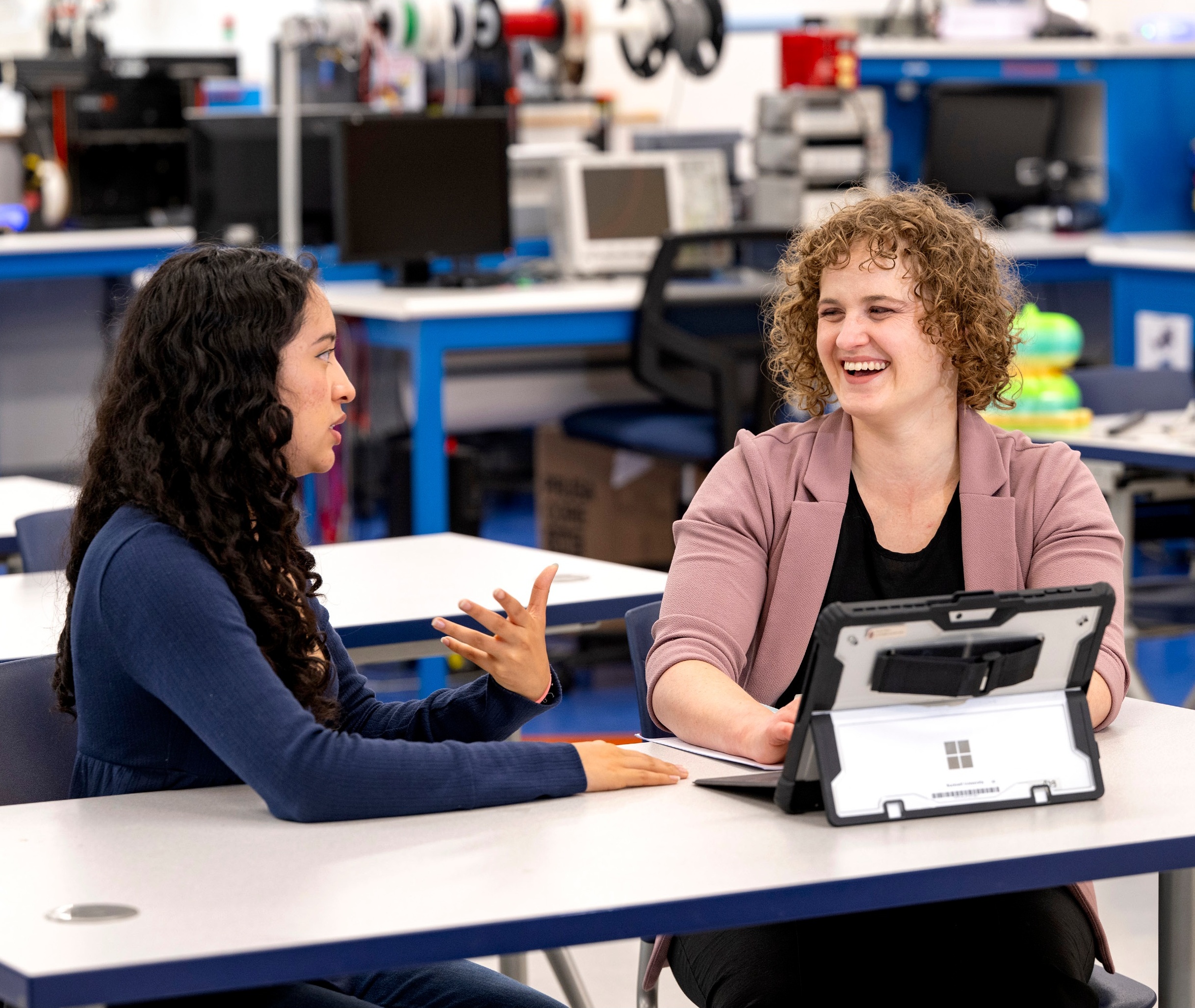
Aura Chuck Hernandez ’27 (left) and Professor Annie Ross team up to make websites and digital devices more accessible.
L ife in the 21st century means that the world — and all it has to offer — is at your fingertips. Pull up a web browser on your phone and find answers to burning questions in a matter of seconds, or fill a virtual cart full of groceries from your laptop and wait for them to be delivered to your front door. In less than half a century, the internet has given most people on Earth quick access to almost anything they can imagine. Now, Bucknell professors and student researchers are working to ensure that an increasingly digitized world is also one that advances accessibility.
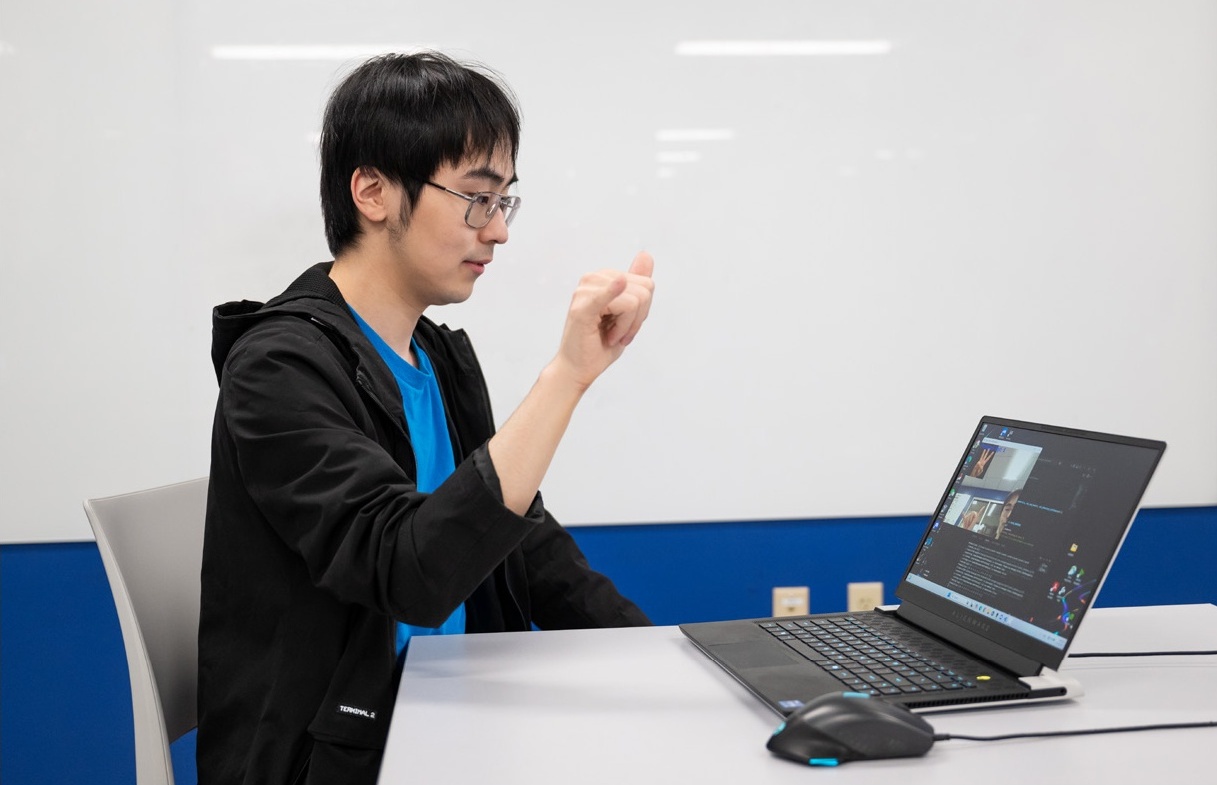
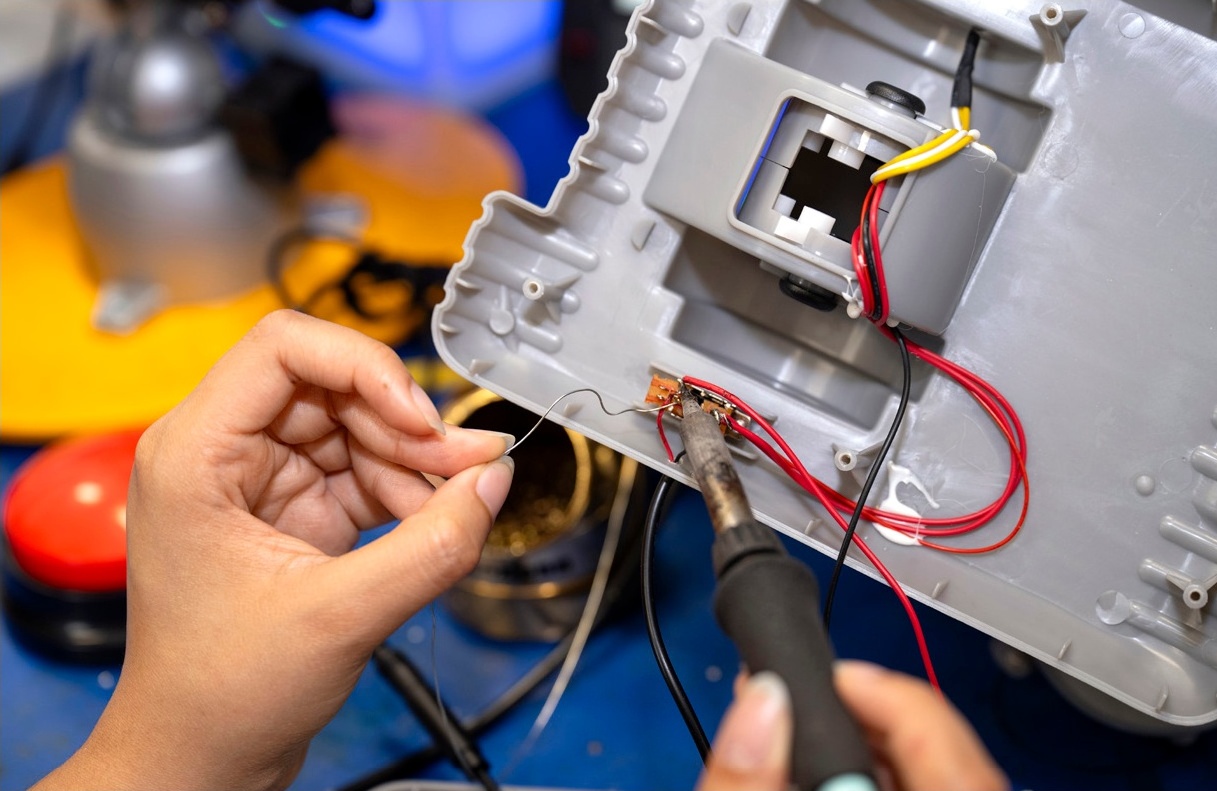
Tiduo “Titus” Weng ‘26 (above) developed a camera-based program that translates Chinese Sign Language into American Sign Language. Modifying hardware (below) is just one step Professor Annie Ross and her students take to improve accessibility.
Enhancing Digital Accessibility
Professor Annie Ross, computer science, specializes in human-computer interaction and accessibility for people with disabilities. Her research explores what makes technology accessible — or not — by examining the tools we use, the broader digital culture and legal frameworks that shape accessibility. Since Ross arrived at Bucknell in 2021, she and her students have examined how small, local businesses can make their digital presence more accessible.
While access refers to the ease with which digital content can be located, Ross says accessibility ensures that digital content and technology can be effectively used and understood by people of all abilities.
“I helped conduct accessibility audits for small businesses in the Susquehanna Valley,” says Aura Chuck Hernandez ’27, a computer science and English — literary studies double-major and Bucknell Community Engagement Scholar from Pittsburgh.
As a Bucknell-Boulder Just Tech Computing Fellow — a program that connects researchers with the Mozilla Foundation to explore the intersection of civic engagement and technology — she partnered with Ross and Bucknell’s Small Business Development Center to work with local businesses to achieve two goals: to figure out how to make their websites and e-commerce stores more accessible and to better understand barriers to improving accessibility.
Chuck Hernandez consulted with area business owners about their websites and offered digital solutions. The results of their research, which were presented at the Susquehanna Valley Undergraduate Research Symposium in 2024, provided some encouraging insights.
“Business owners saw better SEO and higher sales with more navigable and accessible websites,” says Chuck Hernandez. “They also gained confidence in using evolving technologies.”
“I want to contribute to making a more accessible world, and I think what I’m learning will help me do it.”
TIDUO “TITUS” WENG ’26
Bridging Language Barriers
Student researchers are also exploring how novel technologies can be used to enhance accessibility offline. Tiduo “Titus” Weng ’26, computer science & engineering, is developing a program that translates Chinese Sign Language into American Sign Language using extended reality (XR) technology.
“We use cameras and a machine learning framework to capture hand gestures and extract them into 3D points that are then stored as CSV files,” says Weng, who has been working with Professor SingChun Lee, computer science.
Unlike some XR programs that require users to purchase or wear a special glove, Weng’s approach uses only a camera, which makes the technology more accessible.
Weng says he hopes to integrate this data into XR platforms to enable real-time sign language translation through VR glasses or headsets. He sees existing facial recognition technology as a strong indication that this innovation is possible. “I want to contribute to making a more accessible world, and I think what I’m learning can help me do it,” he says.
FEATURES
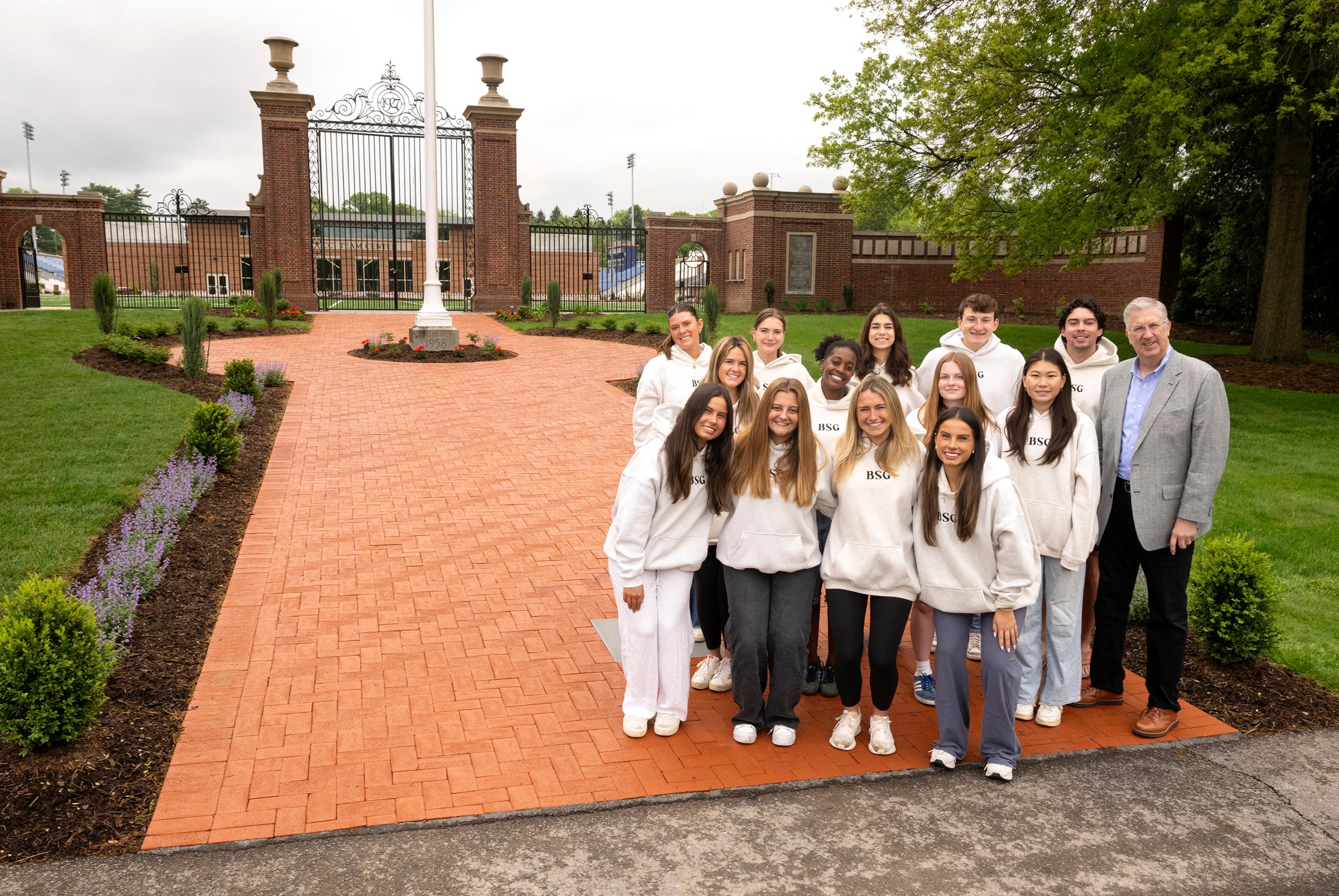
PAVING THE WAY SENIORS GIFTED BUCKNELL A NEW BRICK PATHWAY. SEE THE BACK COVER FOR DETAILS.
photograph by JAMES T. GIFFEN
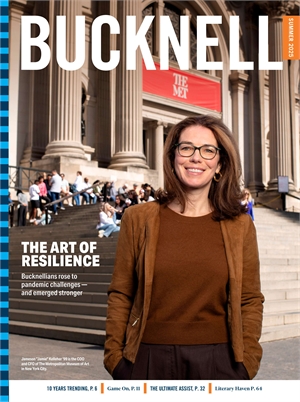
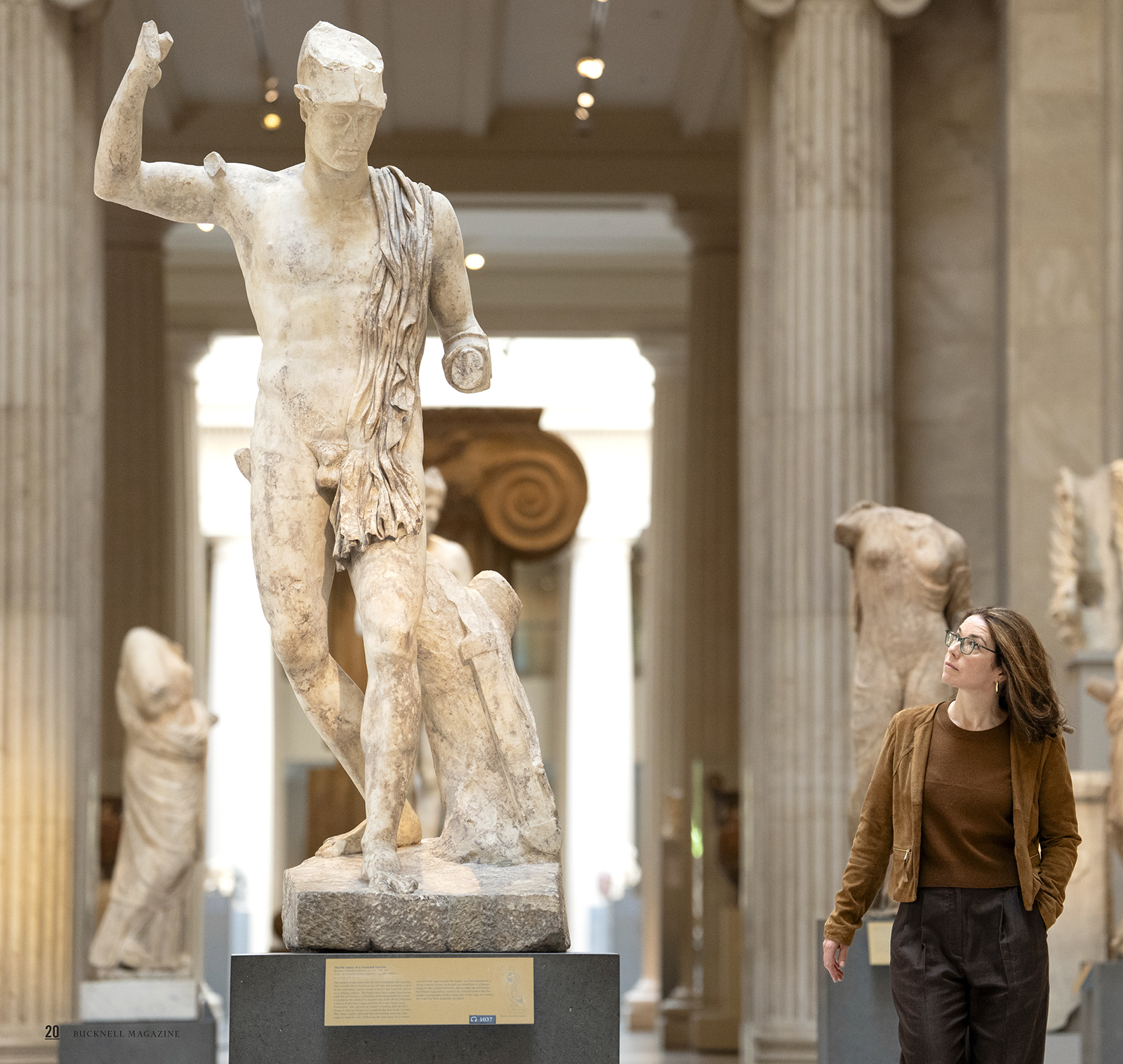
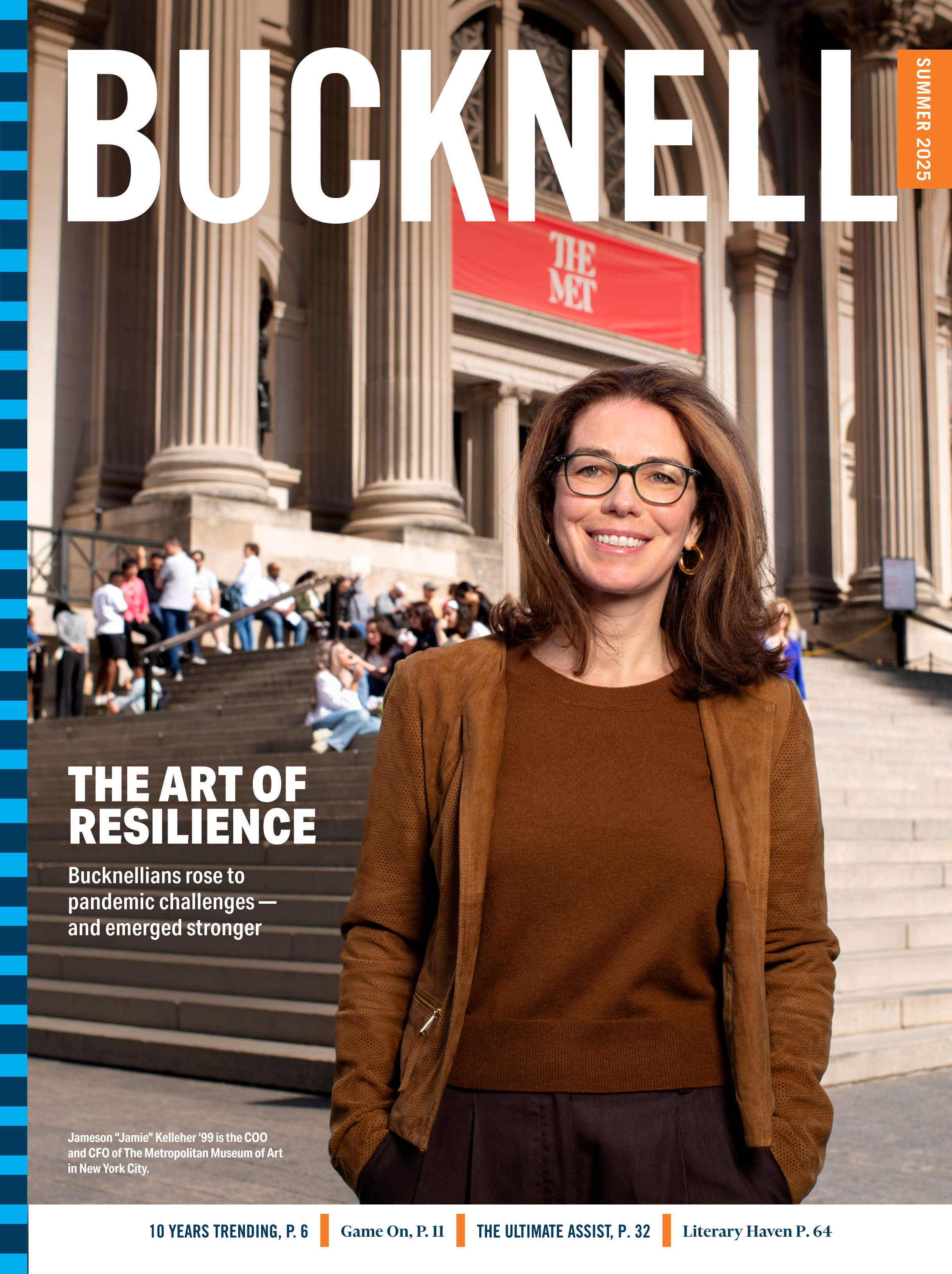
Jameson “Jamie” Kelleher ’99 helped guide The Met through pandemic challenges.
Five Years Later
COVID-19 CHANGED EVERYTHING. NOW, BUCKNELL ALUMNI ACROSS INDUSTRIES REFLECT ON HOW THEIR WORK — AND THEIR WORLDS — WERE TRANSFORMED.
illustrations by JIM TSINGANOS
In March 2020, the world hit pause. The COVID-19 pandemic upended daily life, disrupting every industry and reshaping routines overnight. Now, five years on, we revisit that turning point through the eyes of five Bucknellians. Together, these personal narratives reveal how a time of global uncertainty became a proving ground for leadership, empathy and transformation — and how Bucknellians continue to shape a future still unfolding.
Jameson ”Jamie” Kelleher ’99 walks through The Met, where she worked to help the museum expand digital programs and strengthen community connections.
Art & Culture: Reimagining Museums for a Postpandemic World
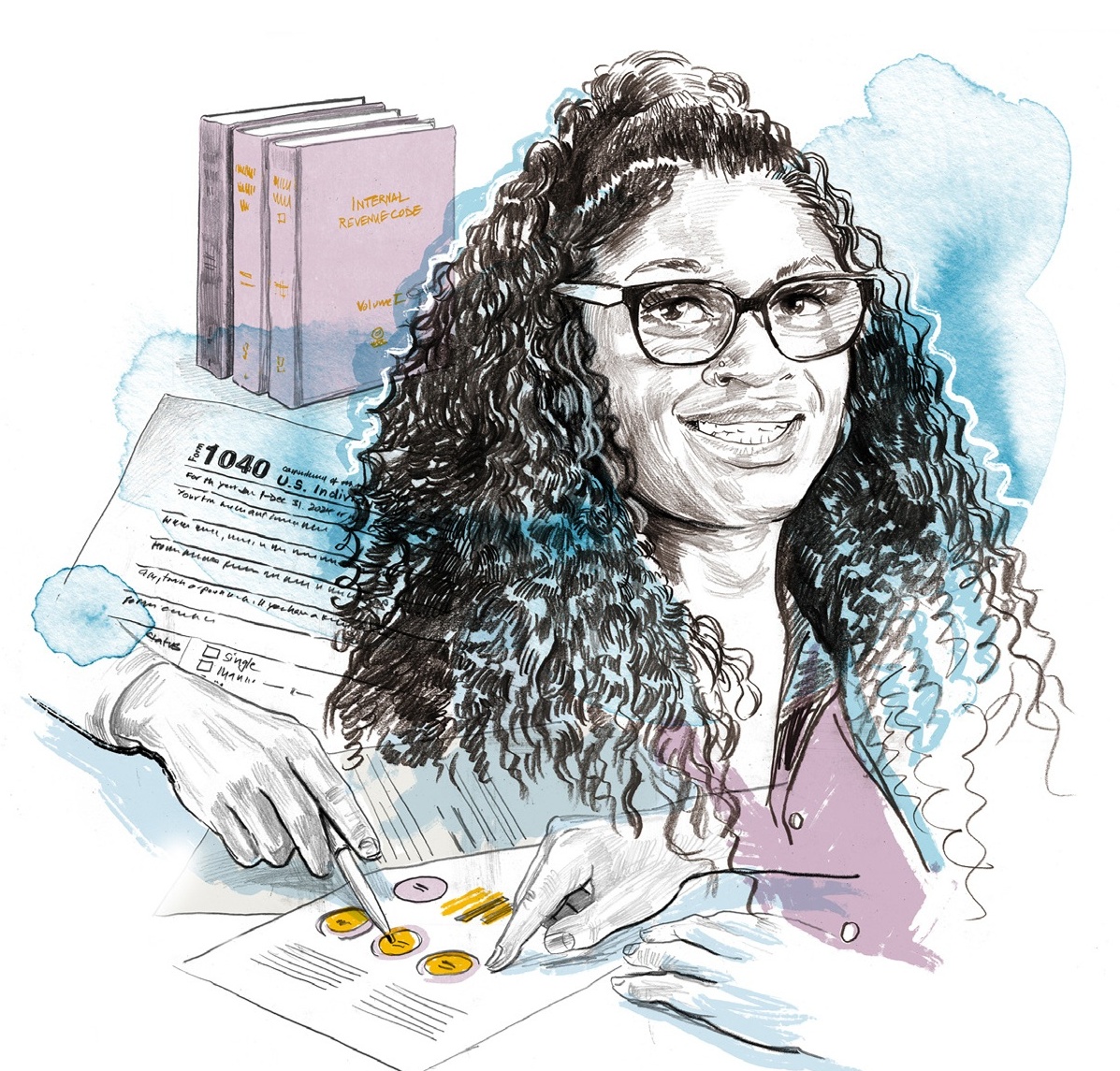
by JAMESON “JAMIE” KELLEHER ’99, CHIEF OPERATIONS OFFICER AND CHIEF FINANCIAL OFFICER, THE METROPOLITAN MUSEUM OF ART, NEW YORK CITY
When The Met finally reopened in August 2020 after five months of closure, the first visitor to walk through the door, masked and with arms outstretched, joyfully exclaimed, “It’s open! We’re back!”
This moment perfectly captured the overwhelming gratitude and relief felt by so many visitors and The Met team and, of course, by me. In the days and months to follow, the museum welcomed thousands of New Yorkers back into its galleries, where they could find community, heal through art, and — perhaps most importantly — find hope during an exceptionally challenging time.
While the rest of the world was shut down, I was fortunate to occasionally spend time in the museum. There, I witnessed the steady hum of essential frontline staff who kept the institution going, because a place like this never truly closes.
On any given day, a few hundred staff members, including security, building and collection care staff, worked around the clock to keep the facilities running and the art safe. Working alongside them filled me with hope and personal resolve that this period would someday end.
The pandemic brought dramatic changes to the museum, many of which persist today. We invested in digital and virtual programs to reach audiences who couldn’t visit in person. Virtual tours, online exhibitions and interactive programs help us stay connected to loyal visitors while reaching new audiences worldwide. These efforts have made The Met stronger than it was before the pandemic, thanks to the commitment and agility of our staff and community.
As we reopened and adjusted to a shifting world, we renewed our focus on local engagement. Community outreach programs, local partnerships, special events, artist collaborations and educational workshops have only gained strength in the years following the pandemic, deepening our connections with our neighbors. Today, a higher percentage of our visitors than ever before are New Yorkers — a sign of how much we need our city and how much our city needs us.
“The pandemic reminded me that art sustains communities during difficult periods.”
Five years later, I carry many lessons from that time. The pandemic reminded me that art sustains communities during difficult periods, technology is essential to bring stories and art to people who cannot travel to museums, and nothing is possible without investing in your people.
We continue to build on that foundation by improving galleries, visitor services and the staff experience while exploring new technologies.
To use the words of one of our building managers when asked if our HVAC system and airflow would protect us against COVID-19: “The museum’s air is better than hospital grade. It turns out what’s good for art is good for people!” This motto holds true on so many levels, and it’s a lesson I’ll never forget.
Tejal Raichura ’09 played a key role in scaling telemedicine, turning a niche service into a vital care option.
Telehealth Innovation: Expanding Access, One Virtual Visit at a Time
by TEJAL RAICHURA ’09, DIRECTOR OF TELEMEDICINE, CHILDREN’S NATIONAL HOSPITAL, WASHINGTON, D.C.
In 2017, I was managing the innovations and research team at Geisinger, focusing on expanding telehealth when adoption of telemedicine was still less than 1%. We saw the potential for growth — though we could never have predicted what was coming.
Before the pandemic, Medicare and private insurers limited telehealth, allowing billing only in rural regions. Urban patients faced barriers because insurers weren’t required to reimburse virtual visits. In Pennsylvania, lack of payment parity meant virtual care was often under-reimbursed — or not covered at all.
Still, we pushed ahead. Between 2018 and 2020, we recruited providers from outside Pennsylvania to reduce wait times for high-demand specialties. Geisinger, with its own health plan, had the flexibility to experiment with care models that prioritized outcomes over billing. For example, we worked with surgeons to replace certain post-surgery follow-ups with virtual visits. Patients recovering from knee replacements still needed in-person incision checks, but later follow-ups could be conducted remotely when appropriate.
By early 2020, adoption was growing slowly. In February, recognizing the looming crisis, we prepared our behavioral health teams for a shift to virtual. When lockdowns hit, our eight-person team trained 2,000 clinicians in two weeks. Virtual visits jumped from 1% to nearly 60%.
The sudden shift required rapid problem-solving. We streamlined appointment reminders, embedded telehealth links into the scheduling process and provided technical support to patients. We tracked emergency policy changes to adapt in real time.
Despite the chaos, our preparation paid off. Prepandemic, we consolidated multiple telehealth platforms into one system integrated with the electronic medical record. This foresight allowed us to scale quickly, handling tens of thousands of virtual visits per month. Patient satisfaction surveys revealed unexpected benefits — some patients, especially those with anxiety or mobility challenges, preferred virtual care. While telehealth usage declined post-pandemic, we aimed to stabilize at a sustainable level.
Now at Children’s National in Washington, D.C., I see a similar trend. Most health systems have settled into a 10–20% telehealth rate. At Children’s National, we’ve embraced telehealth in creative ways, like equipping over 200 schools with telehealth carts so school nurses can connect students with providers for immediate care, reducing absences and ensuring timely treatment.
A top priority is bridging the digital divide. Digital health must address real-world obstacles, from weak rural service to spotty urban reception. The future of telehealth depends on balancing innovation with accessibility. By listening to both patients and providers, we can refine virtual care models to be not only convenient but accessible for all.
Chris Mosunic ’94 is expanding access to mental health support, guiding people toward calm in turbulent times.
Mental Health & Wellness: The Rise of Digital Care
by CHRIS MOSUNIC ’94, CHIEF CLINICAL OFFICER, CALM, SAN FRANCISCO
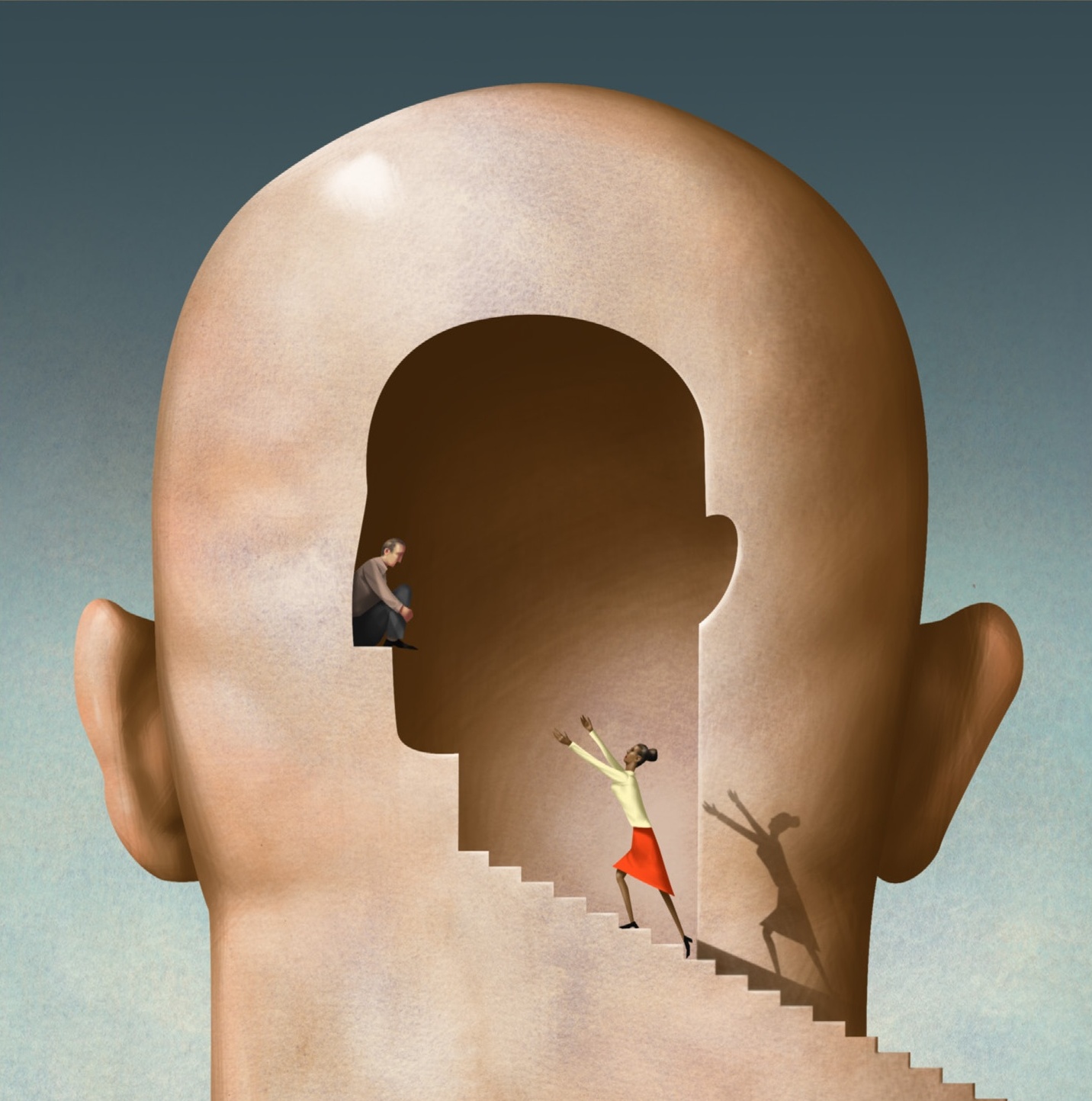
When COVID-19 struck, the world changed, and our mental health was pushed to its limits. Uncertainty, isolation and loss triggered a global surge in anxiety and exhaustion. As in-person support became harder to access, digital tools stepped in, not as a distraction, but as a lifeline.
I remember one evening in March 2020 — my phone buzzed nonstop. At the time, I worked at Vida Health, a health care platform, and demand for our virtual therapists skyrocketed. Our app downloads suddenly doubled daily. It was a tangible reflection of the collective struggle.
Soon after, I attended a virtual conference where an executive from Calm shared how thousands of people were finding solace in the app’s guided meditations and sleep stories — soothing, narrated bedtime stories designed to help listeners fall asleep. The scale of impact resonated with me, and I joined Calm soon after.
Like many, I experienced my own disorientation and anxiety. The sudden shift to remote work, the relentless news cycle and the social isolation took a toll. I turned to Calm’s tools myself, using sleep stories to quiet my racing mind and the daily meditations to stay grounded. It wasn’t just professional; it was personal.
The pandemic didn’t just create new mental health challenges; it exposed gaps in our care systems, particularly in underserved communities. Nearly half of U.S. counties lack a single in-person psychologist, and for the 129 million Americans with chronic conditions, mental health is often overlooked. Digital tools have helped close these gaps, bringing support to people who had none.
Workplace mental health has also evolved. What started as a crisis response became a long-term strategy. Employers initially sought quick relief for stressed employees, but digital tools have since become core benefits.
Today, Calm partners with more than 3,500 organizations and has launched Calm Health, available to over 15 million people for free. It offers evidence-based, personalized support and helps improve engagement with existing resources.
Another shift is our relationship with sleep. Before the pandemic, hustle culture downplayed rest. But the global pause prompted people to reevaluate. Sleep hygiene became a mainstream wellness focus, and Calm’s sleep content saw massive growth — today, more than half of our users rely on it.
Looking ahead, I believe mental health care is becoming as expected as physical health care. Digital tools won’t replace therapy, but they’ll complement it — expanding access, reducing stigma and enabling early intervention. The opportunity is to ensure these tools remain trusted, effective and human centered.
What excites me is the potential to democratize mental health care, making it accessible to anyone, anywhere. I envision a future where seeking help is as routine as going to the dentist and where technology helps us build a more resilient, mentally healthy world.
Katherine Black ’90 supported her campus through rapid change and recovery.
Higher Education: Resilience & Reinvention in Academia
by KATHERINE BLACK ’90, PROVOST AND VICE PRESIDENT FOR ACADEMIC AFFAIRS; UNIVERSITY OF HARTFORD, CONN.
Like most industries, higher education was forced to convert to online work almost overnight in March 2020. Some faculty, staff and students lacked the technology needed at home, and many faculty were not prepared to teach fully online. Universities drew on emergency funds to purchase laptops and video platform licenses, while massive training efforts helped upskill faculty and staff.
At the same time, many juggled illness, caregiving responsibilities and makeshift workspaces. A colleague described the stress and exhaustion of teaching online while helping her young children learn remotely, all from the dining room table. She said the pandemic reinforced her desire to be both a professor and a mom, just not simultaneously.
By fall, as campuses reopened, new problems arose. Social distancing reduced classroom capacity. Enter hybrid learning, where half the class attended in person and half remotely. Absenteeism and disengagement increased. Student life was not much better, with most extracurricular activities paused.
Universities reviewed medical accommodations, tracked vaccinations, swabbed students’ noses and set up quarantine spaces. It was a relief when case numbers dropped and campuses fully reopened.
Still, the fallout lingers. Faculty and staff experienced significant burnout, and some left the profession. Students lost valuable academic and interpersonal opportunities, which impacted their learning. As we emerged from the pandemic, we were slow to re-engage with each other. Some students delayed or abandoned college, and institutions are still trying to recruit them back. Meanwhile, millions of K-12 students experienced learning gaps they now carry into college.
On the plus side, higher education proved more agile than expected. Some faculty who had never taught online found they enjoyed it, leading to an expansion of virtual programs. Video conferencing has made collaborating easier. The pandemic also heightened awareness of global health disparities, prompting universities to prioritize equity and inclusion.
As mental health concerns rose, universities responded with expanded programming and more counselors. At my university, we provide intentional education on mental health awareness and suicide prevention, and Teddy the Comfort Dog has become a well-loved presence.
Ironically, after five years of avoiding the virus, I contracted COVID-19 while writing this essay. Just as personal recovery isn’t linear, higher education’s path forward will have triumphs and setbacks. But the pandemic taught us to focus on what is really important. The value of higher education to individuals’ development and the public good is unquestionable. Higher education plays a critical role in helping us engage with, understand and learn from each other.
Arjun Raman ’09 helps agencies and corporations navigate security efforts in a complex digital landscape.
Cybersecurity & Technology: Securing a Distributed Digital Future
by ARJUN RAMAN ’09, CHIEF SCIENTIST, BOOZ ALLEN HAMILTON, AUSTIN, TEXAS
The COVID-19 pandemic was a turning point for organizations across industries and government, fundamentally changing how they operate. As a chief scientist at Booz Allen Hamilton, I have had a front-row seat to these changes. Booz Allen leverages advanced technology to tackle complex cyber and artificial intelligence problems for government agencies and Fortune 500 companies. I lead teams focused on data processing, advanced analytics, security operations and developing cutting-edge cybersecurity infrastructure.
At the pandemic’s onset, we experienced a rapid, dramatic shift. The workforce, once concentrated in secure office environments, became distributed as employees transitioned to remote work. Cyber teams had to adapt to new ways of working with users, customers, assets, networks and data. One major impact was an expanded surface area of the networks and data. Instead of securing a centralized network, we now had to secure a more complex ecosystem of interconnected systems and users.
An example of this challenge was the Log4j library vulnerability, discovered in 2021 as a zero-day exploit, meaning it was an unknown flaw with no immediate fix, leaving systems exposed. This security flaw, which affected millions of Java-based applications, allowed attackers to perform a remote code execution. It underscored the risks of relying on widely adopted software libraries without thoroughly vetting them for vulnerabilities.
The pandemic highlighted how critical it is to not only protect data but to understand it in real time. With a distributed workforce, data became more valuable — and more exposed. The challenge extended beyond volume to visibility: how to distill vast streams of data from users, devices and systems into actionable insights.
This is where data science plays a vital role, powering tools that process, analyze and surface relevant signals for timely decision-making. New frameworks and techniques, such as zero trust, are data driven and built using the principle of “never trust, always verify.” These techniques continuously evaluate users and their behavior, rather than using a one-time validation, before granting access.
Looking ahead, the intersection of cybersecurity and AI will be even more significant. Technologies such as large language models can detect patterns across vast datasets, allowing for faster detection and response and reducing costs. However, they also bring new risks as adversaries learn to leverage the same tools.
Ultimately, the pandemic revealed just how interconnected — and vulnerable — our systems have become. Security is not just about recognizing evolving threats; it’s about anticipating and preparing for them. That’s how organizations can build trust, maintain continuity and accelerate their missions in an increasingly digital world.
Photos: Barry Williams (2); Amrith Krushnakumaar; Courtesy of Chris Mosunic ’94; Jon Olson; Courtesy of Booz Allen Hamilton
WHERE THEY GO FROM HERE
THEIR BUCKNELL JOURNEY PREPARED THEM FOR WHAT’S NEXT — AND WHAT’S POSSIBLE
For Bucknell graduates, the path to an exciting future is shaped by the experiences of their four years on campus. As they step into meaningful careers and top graduate programs, these new alumni reflect on what made Bucknell the launching pad for their next chapter.
by KATE WILLIARD
illustrations by JULIAN RENTZSCH
SETTING SAIL
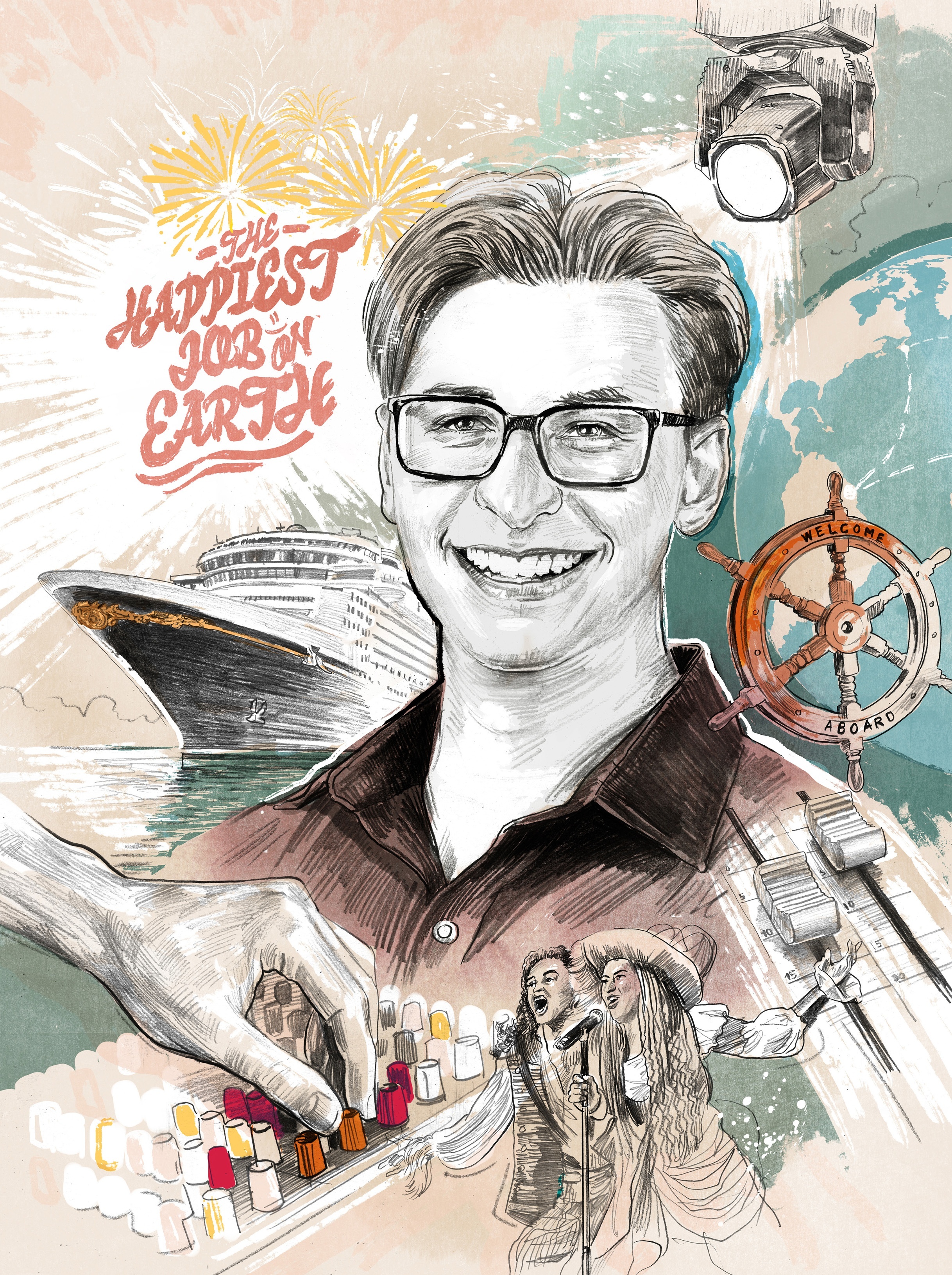
JOE DOX ’25
& ldquo;I’m excited to work for Disney because their product is what they do: create artistic entertainment heavily supported by state-of-the-art technology and stories that are uniquely Disney.”
For Joe Dox ’25, the connection between art and technology has always been clear. “From a young age, I’ve been captivated by how things function behind the scenes,” he says. “How technology works to create moments that feel like magic but in reality are created by a complex system hidden from view.” He majored in computer engineering and minored in design & technology in the theatre department, blending precision with creativity. “Whether working on the circuitry behind stage lighting or fine-tuning the acoustics of a sound system, I’ve discovered a career path that lets me live at the intersection of logic and imagination.”
Dox is setting sail on a Disney cruise ship as a general technician, setting up, operating and striking audio, video, lighting and other technical systems for ship-based and island events. As part of a team of technicians, he delivers the Disney magic to various theatrical entertainment and dining experiences, fireworks displays and theme nights.
Bucknell prepared Dox well for the role. “The academic flexibility allowed me to pinpoint the technical side of the live entertainment industry as the next step for my career,” he says. “I took courses like Lighting Design and an independent study in Advanced Sound Design, worked as a stage electrician and gained entertainment technical experience.”
With support from Bucknell’s Center for Career Advancement, Dox explored off-campus opportunities. A 2023 trip to the United States Institute for Theatre Technology conference confirmed his interest, and he made his first Disney connection at a career day.
“I wouldn’t be pursuing a Disney career without Bucknell’s support,” he says. “Working with exceptional faculty, staff and peers who share my passion for live entertainment technology made it possible for me to go and make magic.”
& ldquo;Coming from a community where education is seen as a privilege, I have been determined to open opportunities for students with similar backgrounds. Bucknell enabled the experiences that opened my possibilities.”
ADVANCING EQUITY
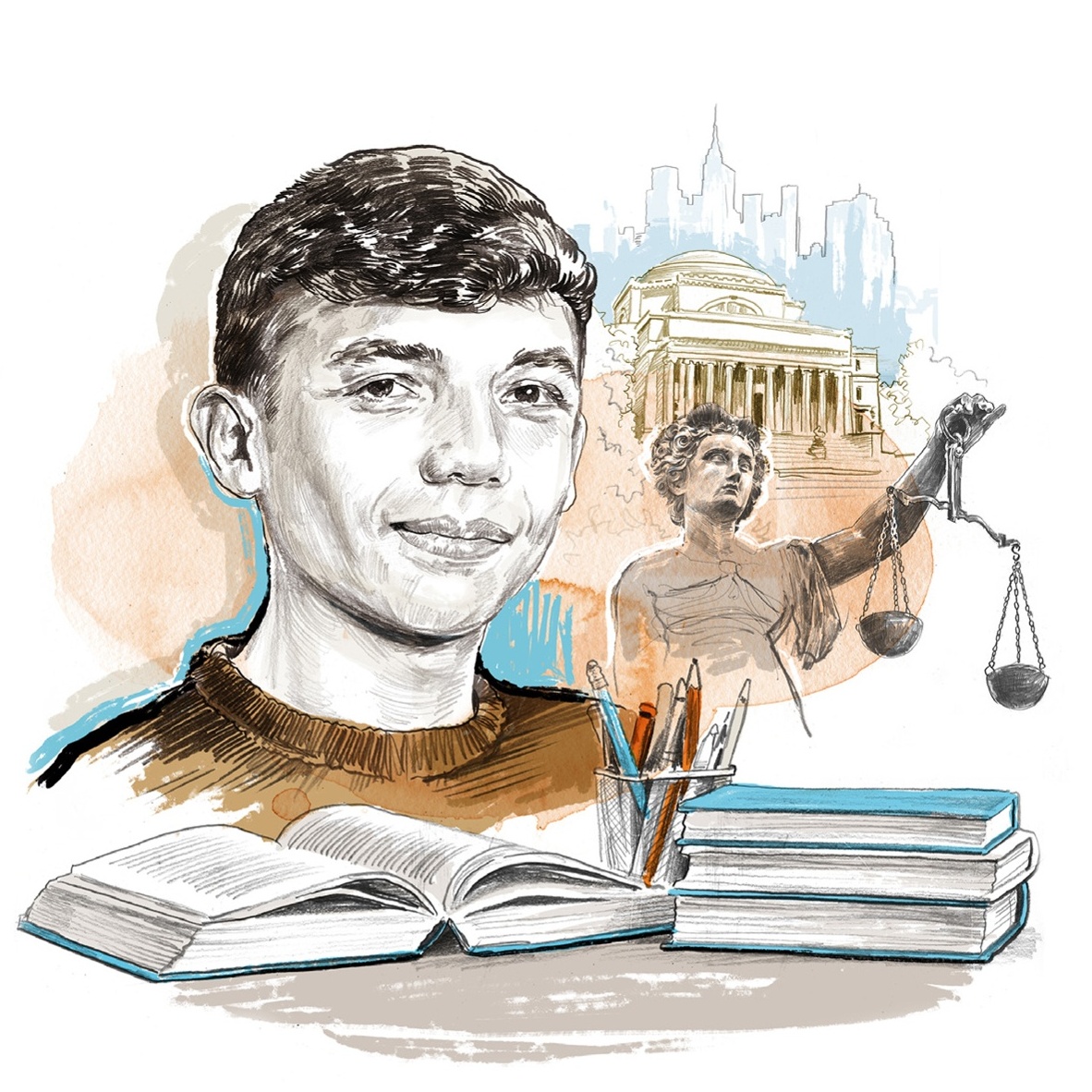
LEONEL “LEO” CASTRO ’25
As a first-generation student from rural South Texas, Leo Castro ’25 chose Bucknell with some trepidation. “I had no idea then what I was capable of,” he says. “But seeking an education far from home felt essential for my personal growth.”
Now, he’s preparing to help others develop a similar mindset by continuing his education at the Wheelock College of Education & Human Development at Boston University.
At Bucknell, Castro majored in political science and immersed himself in public service. Through the Bucknell Public Interest Program, he interned with Congressman Vicente Gonzalez, working on initiatives for underserved students in Texas, and later with Susquehanna Legal Aid for Adults and Youth, advocating for rural communities in Central Pennsylvania.
While working on his graduate degree, he’s serving as a case manager for Cayuga Centers, helping undocumented minors access education and navigate complex family law cases. “I look forward to helping underserved students reach education as a means to break generational poverty.”
& ldquo;Underwater environments introduce obstacles you just don’t face on land. I’m excited by the problem-solving that comes with overcoming them.”
GOING DEEP
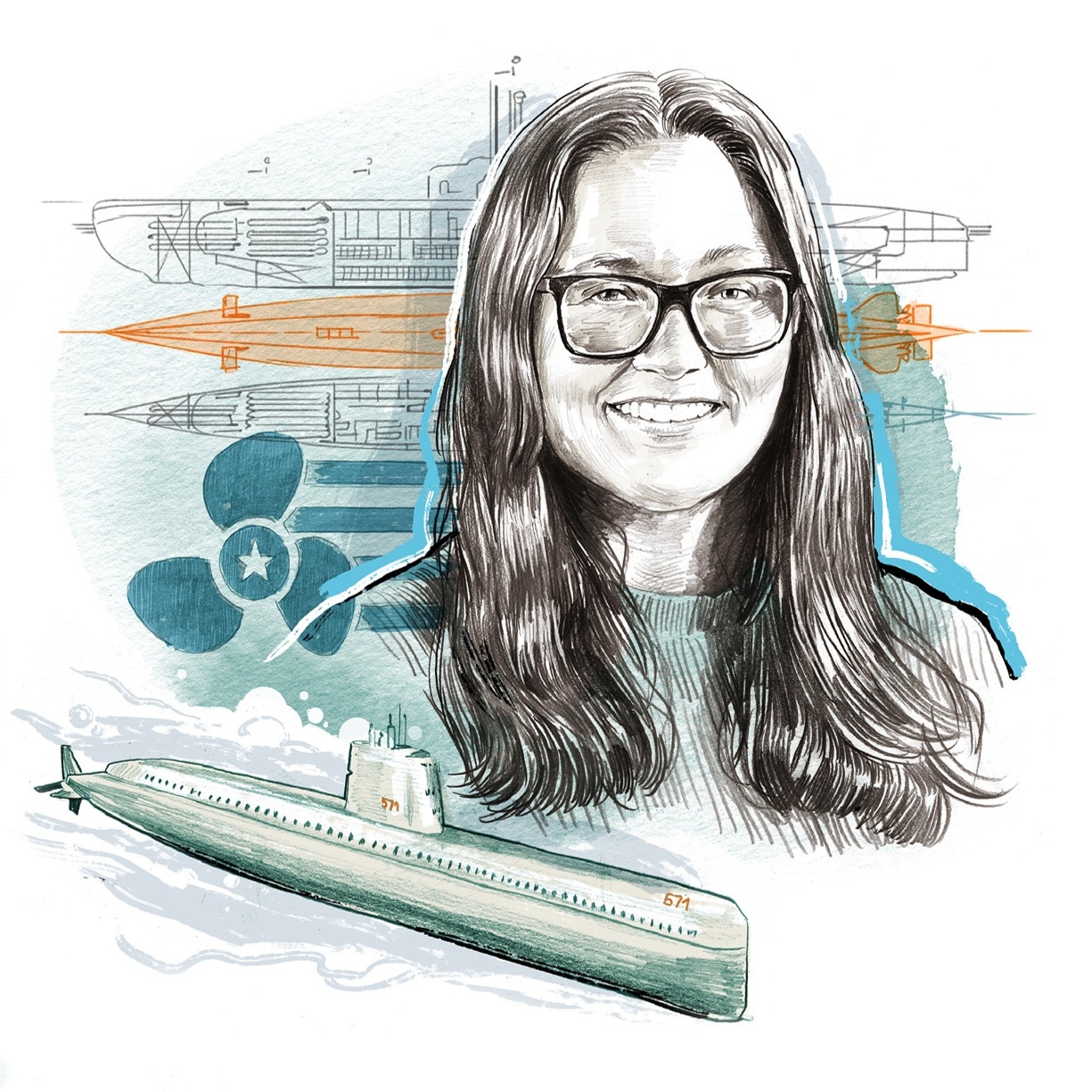
KONA GLENN ’25
Kona Glenn ’25 discovered a passion for undersea engineering during a summer research experience that introduced her to the unique engineering challenges presented by submarines. Now, she’s a combat systems electronics engineer for the U.S. Department of Defense at the Portsmouth Naval Shipyard in Maine, where she’s tasked with modernizing the advanced technical systems on the Navy’s nuclear-powered submarines.
Glenn chose Bucknell for its strong academics and its culture of teamwork. She double-majored in computer science & engineering and mathematics and took part in signature Bucknell experiences like undergraduate research and Senior Design — the College of Engineering’s capstone course — where she learned how to apply classroom learning to real-world problems.
She credits her experience on the women’s rowing team and as a leader on the Student-Athlete Advisory Committee for helping her develop resilience, discipline and leadership — qualities that will serve her well in the military engineering world.
& ldquo;Accounting, with its complex problem-solving and analytical nature, offers the perfect environment to challenge myself and apply my skills on a deeper level.”
CRUNCHING NUMBERS
TAHDAI CREWS-HARRIS ’25
When people face big financial decisions, they need clarity, strategy and someone they can trust. That potential for real-world impact drew Tahdai Crews-Harris ’25 to accounting.
With her degree, Crews-Harris joins Cohn-Reznick Advisory, LLC, in Baltimore as a tax associate, a detail-oriented job that requires both the technical knowledge and strong communication skills Crews-Harris built at Bucknell.
Courses in accounting and data analytics gave her a solid technical foundation, but it was the hands-on roles — as a teaching assistant in the Freeman College of Management and a study group facilitator with the Teaching & Learning Center — that helped her grow as a leader.
“It’s the collective impact of my Bucknell experiences that taught me how to bring that all together to guide others through complex ideas,” says Crews-Harris, who interned with CohnReznick in summer 2024, which led to the full-time offer. “Bucknell gave me the freedom to explore opportunities and prepare for a future I’m excited about.”
& ldquo;In today’s world, access to energy shapes everything from our jobs to our daily interactions. I want to be part of building a more reliable, equitable and sustainable energy future.”
POWERING PROGRESS
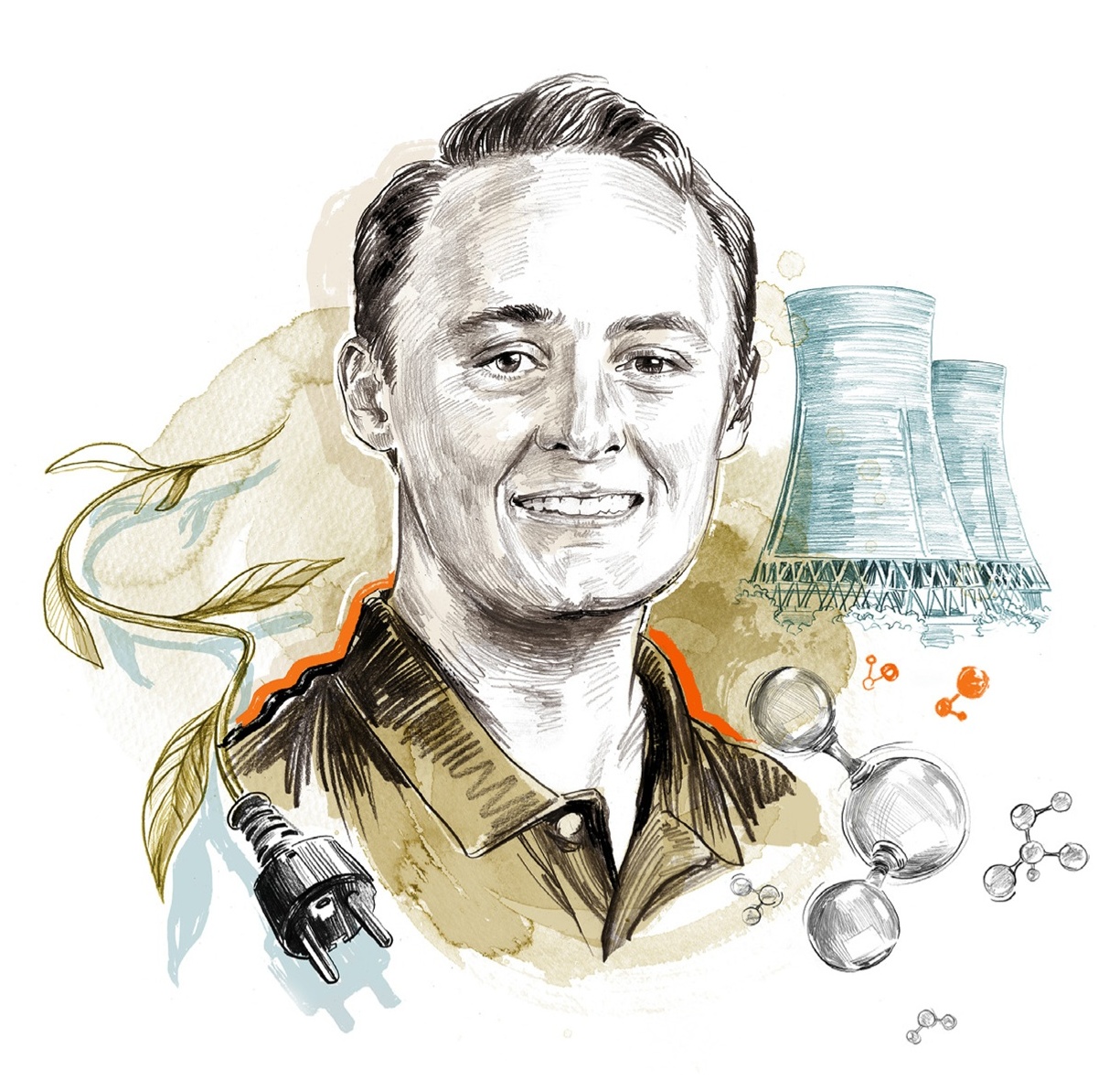
COLTON JIORLE ’25
Tackling the complexities of the global energy landscape demands a wide perspective. Colton Jiorle ’25 brings that mindset to his role as an electrical design engineer with Constellation Energy, where he’s working to recommission Unit 1 at the Three Mile Island facility — now the Crane Clean Energy Center.
A triple-major in electrical engineering, management for engineers and classics & ancient Mediterranean studies, Jiorle credits his broad foundation with shaping his technical skills and his understanding of energy’s social, political and economic dimensions.
“Bucknell makes it easy to push yourself out of your comfort zone — so much so that I’m a fundamentally different person than who I was coming into college,” he says.
After connecting with Constellation at a Center for Career Advancement career fair, he completed back-to-back internships with the company before landing his full-time role. “I care deeply about the social and political implications of my work, as well as the technical and economic impact,” he says. ”Now, I get to be a part of a future of change.”
Onward!
BUCKNELL CELEBRATES ITS 175TH COMMENCEMENT
by MATT JONES // photography by EMILY PAINE
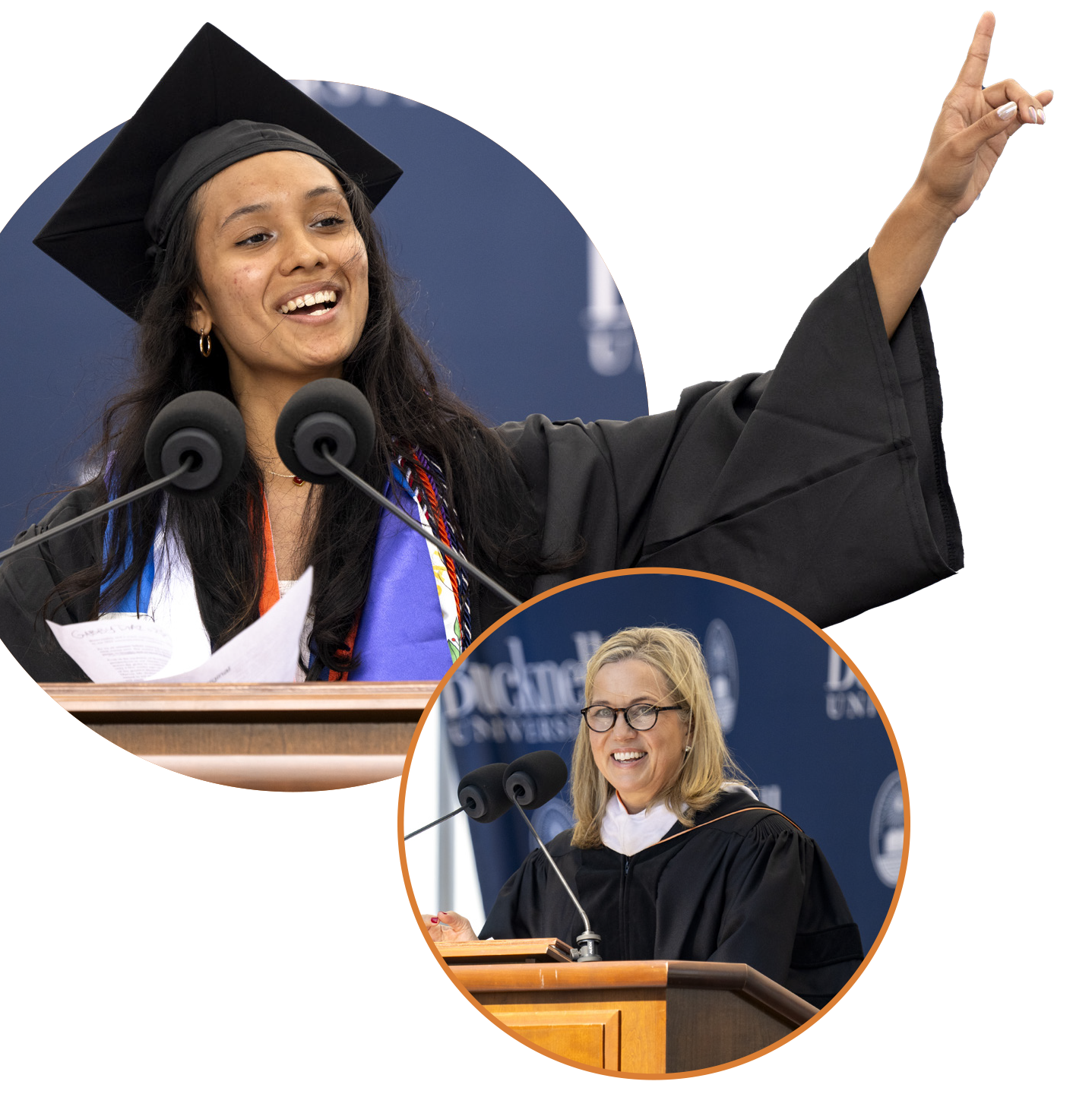
Student speaker Gabby Diaz ‘25 (above left) and keynote speaker Jessica Livingston ‘93 (right) addressed graduates.
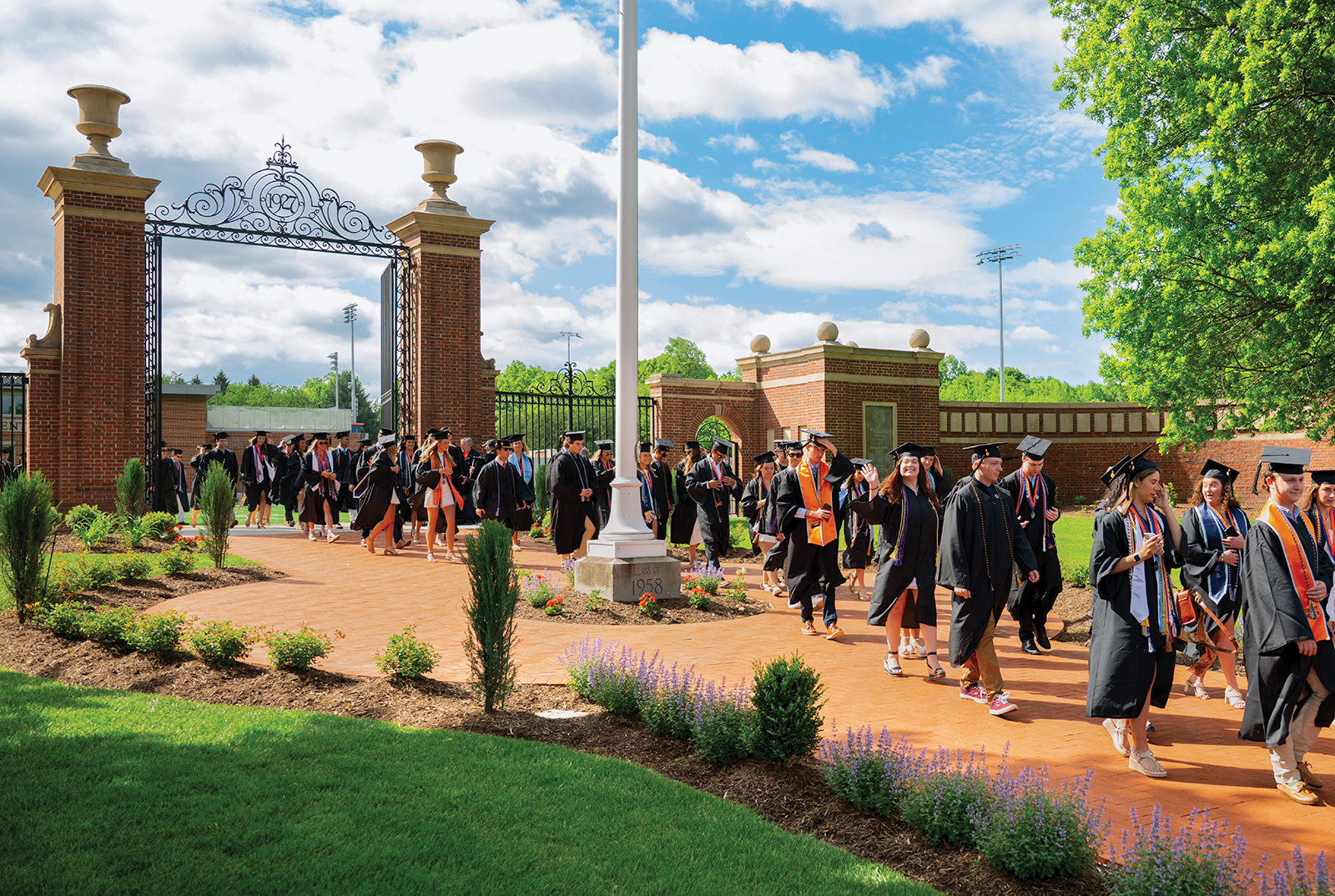
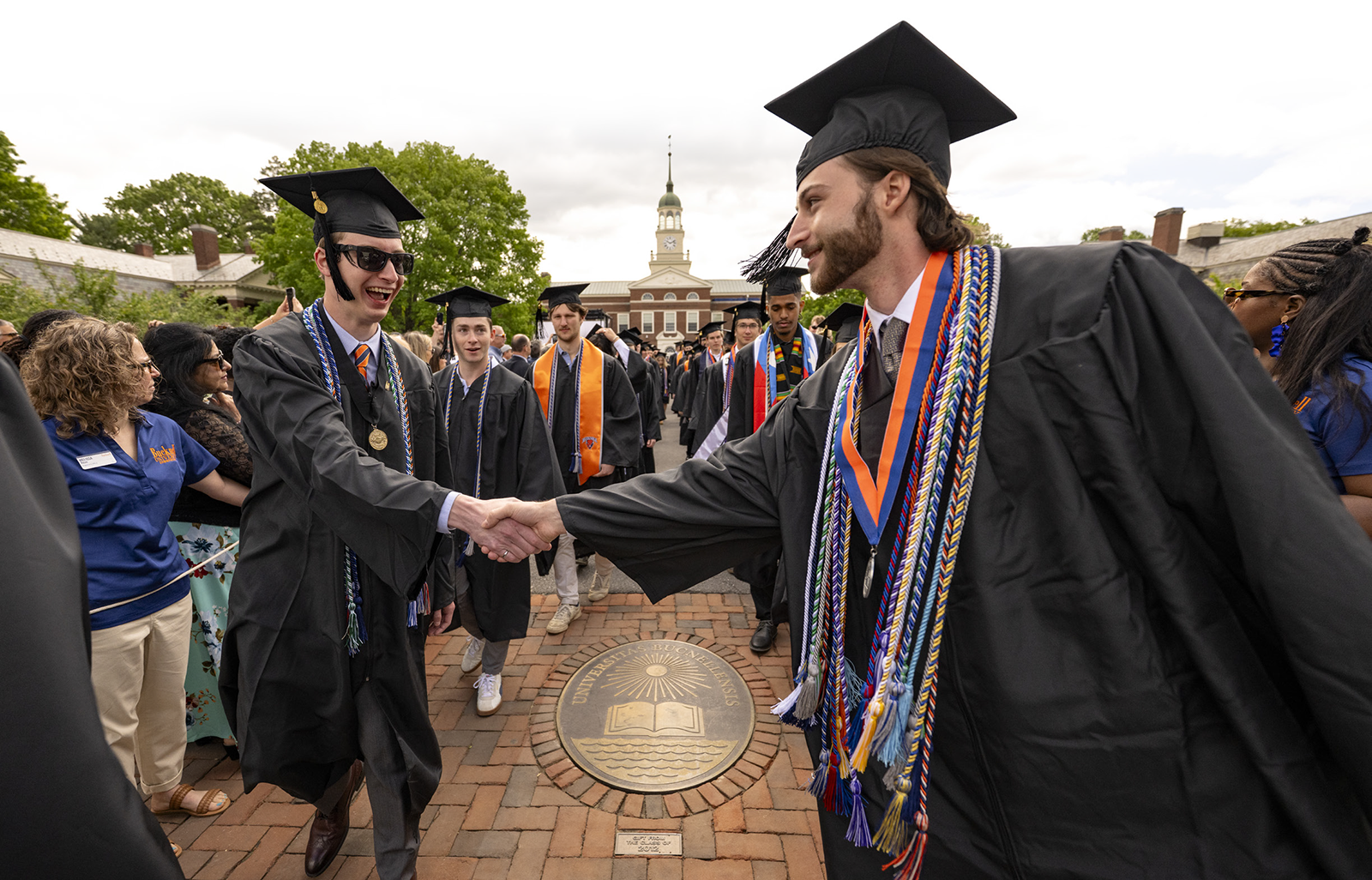
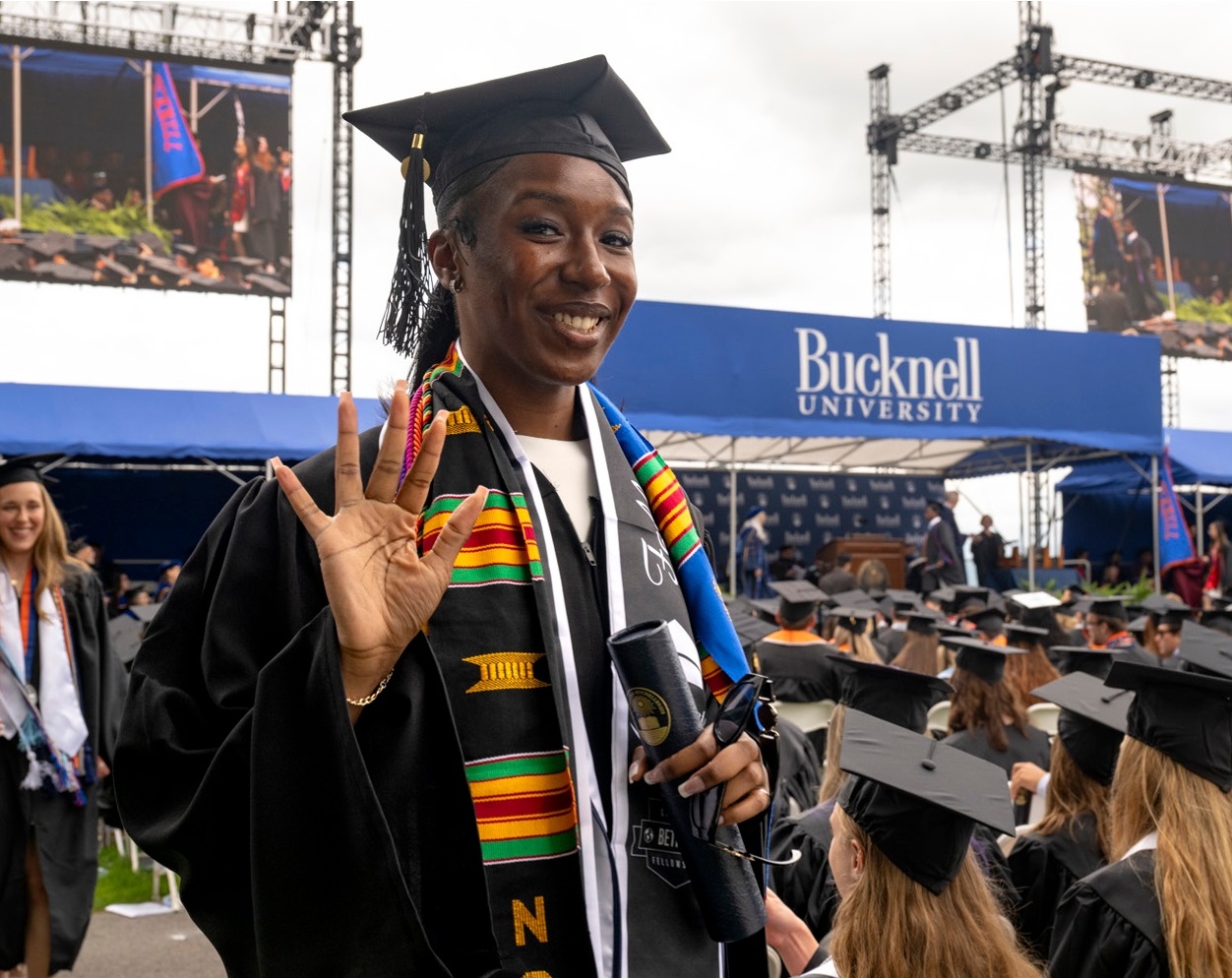
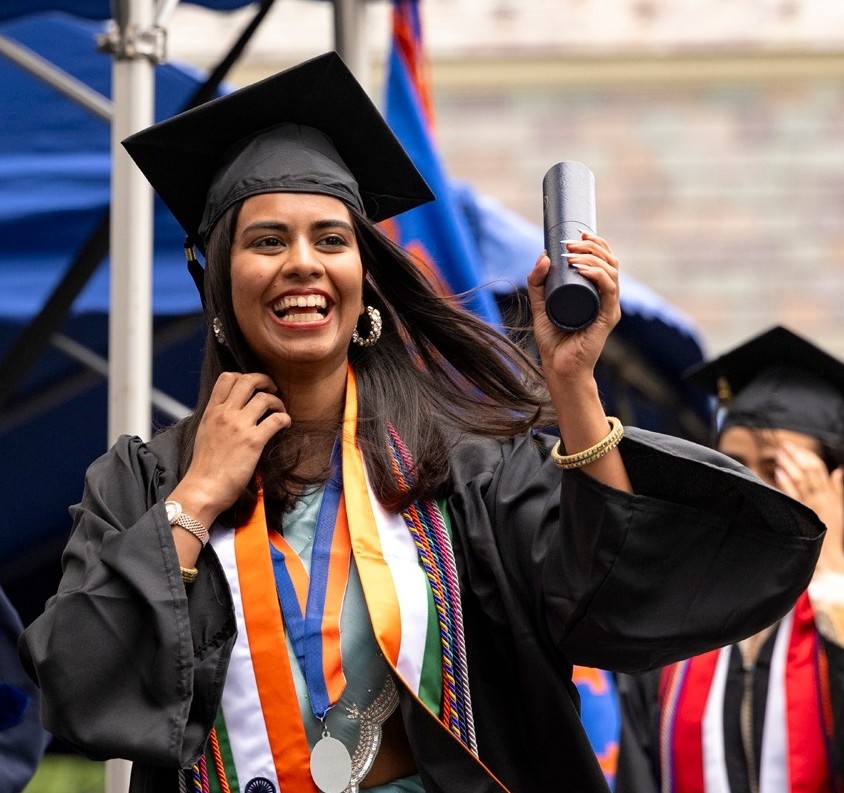
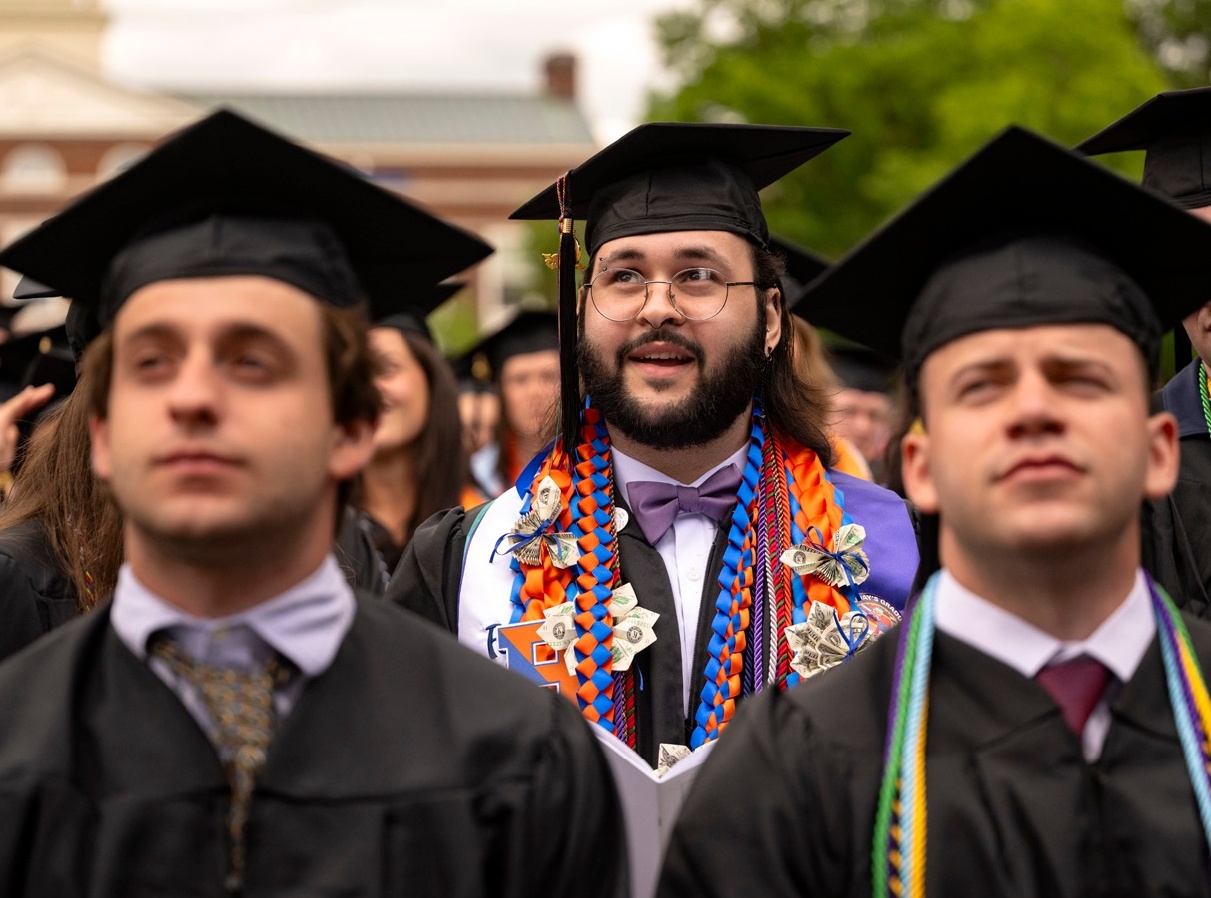
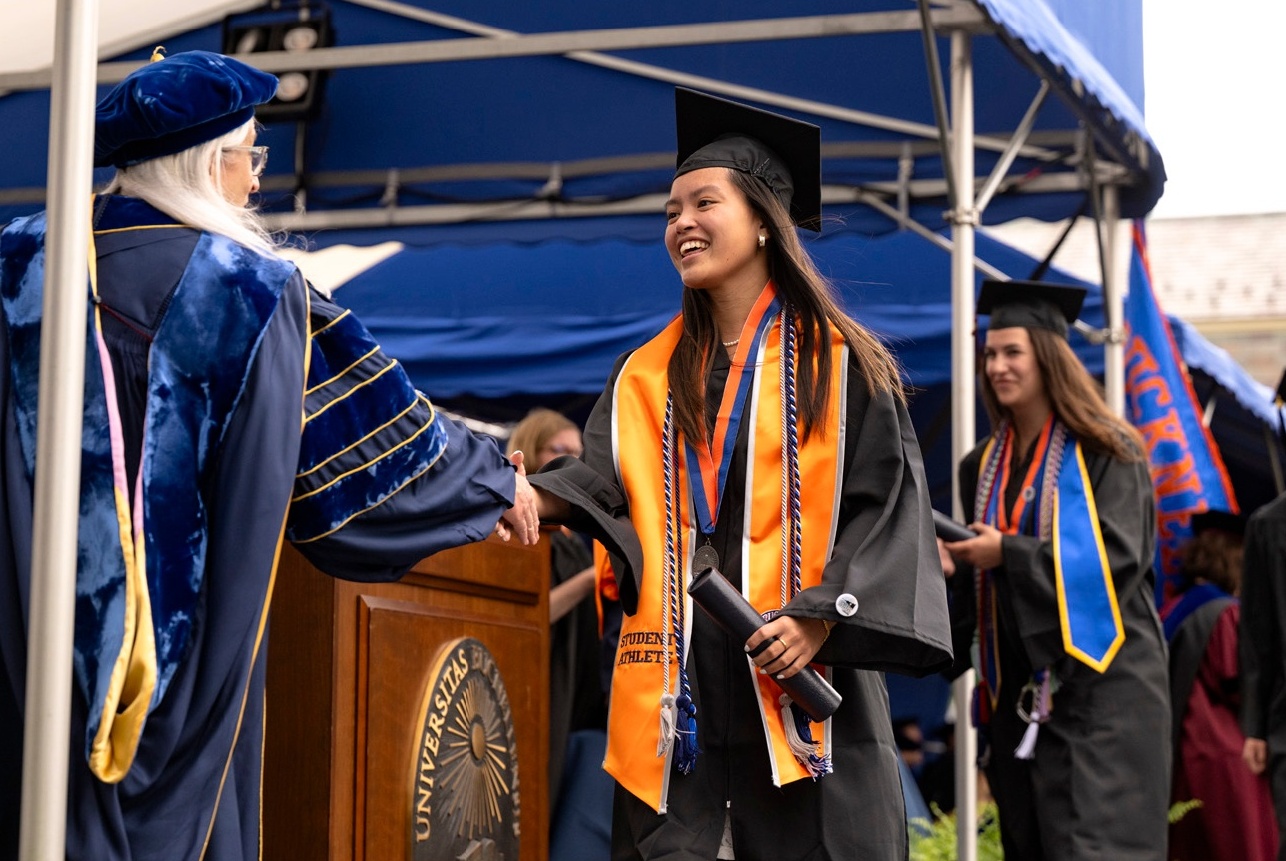
Under sunny skies on Malesardi Quadrangle, Bucknell held its 175th Commencement Sunday, May 18, conferring degrees to 939 graduates.
Jessica Livingston ’93, co-founder of Silicon Valley startup accelerator Y Combinator, delivered the keynote address, reflecting on the unpredictable path to personal and professional fulfillment. Livingston shared how at her own graduation, she was uncertain about the future. She encouraged the Class of 2025 to embrace ambition, actively steer their own paths and remain open to reinvention. (Learn more about Livingston on P. 3).
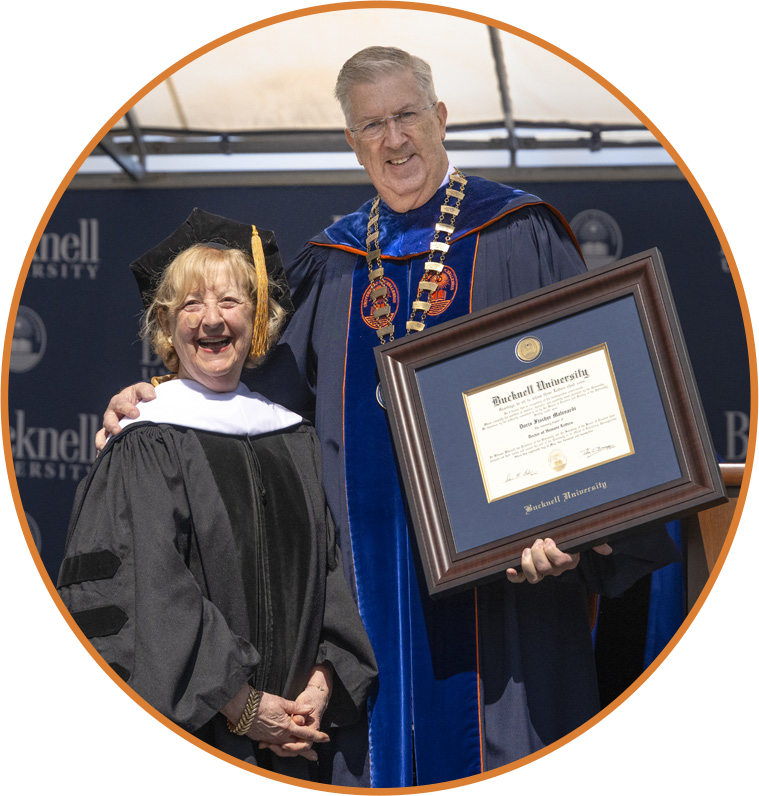
President Bravman with honorary degree recipient Doris Fischer Malesardi S’45.
Doris Fischer Malesardi S’45 was awarded an honorary doctor of humane letters degree in recognition of her continued commitment to the University. Doris and her late husband,Bob Malesardi ’45, P’75, P’79, P’87, G’08, the namesakes of Malesardi Quadrangle, expanded access to Bucknell by supporting merit and need-based financial aid.
Juliana Capizzi ‘25 kicked off Commencement with a rendition of the national anthem.
STILL IN THE GAME
AT AGE 34, PAT BEHAN ’10 HAD HIS CAREER CUT SHORT BY ALS. BUT HIS FRIENDSHIP WITH COACH JOHN GRIFFIN III ’08 HELPED HIM FIND HIS WAY BACK TO BASKETBALL.
by MATT JONES // photography by DANNY SANTOS II
Pat Behan ‘10 offered insights to Coach John Griffin III ‘08 from his D.C. apartment.
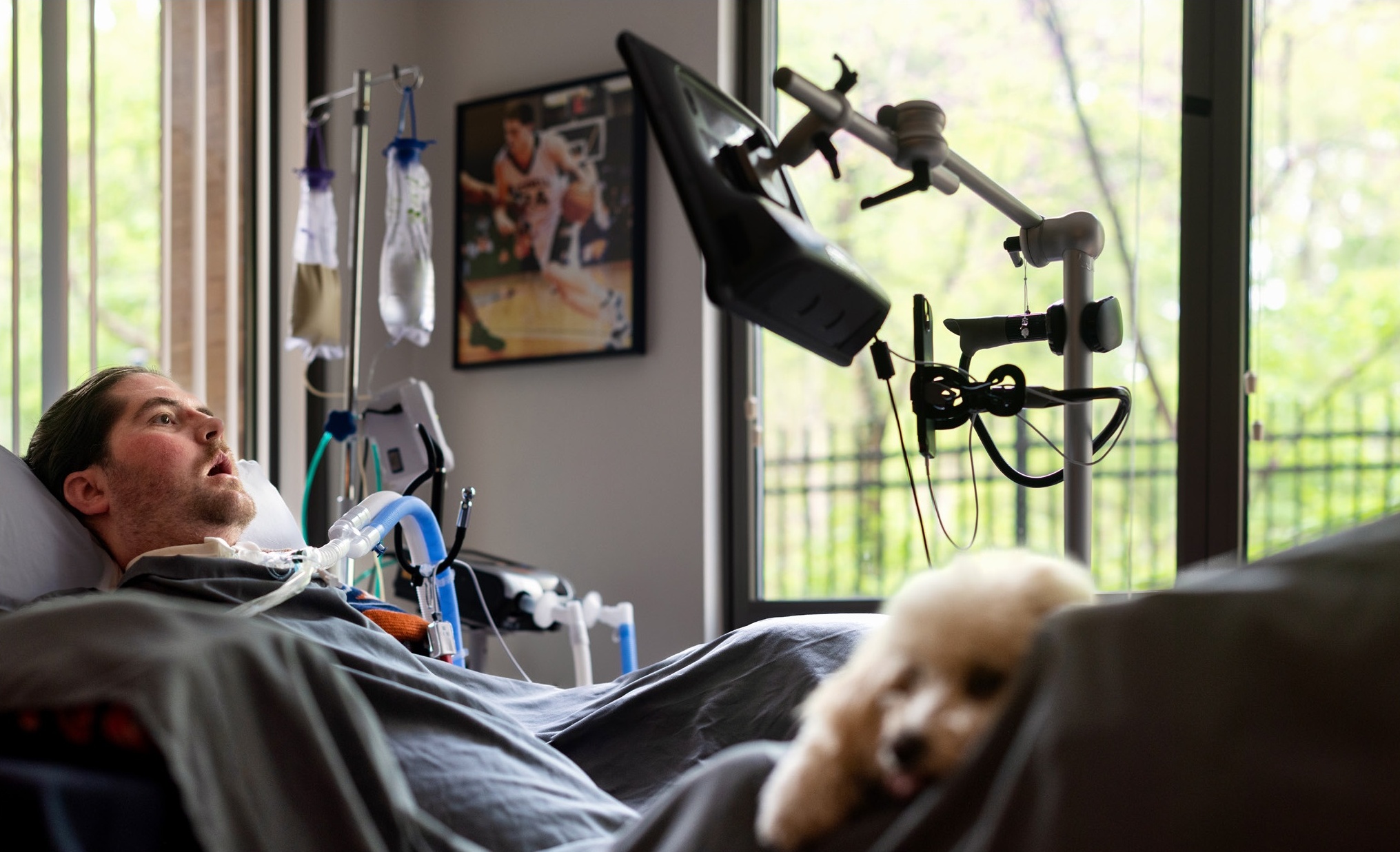
When I meet Pat Behan ’10 and his wife, Nataly, in their one-bedroom apartment in Northwest D.C., barely 24 hours have passed since Bucknell’s upset loss against Navy in the Patriot League semifinals. The whir of the oxygen concentrator fills the room where Behan’s bed looks out at a copse of trees in a nearby park. The Behans’ little dog, Rory, tosses his stuffed lamb toy up into the air before chasing it down again. The six TVs mounted on the wall are silent and black, though it’s easy enough to imagine them pulsing with sound and color the day before.
“We played a very tough nonconference schedule and battled early injuries and really took off in Patriot League play,” says Behan. “Obviously, it was a disappointing conclusion to a great season. Any time a run ends, it leaves you with a lot of emotions.”
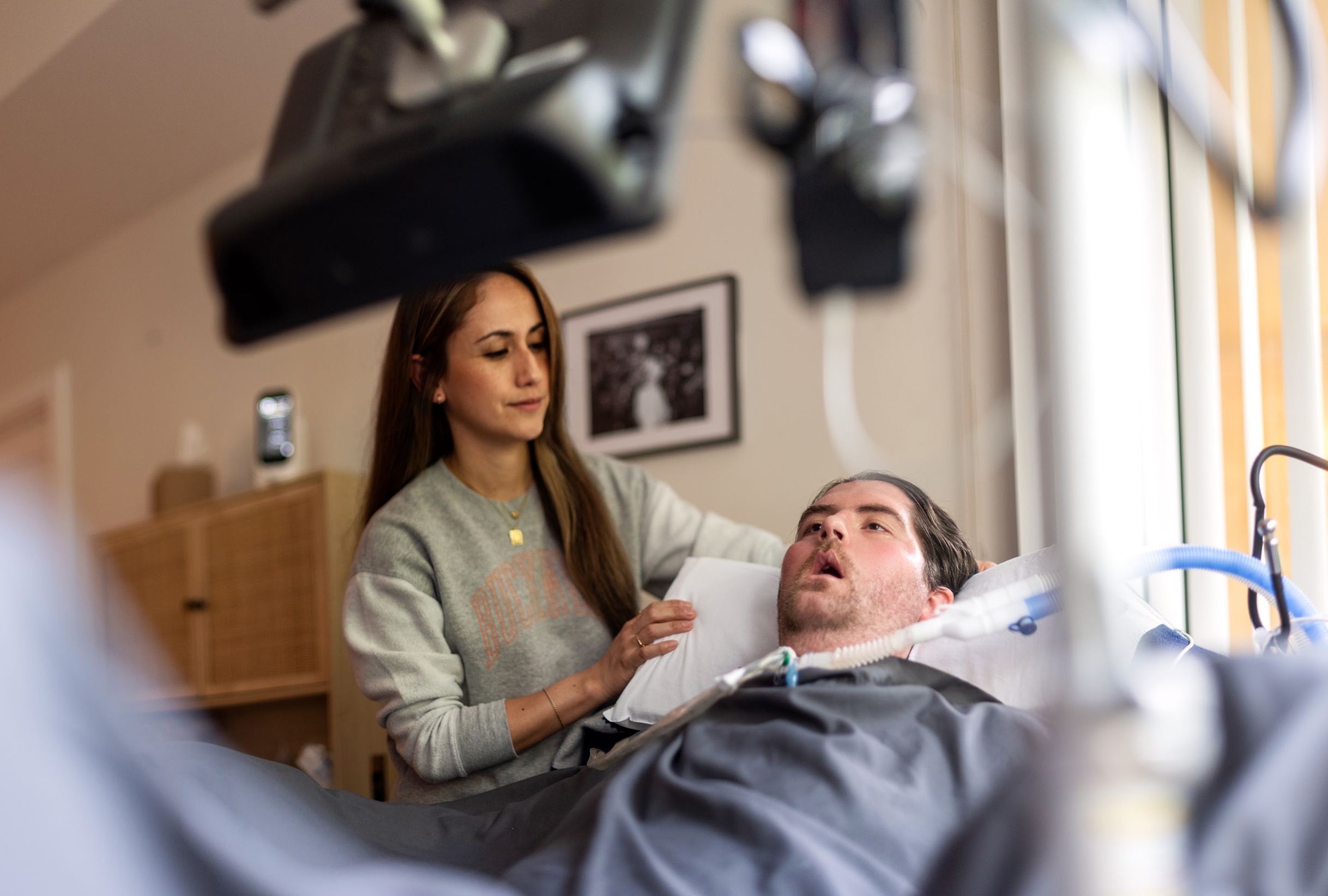
Behan with wife Nataly.
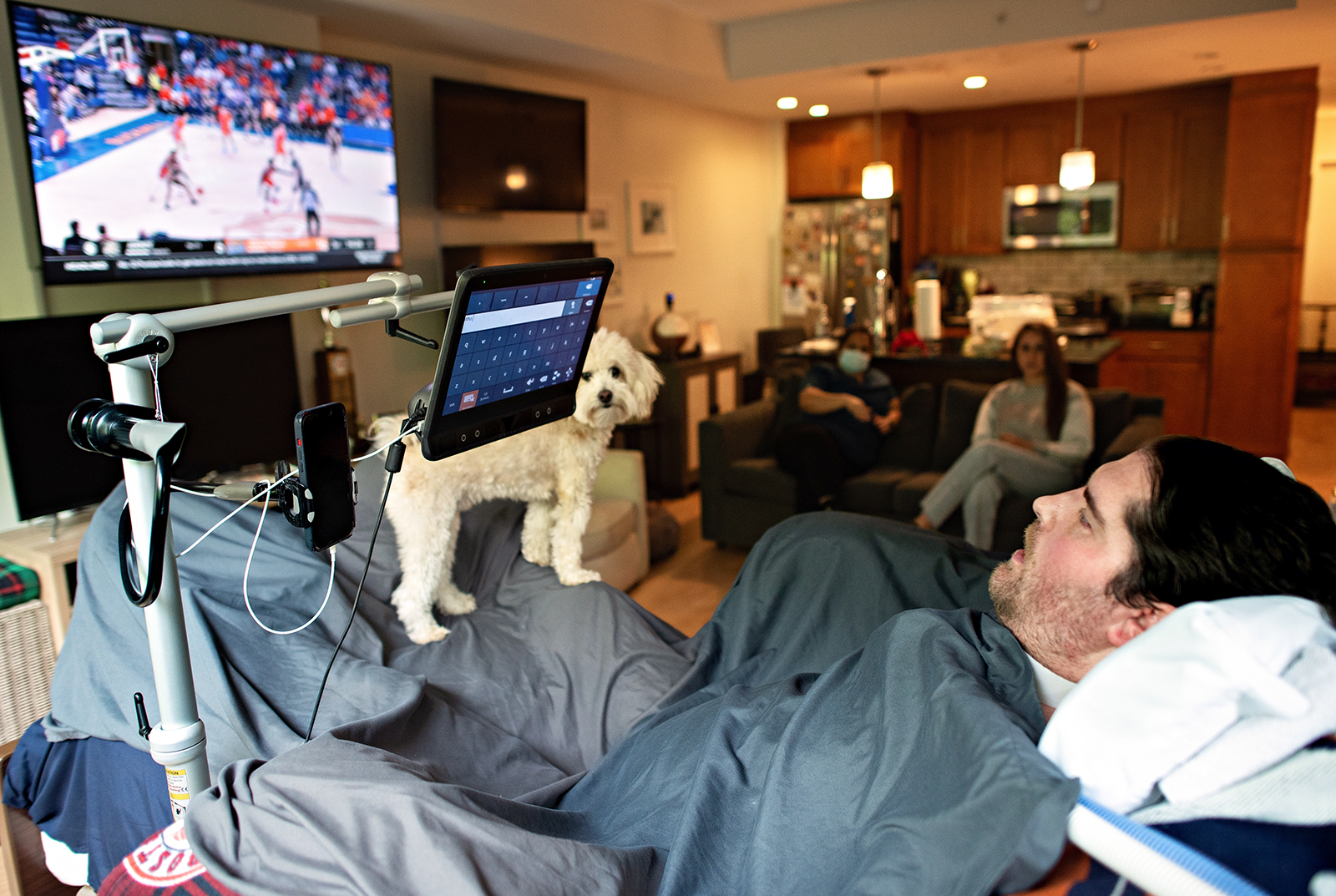
A team of nurses and caregivers flits deftly through the small space, cleaning the floors, fluffing pillows and adjusting the screen suspended over Behan’s bed. “The screen has a sensor that reads his eyes,” says Nataly, working with a nurse to shift Behan’s 6-foot-8 frame in bed. To speak, Behan relies entirely on eye gaze technology. An eye-tracking screen attached to his bed sends out infrared light reflected in his corneas and retinas, and the screen’s cameras use those reflections to determine exactly where he is looking. It makes communicating somewhat exhausting for Behan, as his eyes are required to hunt down each thought, letter by letter.
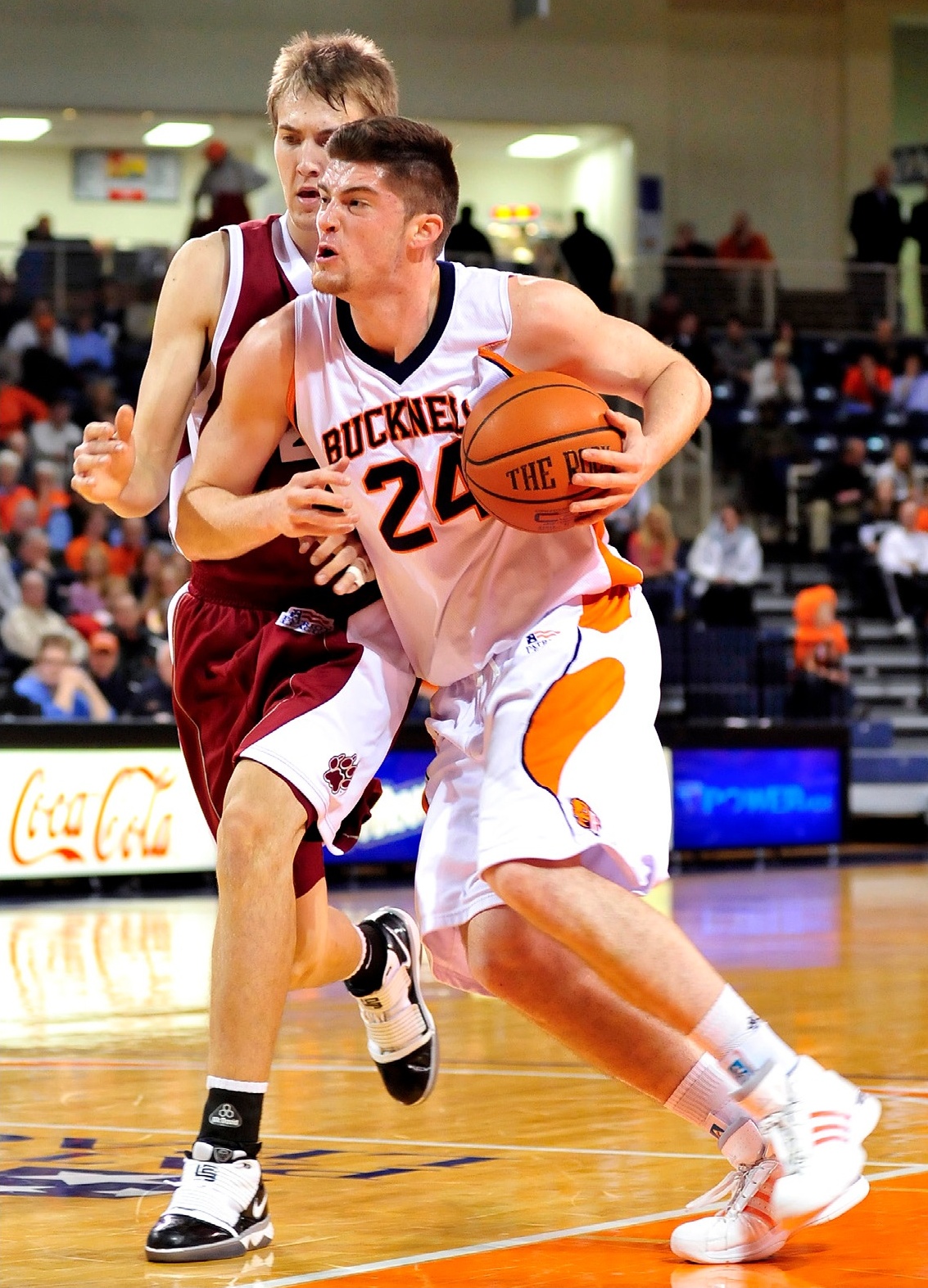
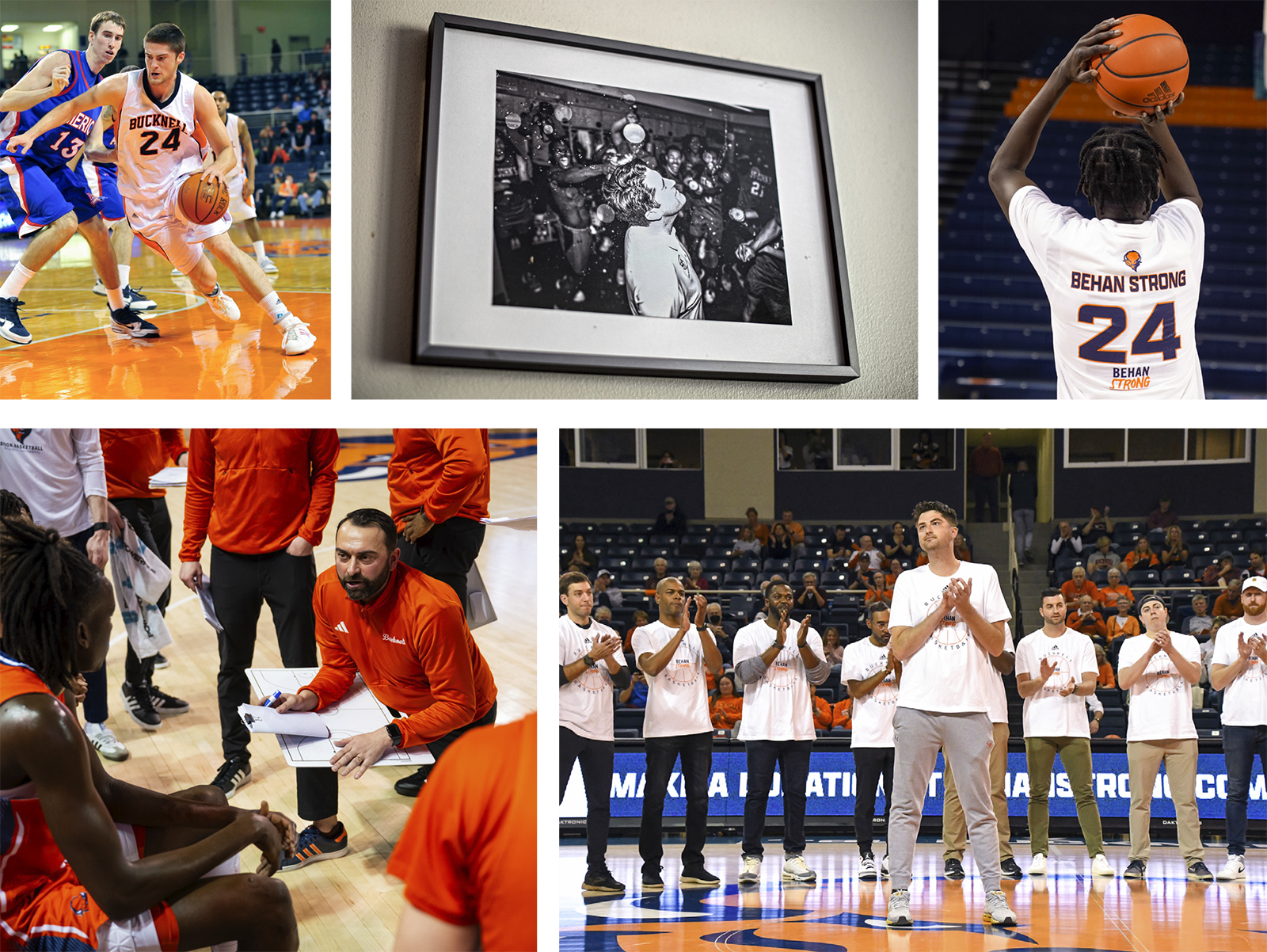
On the walls above Behan’s bed hang two photos. In one, Behan is in his Bucknell Bison gear, the ball in his hand as he drives past an opponent and toward the hoop. It could be from any of the 119 games he played during his four years on the men’s basketball team. In the other photo, it is 2023, and Behan, head coach of the St. John’s College High School basketball team, is celebrating with his players after clinching the Washington Catholic Athletic Conference Championship. On the surface, the image is the epitome of what it means to win. What is less obvious is that it is also a portrait of loss, as it captures what would be Behan’s final season as a head coach, his body already a year into the battle with amyotrophic lateral sclerosis (ALS).
On the court in Sojka Pavilion.
The Competitive Spirit
ALS is a progressive neurodegenerative disease. Given ALS’ incurability, the diagnosis typically narrows future possibilities into a two- to five-year timeline of gradual decline, with some exceptions. In February 2022, at age 34, Behan started to notice weakness in his arms and chest. In May, he received his diagnosis. Atrophy and paralysis followed. In October 2023, he underwent a tracheostomy to help him breathe. It wasn’t long before Behan was confined to a bed, where he retained control over only his eyes and mind.
“Even thinking back to early in the diagnosis, you realize all the little things in life that you miss,” says Behan. “It changes your whole perspective.”
ALS is characterized by loss that is equal parts anticipatory and incremental, pervasive and unrelenting. Past selves and ways of being in the world disappear at the same time as future possibilities. What remains is a tenuous present wherein the work of staying alive is counted by the second and minute. A team of nurses and caregivers, including Nataly, provides him with 24-hour support. The machinery at his bedside monitors his vitals around the clock. The tubes in his throat and stomach are now as much a part of his body as his hands or his feet. Behan’s battle with ALS is undoubtedly a physical one.
Less visible is the struggle of the interior landscape. Basketball had given direction and meaning to his life. It navigated him through college, his career and even into his marriage. “We met on a Friday, and the first thing he did was invite me to one of his games on Sunday,” says Nataly, who took him up on his offer. It was the first of many games she would attend, and she was always amazed at how cool he played it as head coach.
“He was at this really great stage in his career where he had built a nationally recognized high school basketball program. Rising up through the ranks as a coach and eventually becoming a head coach of a college basketball team was part of the trajectory for him,” says John Griffin III ’08, Behan’s former teammate and current head coach of the Bucknell Bison men’s basketball program.
Griffin was already a junior and two-time Patriot League champion when Behan, a power forward with strong shooting skills, arrived at Bucknell as a first-year student. They immediately bonded over their shared love of the game and soon became friends. After graduation, their paths diverged geographically, but their talent and determination set them on similar journeys. Both played professionally in Europe and soon advanced to coaching — Behan at St. Mary’s Ryken High School, then St. John’s College High School, and Griffin at Rider University, Saint Joseph’s University and then Bucknell.
But Behan’s ALS diagnosis radically altered his trajectory.
As much as the disease had taken from him in a short time frame, Behan still had his mind. He was still animated by the same competitive spirit that had possessed him as a player and a coach. It took time to adjust to his new reality, but eventually his thoughts turned to matters of meaning and purpose. Basketball had been an integral part of his life. It still was. It still could be. He wasn’t willing to lose that part of himself.
As it turned out, he wouldn’t have to.
Clockwise from left: Behan in action for the Bison; Behan celebrating a championship win; current Bucknell players honor Behan with “Behan Strong” warm-ups; Behan (center) recognized at a Bison game in 2022; head coach John Griffin III ’08 on the sidelines.
No Hero Steals
Before the Bucknell Bison stepped on the court to face the Kentucky Wildcats early in the 2024-25 basketball season, Griffin received a simple, three-word text message from Behan: “No hero steals.”
To outsiders, the message may have been cryptic, but it resonated with Griffin right away. “If you attempt a hero steal against a team like Kentucky and you miss, then they’ll dunk it right on your head,” says Griffin, who became head coach in March 2023. “I thought those three words contained an important message. That was the moment I realized that Pat was providing me with this expertise from experience that I don’t have. I was looking to grab as much from him as possible.”
To formalize that sentiment, Griffin made Behan an offer in November 2024: to become a special adviser to the head coach. Behan accepted, with one condition. “He didn’t want any pity. He wanted this to be real,” says Griffin. “And it was. We announced it publicly and put it on our website, and it’s been real ever since.”
There is a broadly accepted theory, unaligned with any one discipline, that constraints can promote creativity by forcing individuals to develop innovative solutions in the face of limited options. In Behan’s case, the eye gaze technology he used to communicate was mentally taxing. It didn’t allow for long digressions or abstract pontificating. There was no room for fluff. The limits of his body required him to be concise and straight to the point, which had the effect of rendering his insights into a series of maxims, or “Patisms,” if you will: succinct in form but both practical and expansive in the truths they revealed.
At home, Behan finds comfort in the company of his dog, Rory. The eye gaze screen Behan uses to communicate stands ready.
When I asked him about his philosophy on coaching: “Defense rules. Share the ball. Embrace roles.”
In a series of texts to Griffin: “No second chance points. Next play mentality.”
These short messages — what Griffin dubbed “bullet point material” — became an integral part of the Bison season. The former teammates developed a system: Behan texted, and Griffin transcribed those texts onto a whiteboard for the team to review before games. Behan’s words were more than just directives on how to win; they were lessons to young athletes about what it means to face and challenge the odds each new day. “I wanted to give them perspective — show them every day matters,” says Griffin.
Throughout the season, Behan helped develop a practice schedule for the Bison, and he eventually made video recordings that Griffin played before every game. “It really means a lot,” says Behan. “Griff really made me feel like I was there. It was just nice to have a piece of me back in the game of coaching with my alma mater and my dear friend.”
“Griff really made me feel like I was there. It was just nice to have a piece of me back in the game of coaching with my alma mater and my dear friend.”
After the upset loss against Navy on March 9, Behan kept his postgame message to Griffin short and sweet. “There wasn’t a ton to say. We were both hurting. I just texted him that I loved him.”
As I sat in the Behans’ apartment, which was busy with the foot traffic of caregivers coming and going — calibrating the eye gaze screen, adjusting pillows, making sure Behan’s hands and feet were warm — my attention turned once more to the six mounted television screens on the wall. With the season over, I asked him what he liked to watch when basketball wasn’t an option. Golf, football and baseball were all regular staples. What I really wanted to know, though, was if he liked to watch anything unrelated to sports. A palate cleanser. Something to take his mind off the present and into pure entertainment.
His answer: Money Heist.
Also known as La Casa de Papel, Money Heist follows a charismatic and intelligent leader known as the Professor who recruits a team of people to pull off the seemingly impossible task of stealing money from the Royal Mint of Spain. The odds are stacked against them, though the Professor rigorously trains and prepares his team for any possibility. What is unique about the arrangement is that while the team of robbers infiltrates the mint, the Professor remains in a remote location. He coaches them from afar, his thoughts and words transmitted across the distance. He can’t be there in person, yet he is very much with them all the same.
Photos: Marc Hagemeier (2); Danny Santos II; Mike Coleman; Lianne Garrahan ‘25; James T. Giffen
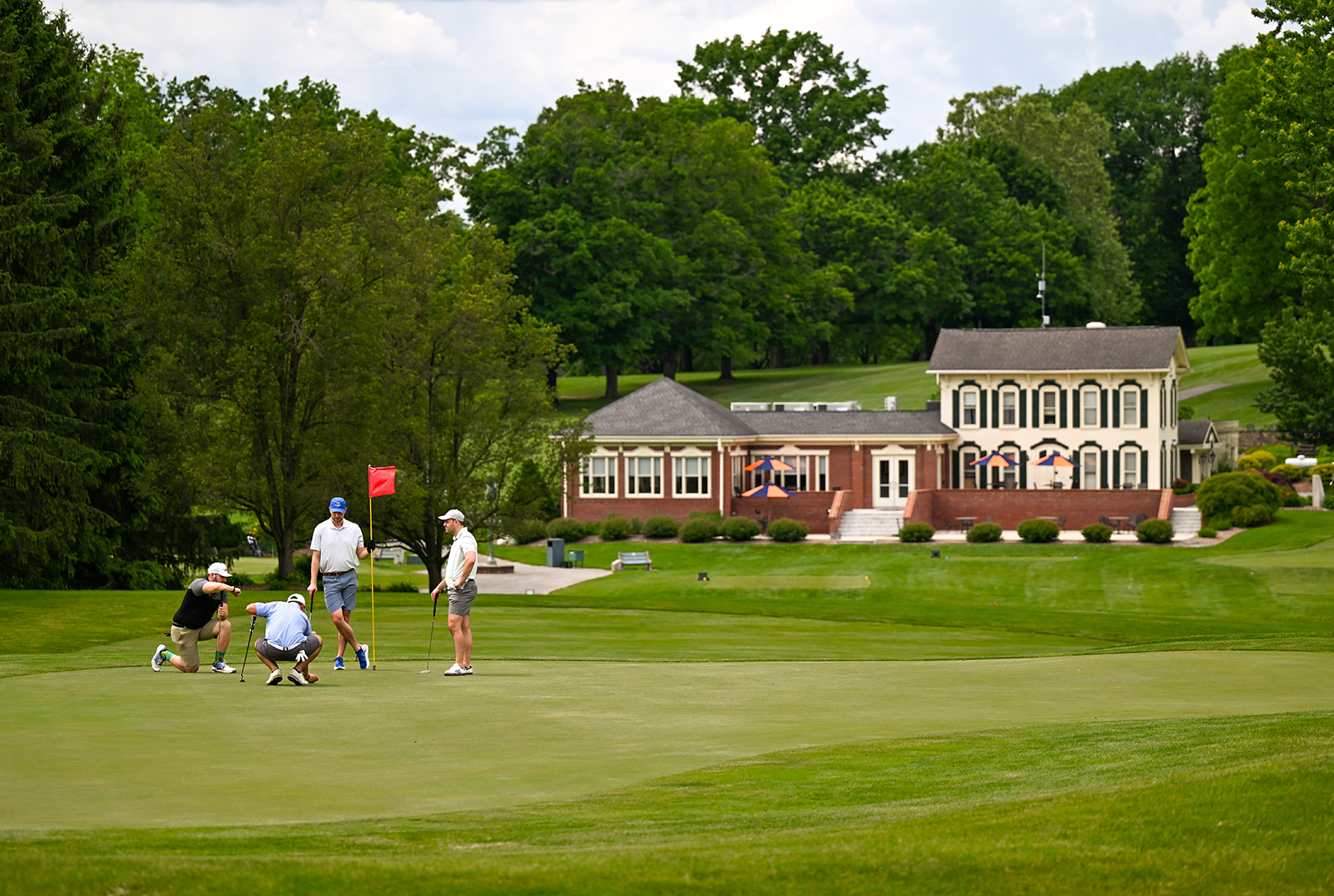
A HOLE LOT OF PRAISEGOLFPASS RANKS THE BUCKNELL GOLF CLUB AS THE NO. 4 BEST COLLEGE GOLF COURSE IN THE U.S.
photograph by JAMES T. GIFFEN
In Praise of Professors
THE FIELD OF higher education stands at a complex intersection of culture, politics and science — an area where national debates often take shape and where society’s greatest aspirations and tensions are on display. Across the country, colleges and universities confront critical questions about value, purpose, access and the future of the academy itself.
Since our founding, Bucknell has thrived through all kinds of changes and challenges by continuing a steadfast commitment to our mission: to provide an exceptional undergraduate liberal arts-based education made possible by our dedicated faculty and staff with the support of loyal alumni, parents and friends who believe in our mission.
I write here about our faculty, who are at the very core of the Bucknell experience. They come here because they love to teach, first and foremost. But they are also scholars whose research informs their teaching, and vice versa, providing a rich classroom experience as well as research opportunities for our students. And they are collaborators who nimbly bridge disciplines with their colleagues as never before, a distinction for Bucknell in an increasingly competitive higher education landscape.
When you combine that intellectual vitality with our 9:1 student-faculty ratio, the result is nothing short of transformational. Our students are seen, mentored and challenged by professors who know them well. Every alum reading this magazine can likely recall the influence of favorite professors, and many have personal relationships with faculty that have endured long after graduation.
Let me highlight just a few examples of our faculty’s extraordinary impact:
Eric Faden, English — film/media studies, researches the preservation of rare Japanese films crafted from paper in the 1930s, collaborating with students from mechanical engineering and computer science.
Rajesh Kumar, computer science, created a course in biometrics, which can be used to help uncover plagiarism, inspiring his students to research the same topic in the Korean and Vietnamese languages.
Annetta Grant, markets, innovation & design, challenges students to think critically about the forces that shape consumer decisions, including media, and to apply data-driven insights to real-world challenges.
From French to physics, from accounting to engineering, our faculty share a common belief: that great teaching can change lives. Often, we never know how our graduates’ journeys unfold. But we trust that the time our students spend with us in the classroom, in the lab and in conversation will ripple outward in ways that are both meaningful and essential to Bucknellians and the world.
Every alum reading this magazine can likely recall the influence of favorite professors.
In April, I had the pleasure of honoring our newly tenured and promoted professors at our annual faculty recognition celebration. In the life of every academic, there are signal events: passing the Ph.D. qualifying exam or its equivalent; turning in an approved thesis or dissertation; getting that first job offer; earning tenure; and, after years of distinguished service, being promoted to full professor. I’m always moved by the joy of this event, and I’m immensely proud of my colleagues’ achievements and dedication — to their students, to their fields and to Bucknell.
As we look to fall, we anticipate the arrival of 11 new tenure-track assistant professors ready to launch their Bucknell careers. I look forward to welcoming them to our community, following their professional development and toasting their successes in the years to come.
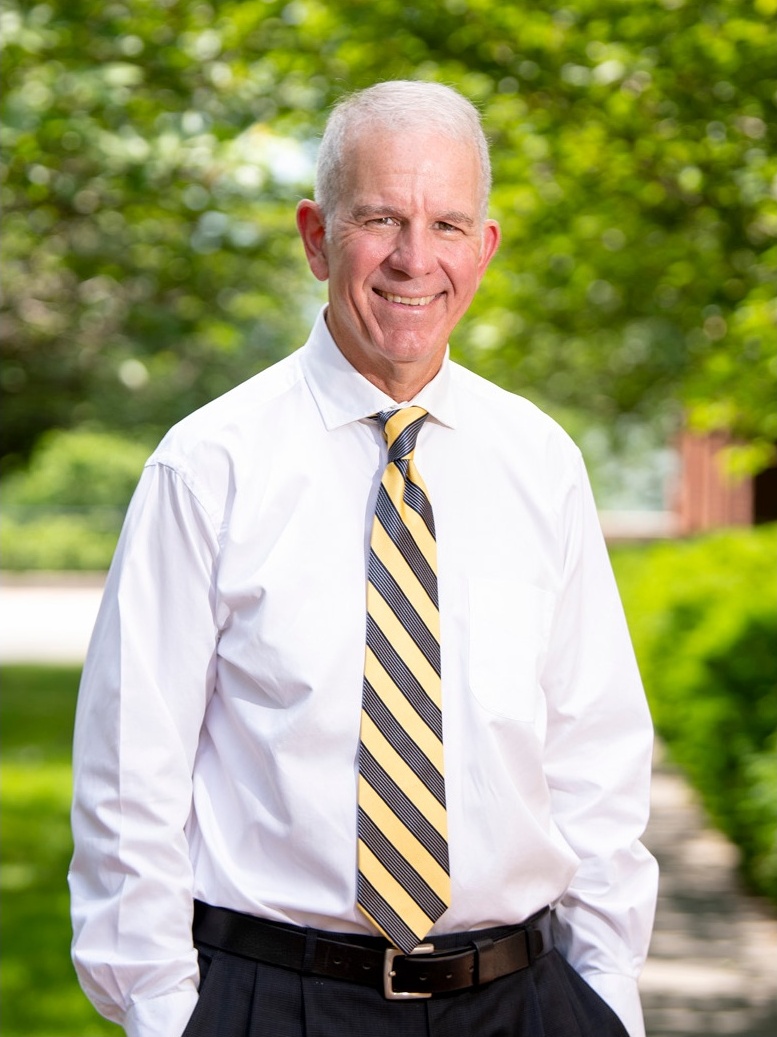
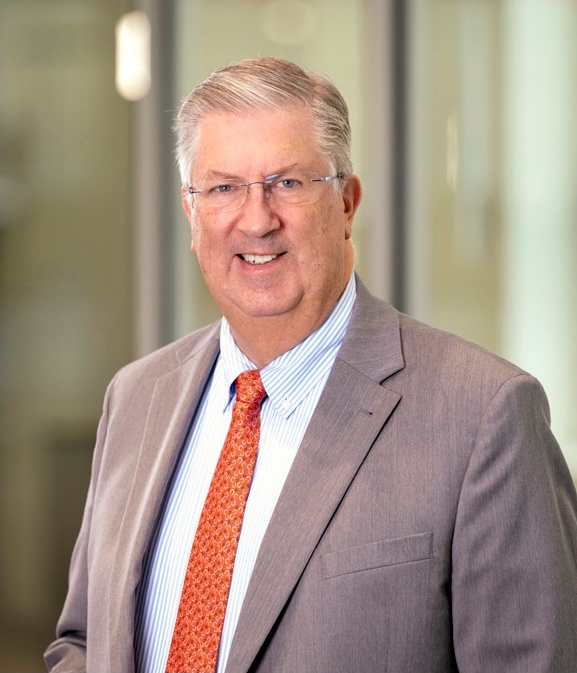
John C. Bravman President
Photo: Emily Paine
STAY INFORMED. STAY CONNECTED. ’RAY BUCKNELL!
The Community International Festival, part of Family Weekend, celebrates cultures from around the world.
ON CAMPUS
Mark Your Calendar!
Join us for these can’t-miss campus experiences this fall
Family Weekend | Sept. 19–21, 2025
As part of the Family Weekend celebrations, the Community International Festival will be held Saturday, Sept. 20. This lively celebration of global cultures, organized in collaboration with the Lewisburg Downtown Partnership, features student performances, food trucks, a flag parade and live music.
Homecoming | Oct. 3–5, 2025
This year’s Homecoming honors the 150th anniversary of the graduation of Edward McKnight Brawley, Class of 1875, Bucknell’s first African American graduate. Join campus events celebrating his legacy and the achievements of Black students, alumni and staff throughout Bucknell’s history.
CROWDSOURCED
IF YOU COULD VISIT BUCKNELL RIGHT NOW, WHAT’S THE FIRST THING YOU’D DO?
“I’d probably grab a wrap from the dining hall and then sit on the Quad to watch the sunset.”
TONY GOMEZ ’16
“I’d start by walking through the Christy Mathewson Gates, then to the Quad, then pause on the Rooke Chapel steps to soak in that unmistakable Bucknell energy before grabbing a slice from Vennari‘s.”
TOM FERRARA ’93
“SELFIE WITH THE CHERRY BLOSSOMS AND ENJOY LISTENING TO THE ROOKE CHAPEL BELLS, KNOWING I’M NOT LATE FOR CLASS!”
ALISON SLATER ’07
"TAKE A SINGLE RACING SCULL OUT ON THE SUSQUEHANNA AT SUNRISE."
BRENDAN GERRITY ’93, M'94
ANSWER THIS
Who at Bucknell inspired you, challenged you or changed the way you see the world?
Join our LinkedIn community to stay in touch, share feedback and respond to future prompts:
Exclusive Access
RECONNECT WITH CLASSMATES THROUGH BUCKNELLCONNECT, THE PRIVATE ONLINE ALUMNI COMMUNITY AND DIRECTORY. VISITBUCKNELLCONNECT.COM
Photo: April Bartholomew
READ THIS
Righting Wrongs, Writing Justice
by MATT JONES
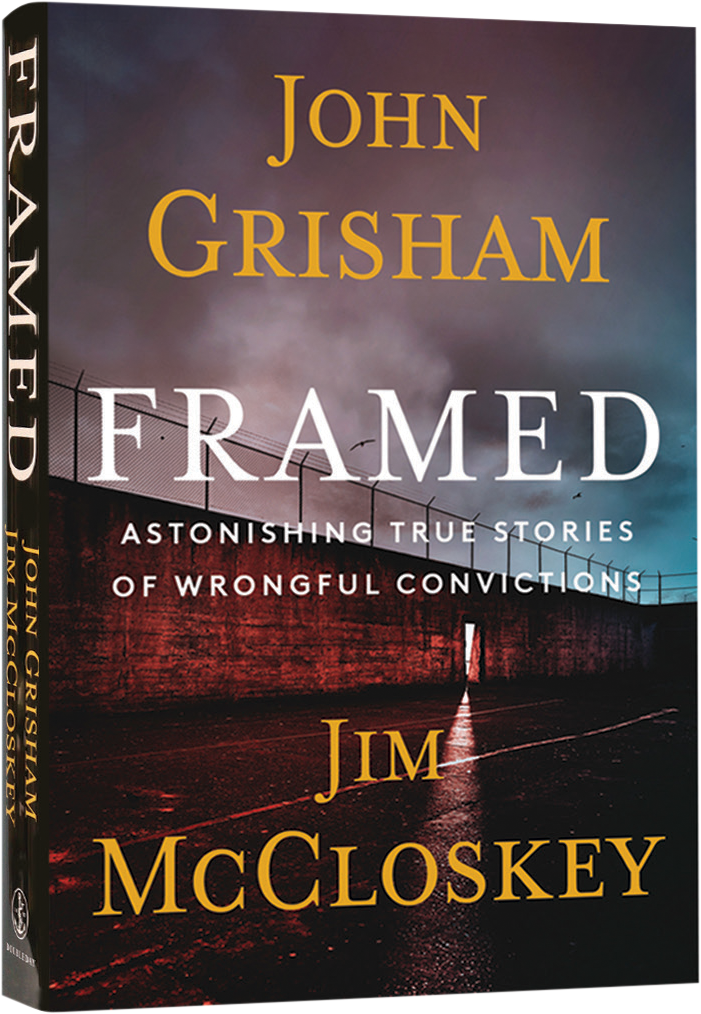
WHEN JIM MCCLOSKEY ’64 was invited to co-write a book with one of America’s most successful authors, he initially questioned himself. “Who am I to write a book with John Grisham, for God’s sake?” he recalls. But it was precisely this willingness to question himself that had guided him toward a lifelong pursuit of justice.
In 2024, McCloskey and Grisham published Framed: Astonishing True Stories of Wrongful Convictions, a powerful exposé of how corruption, racism and systemic flaws in the American justice system upended the lives of 10 innocent people. The book highlights wrongful convictions caused by erroneous forensic analysis, police misconduct, perjury and fabricated testimony.
McCloskey’s path to this collaboration was anything but conventional. After graduating from Bucknell, he achieved his dream of becoming “an international businessman in Japan.” However, by the mid-1970s, he faced a crisis of faith.
“I lost my appetite for the business world. I wanted a greater purpose in life,” he says.
Seeking that purpose, he left his job, sold his house and in 1979 enrolled in Princeton Theological Seminary.
While volunteering as a student chaplain at Trenton State Prison, he met Jorge de los Santos, an inmate who would eventually become the focus of his 2020 memoir When Truth is All You Have, in which McCloskey details how he helped exonerate a wrongly convicted prisoner and discovered his life’s true calling.
“My destiny was to free innocent people from prison, not to become an ordained church minister,” says McCloskey, who went on to found Centurion, a secular nonprofit dedicated to the vindication of the wrongly convicted.
When Grisham, who had written the foreword to McCloskey’s first book, proposed a collaboration, they agreed to split the work — McCloskey would write about five cases he worked on, and Grisham would write about five he knew well.
“It worked very well,” McCloskey says. “Mr. Grisham is authentic, unpretentious, down-to-earth, affable and kind. The personal and professional relationship developed as we traded stories.”
The goal of Framed, McCloskey says, is to expose systemic injustices and challenge readers to question preconceived notions about the justice system. Because as his life shows, it is often through doubt that the opportunity to seek truth — and justice — arises.
Published by Doubleday in 2024, Framed: Astonishing True Stories of Wrongful Convictions was on the New York Times Best Seller list for 18 weeks. The paperback edition will be available in August.
SARATOGA SCHAEFER ’13
‘Serial Killer Support Group’
Crooked Lane Books, 2025
Schaefer, who majored in English — film/media studies, has released their debut novel, Serial Killer Support Group, a dark and witty thriller that blends feminist commentary with suspense. The story follows Cyra Griffin, who infiltrates a support group for serial killers in a bid to avenge her sister’s murder. Schaefer is a publicist and yoga instructor in upstate New York.
MARK SABBAS ’14
‘The Monarchs’
Koehler Books Publishing, 2024
In his debut novel, The Monarchs, Sabbas explores the intersection of science and spirituality. Set in a war-torn future, the story follows a group of children with psychic abilities who may hold the key to humanity’s evolution. It won in the New Age Fiction category prize of the 2024 American Fiction Awards. Sabbas, who double-majored in economics and philosophy, is a data analyst in Fort Mill, S.C.
SHARE YOUR WORK WITH US
Bucknellians, have you recently published a book, launched a podcast, released a film or developed an app? We’d love to hear about it! Send your news to bmagazine@bucknell.edu
CAPTION CONTEST
Compose a clever caption. Our favorites will win a cool Bucknell T-shirt.
Submit your caption for this retro photo to bmagazine@bucknell.edu
SUBMIT A PHOTO
Have a vintage Bucknell image that deserves captioning?
Recognize yourself or the Bucknellians in this photo? We’d love to hear from you. Share your nostalgic story with us at bmagazine@bucknell.edu
WRITE TO US
We love to hear from readers. Send your feedback, insights, compliments and complaints. Write to us at bmagazine@bucknell.edu or Bucknell Magazine, One Dent Drive, Lewisburg, PA 17837
PLANT A TREE
Need help choosing the right native trees for your yard, neighborhood or community project? There’s a new tool for that — and Bucknell students helped build it. Partnering with the Chesapeake Conservancy, Bucknell engineering seniors co-developed the Pennsylvania Native Tree Selector, an online resource that helps residents, conservation planners and volunteer groups select native tree and shrub species suited to their area. Check it out at ccpants.netlify.app
Stay Connected
NEW EMAIL? NEW ADDRESS? LET US KNOW! GO.BUCKNELL.EDU/RECORDS
BE HERD
Share your thoughts, questions or feedback with the Bucknell University Alumni Association Board of Directors. Submit your message through our form and connect directly with BUAA Board members who are ready to listen and engage: bucknell.edu/BUAA
ALUMNI HONOREES
Here are our favorite caption submissions from the spring issue:
“That moment you realize the Bucknell Bubble isn‘t just a metaphor — it’s a lifestyle.”
Siobhan Nerz ‘24
“EXPLORING FLUID DYNAMICS — ONE BUBBLE AT A TIME!”
Jennifer Steeper ‘80
“Please don’t let me sneeze! Please don’t let me sneeze!”
Barb Bobko M‘72
“As a Wizard of Oz super-fan, now I know how Glinda felt in her bubble!”
Dave Price ‘87
“ SEINFELDWRITERS’ CREATIVE INSPIRATION FOR THE ‘BUBBLE BOY’ EPISODE.”
Ken Rankin ‘84
“Surprising revelation that BU students invented the original ‘cone of silence. ’ ”
Bryan Snapp ’72
Photos: Emily Paine; courtesy of Special Collections/University Archives; Courtesy of Special Collections/University Archives; Courtesy of Doubleday
Switching majors launched Mark Morganelli ‘77 on a jazz-filled career as a performer, producer and music educator.
All That Jazz
by HEATHER MAYER IRVINE
Mark Morganelli ’77 arrived at Bucknell as a chemistry major, never imagining music as more than a hobby. Then the trumpet and flugelhorn player auditioned for the Bucknell Jazz & Rock Ensemble and was one of only two first-year students to make the cut. It was the confirmation he needed. He left the lab and switched to a music major. “It turns out Bunsen burners weren’t my thing,” he says.
At Bucknell, Morganelli was everywhere — on stage with his trumpet and flugelhorn, on the track as a runner and even abroad. A summer in Austria led to a trip to the Montreux Jazz Festival in Switzerland, where he made connections that later brought the Bucknell Jazz & Rock Ensemble to perform there. That experience inspired him to produce records from the group’s performances, planting the seeds for his future as a producer.
After graduating, Morganelli immersed himself in the music world, producing dozens of albums and releasing six of his own. His latest, For Miles, a tribute to Miles Davis, was recorded in Torino, Italy, where he frequently tours.
He also founded The Jazz Forum in Tarrytown, N.Y., a jazz club run by his nonprofit performing arts organization dedicated to presenting high-quality musical events to the public at little to no cost. DownBeat Magazine recently named it one of the world’s top 100 jazz venues. This summer, his nonprofit, Jazz Forum Arts, celebrates its 40th anniversary with 32 free outdoor concerts.
Education continues to shape his work. He coordinates music workshops for school-age students and launched two music education programs, Jitterbugs: Jazz for Kids and the Jazz Forum Student Ensemble.
His advice to fellow Bucknellians? “Follow your passion,” he says. “Even if it doesn’t become your career, it will greatly enhance your life.”
Rebecca Baptiste-Forbes Carter ‘17‘s career spans finance and technology.
Curiosity Drives Success
by HEATHER MAYER IRVINE
Rebecca Baptiste-Forbes Carter ’17 landed on Forbes’ 2025 30 Under 30 — Finance list, an especially meaningful recognition given her unconventional path. At Bucknell, she planned to study biology but triple-majored in economics, international relations and French. New interests — and the freedom to explore — shifted her focus.
After graduation, she broke into Morgan Stanley’s equity sales and trading division. She later earned a master’s in public management and policy from Johns Hopkins University. Today, she is vice president of corporate development at JPMorgan Chase, where she leads partnerships and client relationships in the consumer auto business.
Carter credits her interdisciplinary education for helping her approach challenges with agility and creativity. Her studies in energy and environmental policy, for example, have given her an edge in navigating the automotive industry's complexities, from tax credits to tariffs and supply chain shifts.
Cheyanne Stunger ’22 is responsible for the safe handling of artwork at the Harvard Art Museums.
Behind the Exhibit
by BROOKE THAMES
There is an important mantra in the world of museum etiquette: Look, but don’t touch. Unless you’re Cheyanne Stunger ’22, whose job as an exhibition production specialist meant handling art with care and finesse. At the Harvard Art Museums, she prepared, installed, lit and packaged artworks, casework and graphics for exhibitions and loans.
“I love[d] being the person who gets to work with the objects in an intimate way, ” says Stunger, who helped install It’s Time, an exhibition of LaToya Hobbs’ life-sized woodcuts. “Handling not only the art but the graphics, the labels and all the little details that go into it … it’s so cool to see how everything contributes to an impactful visitor experience.”
Stunger initially planned to major in computer science. But a course taught by Roger Rothman, the Samuel H. Kress Professor of Art History, changed her mind. “I was focused on selecting a major that would lead to a ‘practical job,’ but Rothman opened my eyes to a whole other realm of possibilities,” she says. “After looking at art from a critical standpoint and seeing how interdisciplinary the field could be, I thought, ‘I love this. I’m good at this. This is the direction I want to go.’ ”
At Bucknell, Stunger worked at the Samek Art Museum, gaining invaluable knowledge from director Rick Rinehart, who mentored her through Bucknell’s GenFirst! program.
After graduation, she spent time at KW Contemporary Art, a commercial gallery run by Kiersten Wilcox ’11. In conjunction with her position at the Harvard Art Museums, Stunger began a master’s in art history and museum studies at Tufts University. Recently, she transitioned into a new role at the Harvard Art Museums, where she’s now responsible for the safe movement and handling of artwork in galleries, storage, conservation, photography areas and viewing spaces.
“It’s empowering to have this network of Bucknell connections who have supported and inspired me,” she says.
Photos: Adam Z; Ring Concierge, Joe Duval
REUNION
Bucknellians returned to their happy place May 30–June 1 to relive old memories and make new ones
photography by APRIL BARTHOLOMEW and GORDON R. WENZEL
ALUMNI HONOREES
At Reunion, the Bucknell University Alumni Association recognized alumni for their leadership, character, intellectual exploration, creativity and imagination. This year’s recipients were Susan McHale ’75, Matthew Hinton ’00, Winnie Okello ’10, William Morrow ’70 (left to right) and Anne Flegal Hinton ’00 (not pictured). Learn more at go.bucknell.edu/alumniawards
The Reading Room in Bucknell Hall
by PETER BALAKIAN ’73, P'10
photograph by JAMES T. GIFFEN
Peter Balakian ’73, P’10 will attend the Oct. 4 dedication of the Jack Wheatcroft ’49 Reading Room.
“It is, for me, the crown jewel of campus and the center for contemporary literature.”
Every time I return to campus, I find my way to the Stadler Center for Poetry & Literary Arts in Bucknell Hall and sit in the pews of the Reading Room.
Over the years, I’ve spent many memorable times there listening to poets, giving readings and being part of literary festivals. Hundreds of writers, from Pulitzer Prize winners to Bucknell students, have given public readings there since its opening in 1988.
The Reading Room is grand and elegant, with its original Arts and Crafts-era design: a high, vaulted ceiling, original wainscoting with trimmings of William Morris-style wallpaper, rising windows with stained glass and beautiful antique pews.
The Stadler Center was the vision of Homer Rainey Professor of English Jack Wheatcroft ’49, a poet and fiction writer who taught at Bucknell from 1952 to 1995. He transformed Bucknell Hall into the center for creative writing and more broadly, for the arts.
Jack taught and affected generations of Bucknell students with a generosity that was rare for a teacher so immersed in his own intellectual work and writing. Over 50 years, he published 26 books of poetry, fiction and plays. Along with the Stadler Center, Jack also founded the Bucknell Seminar for Younger Poets and the Philip Roth Residence in Creative Writing, propelling Bucknell into national prominence in contemporary literature and writing.
In recognition of Jack’s visionary contributions to the arts at Bucknell, the Reading Room in Bucknell Hall will be named in his honor. On Oct. 4, the University will host a dedication ceremony during Homecoming. Alumni and friends are invited to attend and celebrate Jack’s enduring legacy in this special space. While traveling across campuses as a writer, I’ve never found a space as inspiring.
Peter Balakian ’73, P’10 is the author of many books, including Ozone Journal, winner of the Pulitzer Prize for Poetry. He was Bucknell’s 2017 Janet Weis Fellow in Contemporary Letters and also received an alumni Service to Humanity Award. He teaches at Colgate University.
The Class of 2025’s tribute to the University is a new brick pathway that connects the iconic Christy Mathewson Gates to the sidewalk along Dent Drive. Members of Bucknell Student Government, pictured here, led the effort to bring the project to life. The class was the first to walk on it during their Commencement ceremony on May 18.
photographs by EMILY PAINE
Summer 2025 - Cover
Go to page 1: <span style="font-weight: bold;">Summer 2025 - Cover</span>
By Way of Bucknell
Go to page 2: <span style="font-weight: bold;"><span style="font-weight: 700;">By Way of Bucknell</span></span>
Pathways
Go to page 3: <span style="font-weight: bold;"><span style="font-weight: 700;">Pathways</span></span>
From the Commencement Stage to Penn Carey Law
Subtitle: From the Commencement Stage to Penn Carey Law
Pathways
Go to page 4: <span style="font-weight: 700;">Pathways</span>
From Silicon Valley to the Commencement Stage
Subtitle: From Silicon Valley to the Commencement Stage
From the Editor
Go to page 5: <span style="font-weight: 700;">From the Editor</span>
Celebrating 10 Years of @iamraybucknell: A Decade of Real Student Stories
Go to page 6: <span style="font-weight: bold;">Celebrating 10 Years of @iamraybucknell: A Decade of Real Student Stories</span>
’burg and Beyond
Go to page 7: <span style="font-weight: 700;">’burg and Beyond</span>
In Lewisburg and far afield, Bucknellians make a positive and palpable difference
Subtitle: In Lewisburg and far afield, Bucknellians make a positive and palpable difference
Ask the Expert
Go to page 8: <span style="font-weight: 700;">Ask the Expert</span>
‘More Than Just a Paycheck’
Subtitle: ‘More Than Just a Paycheck’
Innovative Learning — Across the Atlantic
Go to page 9: <span style="font-weight: bold;">Innovative Learning — Across the Atlantic</span>
In an international classroom stretching from Bucknell to Belfast, students examine inequality, injustice and mental health
Subtitle: In an international classroom stretching from Bucknell to Belfast, students examine inequality, injustice and mental health
Thrown Together
Go to page 10: <span style="font-weight: bold;">Thrown Together</span>
Pop Quiz
Go to page 11: <span style="font-weight: bold;">Pop Quiz</span>
The Misunderstood Mammal
Go to page 12: <span style="font-weight: bold;">The Misunderstood Mammal</span>
They’re not villains or vermin. Professor DeeAnn Reeder P’16 wants you to see bats for what they really are: extraordinary.
Subtitle: They’re not villains or vermin. Professor DeeAnn Reeder P’16 wants you to see bats for what they really are: extraordinary.
Access Granted
Go to page 13: <span style="font-weight: bold;">Access Granted</span>
Technology is embedded in nearly every aspect of our daily lives. But Bucknell researchers wonder: Is it built for everyone?
Subtitle: Technology is embedded in nearly every aspect of our daily lives. But Bucknell researchers wonder: Is it built for everyone?
Features
Go to page 14: <span style="font-weight: 700;">Features</span>
Five Years Later
Go to page 15: Five Years Later
Covid-19 changed everything. Now, Bucknell alumni across industries reflect on how their work — and their worlds — were transformed.
Subtitle: Covid-19 changed everything. Now, Bucknell alumni across industries reflect on how their work — and their worlds — were transformed.
Where They Go from Here
Go to page 16: <b>Where They Go from Here</b>
Their Bucknell journey prepared them for what’s next — and what’s possible
Subtitle: Their Bucknell journey prepared them for what’s next — and what’s possible
Onward!
Go to page 17: <b>Onward!</b>
Bucknell celebrates its 175th commencement
Subtitle: Bucknell celebrates its 175th commencement
Still in the Game
Go to page 18: <b>Still in the Game</b>
At age 34, Pat Behan ’10 had his career cut short by ALS. But his friendship with coach John Griffin III ’08 helped him find his way back to basketball.
Subtitle: At age 34, <b>Pat Behan ’10</b> had his career cut short by ALS. But his friendship with coach <b>John Griffin III ’08</b> helped him find his way back to basketball.
'ray Bucknell
Go to page 19: <span style="font-weight: bold;"><span style="font-weight: 700;"><span style="font-style: italic;">'ray</span> Bucknell</span></span>
In Praise of Professors
Go to page 20: In Praise of Professors
THE FIELD OF higher education stands at a complex intersection of culture, politics and science — an area where national debates often take shape and where society’s greatest aspirations and tensions are on display. Across the country, colleges and universities confront critical questions about value, purpose, access and the future of the academy itself.
Subtitle: THE FIELD OF higher education stands at a complex intersection of culture, politics and science — an area where national debates often take shape and where society’s greatest aspirations and tensions are on display. Across the country, colleges and universities confront critical questions about value, purpose, access and the future of the academy itself.
Do: On Campus
Go to page 21: <span style="font-weight: bold;">Do: </span><b>On Campus</b>
Join us for these can’t-miss campus experiences this fall
Subtitle: Join us for these can’t-miss campus experiences this fall
Righting Wrongs, Writing Justice
Go to page 22: <span style="font-weight: bold;">Righting Wrongs, Writing Justice</span>
Caption Contest
Go to page 23: <b>Caption Contest</b>
All That Jazz
Go to page 24: <span style="font-weight: bold;">All That Jazz</span>
Reunion
Go to page 25: <b>Reunion</b>
Bucknellians returned to their happy place May 30–June 1 to relive old memories and make new ones
Subtitle: Bucknellians returned to their happy place May 30–June 1 to relive old memories and make new ones
Where I Belong: The Reading Room in Bucknell Hall
Go to page 26: <span style="font-weight: bold;">Where I Belong: </span><b>The Reading Room in Bucknell Hall</b>
“It is, for me, the crown jewel of campus and the center for contemporary literature.”
Subtitle: “It is, for me, the crown jewel of campus and the center for contemporary literature.”
Bucknell Magazine p.27
Go to page 27: Bucknell Magazine p.27
BUCKNELL UNIVERSITY
Go to page 28: BUCKNELL UNIVERSITY
Bucknell Magazine Bucknell University One Dent Drive Lewisburg, PA 17837
Subtitle: <span style="font-style: italic;">Bucknell Magazine</span> Bucknell University One Dent Drive Lewisburg, PA 17837
View Desktop Version
Subscribe Now
CONTENTS
Done